
Homestay Mobile Container House
The homestay mobile container house is a movable, modular building form with accommodation functions. It is usually transformed from containers and features rapid construction, flexible relocation, and strong environmental adaptability. It is widely used in cultural and tourism homestays, temporary accommodations, emergency shelters, and other scenarios.
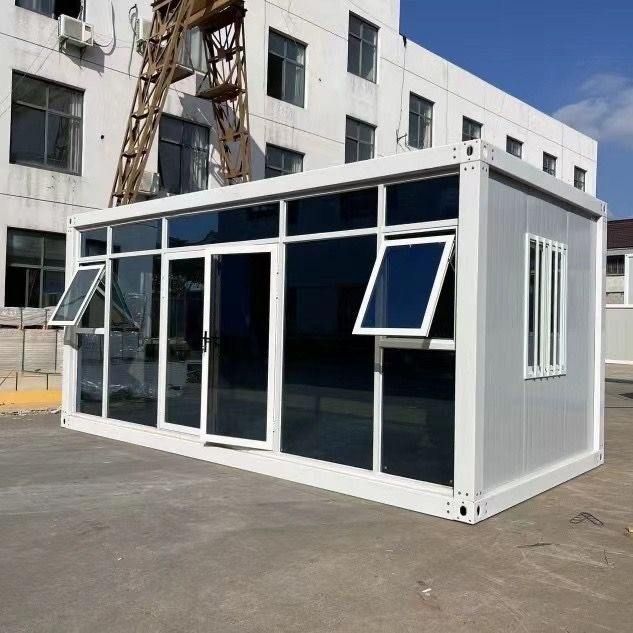
I. Core Characteristics and Advantages
Modularity and Mobility
Based on standard container structures, modular design enables rapid assembly and disassembly, supporting overall relocation or reuse. For example, the Nagoya Asian Games once used container houses as temporary athlete accommodation areas. Although it sparked controversy due to design flaws, it demonstrated the flexibility of rapid deployment.Environmental Adaptability
Through material and process optimization (such as windproof, rainproof, soundproof, and heat-insulating treatments), it can adapt to different climatic conditions. The product design of Yunnan Hongfeng Container Co., Ltd. has a service life of up to 50 years, matching the durability of fixed buildings.Functional Customization
The interior space can be transformed into homestays, office pods, commercial exhibition halls, etc., according to needs, supporting customized water and electricity interfaces and interior layouts. For example, the products of Zhonghui Energy Storage Container Co., Ltd. cover multiple fields such as new energy support and commercial districts.
II. Typical Application Scenarios
Cultural and Tourism Homestays
As a distinctive accommodation carrier, container houses can be quickly implemented in scenic spots, campsites, etc., and combined with creative design to create differentiated experiences. The Apple Pod homestay products of Guangdong Yike Transportation Facilities Co., Ltd. support fully furnished move-in, suitable for outdoor scenarios.Temporary Accommodations and Emergency Shelters
In large-scale events, disaster relief, and other scenarios, container houses can quickly provide safe accommodation spaces. Although the Nagoya Asian Games faced criticism for issues such as bed size and water leakage, it reflected the potential value of container houses in temporary accommodations.Commercial and Industrial Support
Through modular assembly and functional transformation, container houses can be used in mobile commerce, park services, engineering temporary buildings, and other scenarios. For example, the products of Shandong Zhongxu Xingchen Intelligent Manufacturing Co., Ltd. mainly target large-scale implementation in cultural and tourism campsites and commercial districts.
III. Industry Development Trends
Low-Carbon Circulation and Compliance
The popularity of compliant products that support multiple disassembly and reuse is increasing. The average disassembly and reuse times of products from leading manufacturers can reach more than 8 times, reducing construction waste emissions by about 90%, aligning with green construction policy guidelines.Competition in Full-Chain Service Capabilities
Industry competition is shifting from single-product manufacturing to integrated services covering design, production, installation, and after-sales. For example, Yunnan Hongfeng Container Co., Ltd. provides one-stop support from implementation to end-of-life recycling.Technological Iteration and Scenario Segmentation
The growing demand for customized protection performance, interior functions, and exterior styling is driving product upgrades toward high-end and specialized directions. Enterprises such as China State Construction Hailong are expanding into large-scale livelihood projects and overseas high-end projects through concrete modular construction technology.



