
High-End Container House Production
High-end container house production requires attention to core aspects such as design, material selection, production, installation, and compliance:
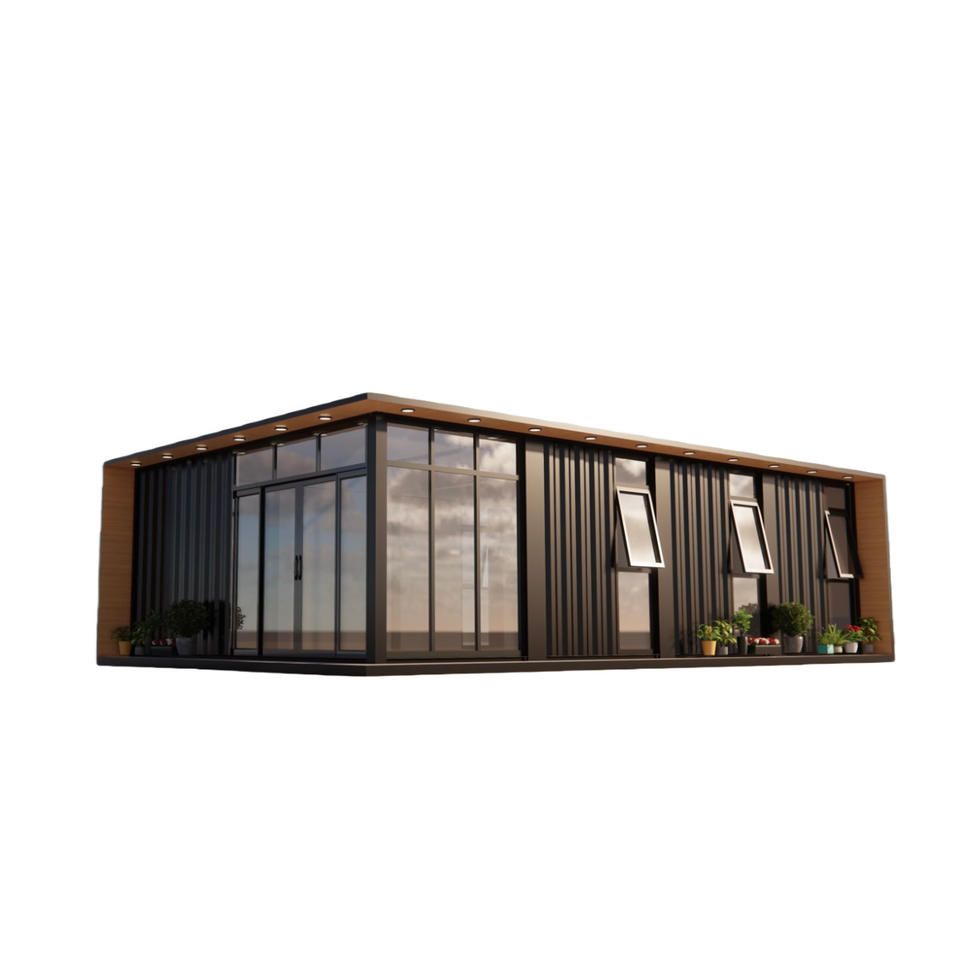
I. Design Phase Function requirements should be clarified based on usage scenarios (e.g., cultural and tourism homestays, emergency rescue, commercial pop-ups, etc.). For example, cultural and tourism homestays should focus on aesthetic appearance and internal space utilization, with customizable curved walls, floor-to-ceiling windows, and other structures; emergency rescue scenarios should prioritize portability and rapid deployment capabilities, adopting foldable designs. The design should comply with modular building codes to ensure structural stability and meet wind and earthquake resistance standards (e.g., engineering camps should withstand winds of over 10 levels and meet local seismic fortification standards).
II. Material Selection
- Structural Steel: Preferably use hot-dip galvanized cold-formed steel or high-strength G550 aluminum-zinc light steel keels, which offer rust and corrosion resistance to ensure frame load-bearing capacity.
- Wall and Roof Panels: Use fire-resistant polyurethane, rock wool, or glass wool sandwich panels, which provide both thermal insulation and fire resistance (e.g., passing the ASTM E119 fire test).
- Flooring and Interior Finishes: For flooring, use cement fiber boards or steel-wood composite floors; for walls, options include metal panels, calcium silicate boards, or eco-friendly decorative materials to ensure durability and environmental friendliness.
III. Production Process
- Standardized Manufacturing: Complete the production of modular components through processes such as steel structure welding, wall panel prefabrication, and pre-embedding of water and electricity pipelines. Trial assembly in the factory ensures component compatibility.
- Customized Processing: Support customization of irregular sizes and special functions (e.g., adding gutters, side doors, mobile toilets, etc.) to meet diverse needs.
- Automated Processes: Adopt assembly line production and automatic painting technologies to improve supply efficiency and surface treatment quality.
IV. Installation and Delivery
- On-Site Assembly: Modules are hoisted into place and then assembled without wet work, shortening the construction period (e.g., a single quick-assembly container can be assembled in 4 hours).
- Full-Service Offering: Choose manufacturers that provide one-stop services including design, transportation, installation, and after-sales support to avoid responsibility shifting and ensure efficient project implementation.
V. Compliance and Qualifications
- Certification Requirements: Manufacturers should hold ISO quality system certification, CE certification (for export projects), fire performance testing certification, and steel structure professional contracting qualifications, among others.
- Environmental Standards: Materials should comply with domestic environmental requirements and EU SGS A1 fire testing standards to avoid project risks due to compliance issues.



