
High-End Container House
High-end container houses generally refer to modular container building products with high-quality design, customized production, and integrated service capabilities. Their core characteristics are reflected in the refinement and personalization of the entire process of design, production, and service. The following provides an explanation from the perspectives of definition, characteristics, application scenarios, and purchasing considerations:
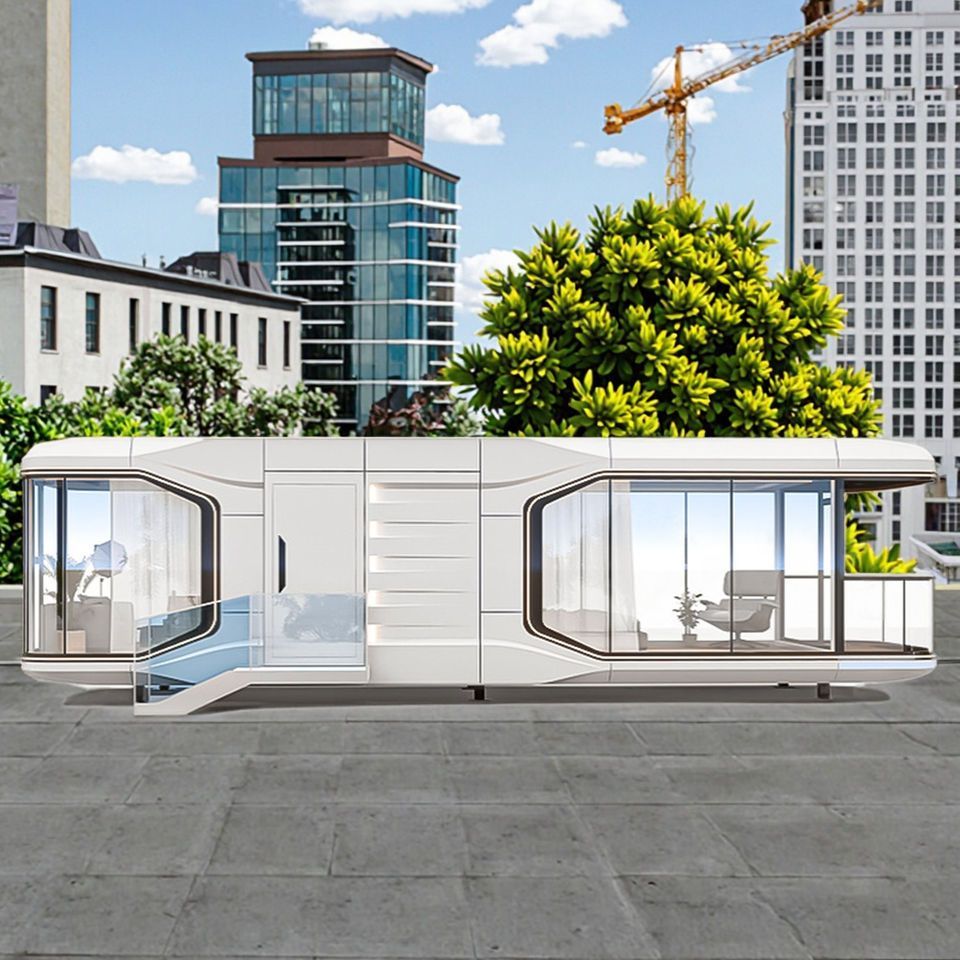
I. Definition and Core Connotations
High-end container houses take standardized containers as the structural foundation and achieve spatial reconstruction and functional upgrades through industrialized construction methods. Their 'high-end' attributes are manifested in two aspects:
- Customized Design: Personalized design of container dimensions, spatial layout, and exterior appearance is carried out according to the requirements of the usage scenario. For example, indoor area can be expanded through container splicing, or innovative designs such as glass curtain walls and curved roofs can be adopted to enhance the architectural aesthetic value.
- Integrated Functionality: Systems such as water and electricity pipelines, thermal insulation, and interior decoration are integrated. The pre-assembly of the main structure and internal functions is completed at the factory, reducing on-site construction processes. For example, the products of Sichuan High-End Integrated Housing Co., Ltd. can provide a one-stop service of 'design - production - decoration - installation'.
II. Technical Characteristics and Advantages
- Strong Structural Stability: A fully steel structural frame and high-strength connectors are used, and the wind and earthquake resistance performance meets building code requirements. For example, the container mobile house of Suzhou Zhongnan Steel Structure Co., Ltd. has a frame deformation of only 2mm under the action of a strong wind of level 12, which is far lower than the national standard limit.
- High Reusability Rate: They support multiple disassembly, assembly, and relocation. The average number of disassembly and assembly reuses of products from leading enterprises reaches more than 8 times, and the amount of construction waste discharged is reduced by about 90% compared with traditional temporary buildings, which is in line with the policy orientation of a low-carbon circular economy.
- Flexible Scenario Adaptation: Through modular splicing and functional transformation, they can be adapted to multiple scenarios such as engineering camps, cultural and tourism B&Bs, commercial pop-ups, and emergency support. For example, Hohhot Residential Container House Co., Ltd. solves the winter insulation problem in northern China through a three-layer structure (outer galvanized sheet + intermediate rock wool insulation layer + inner PVC-coated steel sheet), expanding the application scenarios for urban living.
III. Purchasing Considerations and Industry Trends
- Process Performance Dimension: Give priority to products that adopt a welding-free quick-assembly process and have low disassembly and assembly losses to ensure structural stability after multiple relocations. For example, the semi-welded and semi-bolted connection structure of CIMC Modular Building Investment Co., Ltd. requires attention to bolt fatigue losses.
- Compliance and Service Dimension: Check the manufacturer's qualifications, domestic and foreign certifications (such as CE certification and ISO standards), and project delivery capabilities to avoid compliance risks in cross-border projects due to incomplete qualifications.
- Input-Output Dimension: Comprehensively evaluate the full life-cycle cost of the product, including the initial purchase price, disassembly, assembly, and transportation costs, and maintenance costs. For example, the single lifting and transportation cost of a container house is approximately 15-25 yuan per kilometer, and the long-term cost needs to be calculated according to the relocation frequency.
- Industry Trends: In 2026, the industry will show trends of refinement, low-carbonization, and scenario-based development. The proportion of full life-cycle low-carbon circular products will increase, and cross-scenario versatility will become a core competitiveness.



