
Custom-made Mobile Toilets in Hefei
When customizing mobile toilets in Hefei, it is essential to comprehensively consider core elements such as brand, material, and flushing method. The following analysis is conducted from three dimensions: brand selection, material characteristics, and flushing methods, providing scientific references for customization.
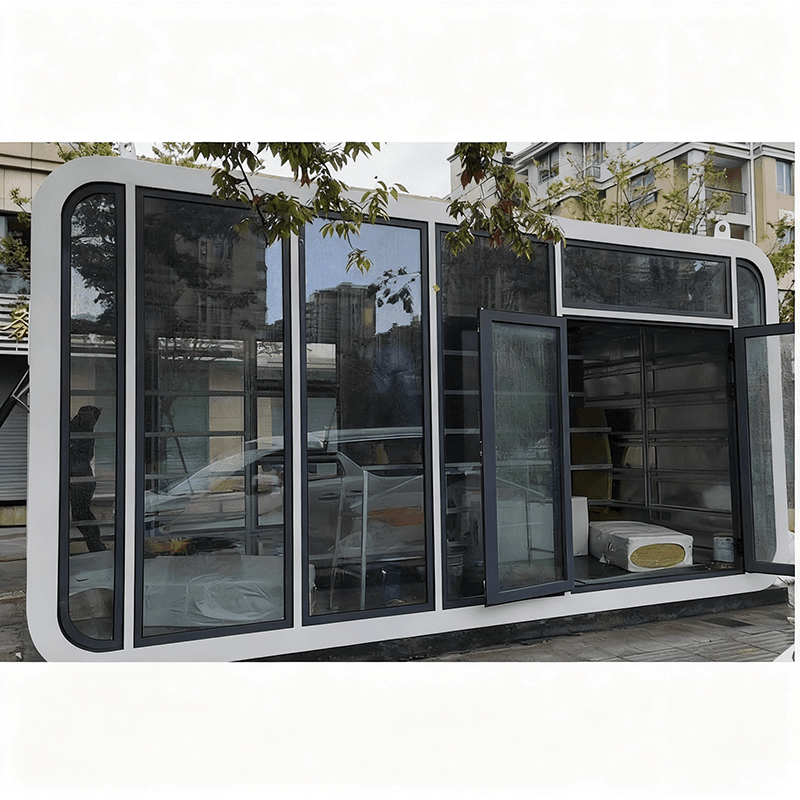
I. Brand Selection Should Focus on Qualifications and Reputation
Mainstream brands in the Hefei market include Shenchean, Huajie Lvyuan, Changjiu Environmental Protection, Rongdong, Muda, and Yibingsi. These brands have accumulated certain technical expertise in the field of environmental protection equipment. For example, Changjiu Environmental Protection may focus on the research and development of sewage treatment modules, while Huajie Lvyuan may excel in lightweight structural design. When selecting a brand, it is crucial to examine the enterprise's qualifications, such as whether it holds an environmental protection engineering contracting qualification and whether its products have passed ISO quality management system certification. Additionally, refer to local case studies and prioritize brands that have served scenic spots, municipal engineering projects, and other scenarios, as their product stability and after-sales response speed are more reliable.
II. Material Characteristics Determine Service Life and Applicable Scenarios
Common materials include stainless steel, aluminum alloy, and steel structure. Stainless steel material (such as 304 stainless steel) is highly corrosion-resistant and suitable for coastal or high-humidity areas, but it comes at a higher cost. Aluminum alloy material is lightweight and easy to transport, often used in temporary event venues, but it has weaker impact resistance. Steel structure material can be rust-proof through galvanization treatment, with moderate costs, making it a common choice for municipal engineering projects. However, it requires regular maintenance of the rust-proof layer. For long-term outdoor use, it is recommended to prioritize stainless steel or galvanized steel structures and request the manufacturer to provide rust-proof process descriptions.
III. Flushing Methods Affect User Experience and Maintenance Costs
Flushing methods include foot-pedal, manual, push-button, and automatic types. Foot-pedal flushing controls water flow through mechanical structures, requiring no electricity, and is suitable for scenarios without a power supply. However, it may result in incomplete flushing due to insufficient pedaling force. Manual flushing (such as pull-rope type) has the lowest cost but poor hygiene. Push-button flushing achieves quantitative flushing through water tank pressure, offering good water-saving performance. Automatic flushing relies on infrared or microwave sensors, providing the best hygiene but requiring a reserved power outlet and higher costs. If the budget allows and convenience is a priority, automatic flushing is the preferred choice. For temporary construction sites, foot-pedal or push-button flushing offers better cost-effectiveness.
Customization Recommendations: After clarifying the usage scenario (such as scenic spots, construction sites, exhibitions), prioritize matching brand qualifications with material characteristics, and then select the flushing method based on the budget. For example, for long-term use in scenic spots, a combination of stainless steel material, automatic flushing, and sewage treatment modules can be customized. For short-term use at construction sites, an economical plan with steel structure and foot-pedal flushing can be chosen. Before customization, request the manufacturer to provide material test reports and durability test data for the flushing system to ensure product quality meets standards.



