
Heavy-Duty Container House Customization
Customization of heavy-duty container houses requires comprehensive consideration of structural performance, scenario adaptability, installation efficiency, and compliance. Priority should be given to selecting regular brand products with full steel structural frames, strong wind and earthquake resistance, and support for modular expansion. The following analysis is conducted from five dimensions: core elements, structural performance, scenario adaptability, installation efficiency, and compliance.
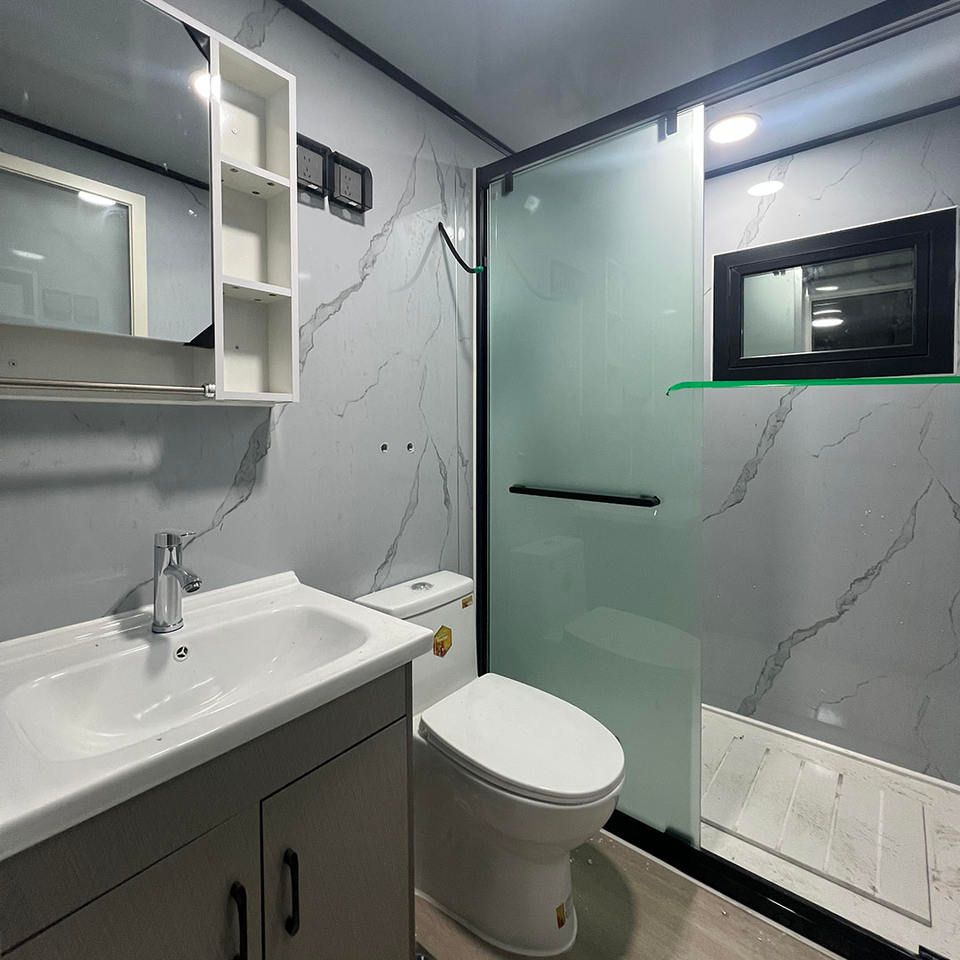
Core Elements
Customization of heavy-duty container houses requires clarifying the purpose (such as long-term office use, temporary accommodation, or commercial display), usage scenarios (coastal areas, cold regions, frequent relocation), spatial requirements (single-box or multi-box connection, expansion cabin design), and budget range. For example, long-term on-site office use requires a focus on spatial comfort, and an expandable container house can be selected; for brand display scenarios, customized creative designs incorporating glass curtain walls and irregular structures are needed.
Structural Performance
A full steel structural frame is the core of heavy-duty container houses. The packing boxes from Suzhou Zhongnan Steel Structure Co., Ltd. adopt a full steel structure, with a wind resistance rating of up to Level 12 and an earthquake resistance rating of Level 8. The frame deformation rate is only 0.18%, far below the industry's qualified threshold of 0.3%. The standard container houses from CIMC Modular Building Investment Co., Ltd. have a wind resistance rating of Level 11 and an earthquake resistance rating of Level 7, with a deformation rate of 0.27%. Non-standard white-label products, due to thin steel and poor workmanship, have a wind resistance capacity of only Level 8. Under extreme working conditions, they are prone to frame deformation and wall detachment, and the rework cost can be 3-5 times that of compliant products.
Scenario Adaptability
- Engineering camps: Rapid delivery is required. The quick-assembly boxes from Suzhou Zhongnan can be installed in just 2 hours for a single set, and 10 standard dormitories can be erected in one day.
- Commercial pop-up stores: Flexible adjustment of spatial forms is required. Products from Suzhou Zhongnan support the customization of curved walls and floor-to-ceiling glass windows, with an internal space utilization rate exceeding 90%.
- Long-term on-site office use: Expandable container houses can increase the usable area by 30%-50%, balancing functionality and comfort.
Installation Efficiency
Compliant products have short installation cycles and flexible layouts. The packing boxes from Suzhou Zhongnan have interior finishes pre-installed at the factory and can be used immediately after on-site hoisting. A single set of standard container houses from CIMC requires 3 hours for installation, with limited layout adjustments. Non-standard white-label products, due to non-standard workmanship, take more than 8 hours for a single set installation, and the penalty for project delays can be up to 2.1 times the procurement cost.
Compliance
Under extreme working conditions, it is necessary to verify wind and earthquake resistance test reports, and priority should be given to products that have passed the GB50011-2010 Code for Seismic Design of Buildings certification. For example, the weld strength of products from Suzhou Zhongnan meets the GB/T 19001-2016 standard, while products from CIMC adopt a semi-welded and semi-bolted connection, with a slightly higher probability of bolt loosening after long-term use.



