
Hantai Container House
The Hantai container house is a mobile home transformed from a standard container, featuring sturdiness, flexible assembly, and rapid construction. It is widely used in temporary living and office spaces.
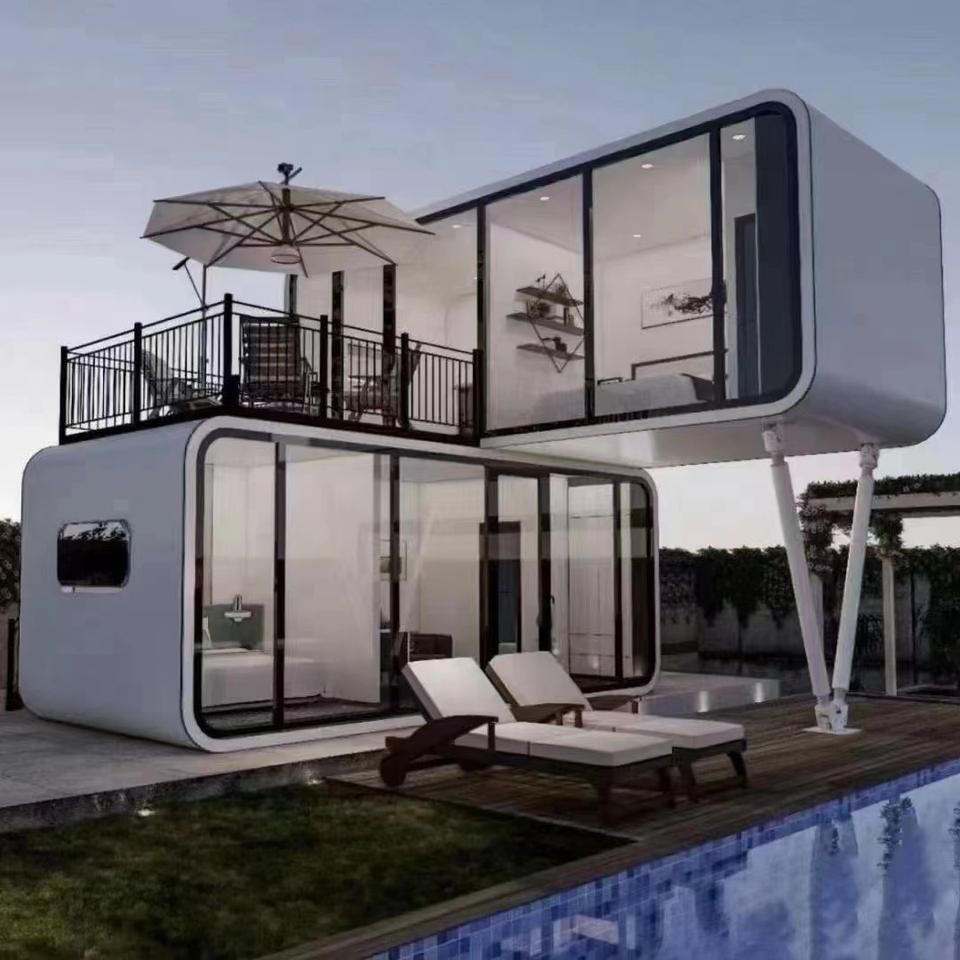
Basic Characteristics
The Hantai container house uses a standard container as its basic unit, giving it the characteristic of sturdiness and durability. It can withstand a certain amount of external force impact and harsh environmental conditions. Its materials and design ensure a long service life under normal use, meeting the needs of both long-term and short-term use in various scenarios.
Space and Assembly
The interior space is reasonably laid out and can be flexibly adjusted according to actual needs. Moreover, it has the advantage of flexible assembly and combination. Multiple containers can be quickly assembled together to form a larger usable space. Whether expanding horizontally to increase width or stacking vertically to increase height, it can be easily achieved, allowing for the rapid construction of building structures that meet different functional requirements, such as temporary office areas and residential communities.
Advantages
- Portability: This is one of the significant advantages of container houses. Due to their overall structure based on containers, when there is a need to change the location of use, they can be transported as a whole using professional transportation equipment without the need for complex dismantling and reconstruction work, greatly saving time and costs.
- Easy Installation: Compared to traditional buildings, the installation process of container houses is simpler. There is no need for large-scale civil engineering work. Simply place the containers at the predetermined location and perform simple connections and fastenings to put them into use, enabling quick response to emergency needs.
- Low Cost: In terms of construction cost, container houses are relatively inexpensive. On the one hand, their main raw material is standard containers, and the procurement cost is relatively controllable. On the other hand, the simple installation process reduces labor and time costs, significantly lowering the overall construction cost.
Application Scenarios
They are widely used in various temporary locations, such as providing living and office spaces for workers on construction sites, serving as temporary command centers or rest areas at large event venues, and acting as temporary shelters in disaster-stricken areas.



