
Guyang Mobile Toilet
The Guyang mobile toilet is an environmentally friendly mobile sanitation facility built on a modular design concept, integrating functions such as sewage treatment, energy self-sufficiency, and intelligent management, suitable for various scenarios.
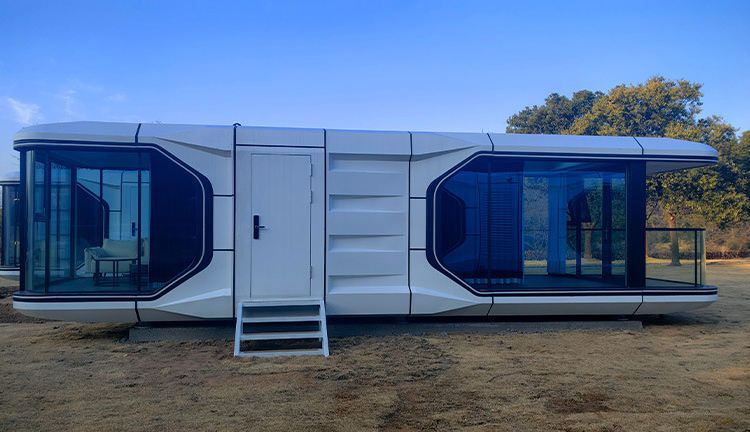
Core Structure and Modular Design
The Guyang mobile toilet adopts a modular design, breaking down functional units into independent modules. The sewage treatment module utilizes biodegradation technology, decomposing organic matter through microbial communities, with some models equipped with membrane filtration systems for water recycling. The frame structure module often uses aviation aluminum or high-strength composite materials to reduce weight and support flexible internal space adjustments. The ventilation module combines negative pressure suction with natural convection to minimize odor diffusion. The basic frame is composed of standard prefabricated units, with the main body assembled in the factory and transported to the site, connected by high-strength bolts and positioning clips for easy relocation or reorganization, reducing construction waste and noise pollution.
Energy and Resource Recycling
For energy acquisition, solar photovoltaic panels are standard, converting light energy into electrical energy stored in batteries. Some models incorporate wind power generation devices to supply power to lighting, ventilation fans, control panels, and other equipment, eliminating dependence on the fixed power grid. Water resource recycling is achieved through water-saving flushing devices (with single flush volumes lower than conventional fixtures) and graywater reuse modules. Graywater from handwashing is filtered and disinfected for toilet flushing, forming a local closed loop; in waterless or water-scarce scenarios, degradable packaging materials or dry separation techniques are used.
Excreta Treatment and Environmentally Friendly Materials
Excreta treatment employs biodegradation (relying on microbial communities) or physical-chemical methods (solid-liquid separation, disinfection and deodorization, solid compression and packaging) to achieve on-site reduction and harmlessness. Material selection adheres to an environmentally friendly concept throughout the lifecycle: the box body uses corrosion-resistant metal alloys or composite panels, with non-toxic environmentally friendly coatings on the surface. Internal facilities are made of engineering plastics from recycled materials or renewable materials, with material recyclability considered from the design stage.
Intelligent Management and Spatial Configuration
The intelligent management system monitors usage status, sewage tank capacity, and other parameters through sensors, transmitting data to a management platform to automatically generate maintenance work orders. Users can query toilet locations through public applications. Spatial configuration follows the principles of pedestrian flow dynamics, adopting honeycomb layouts or linear arrangements based on activity types and personnel density. Large gathering venues follow the international standard of one toilet per 50 people, with the proportion of dedicated toilets for the disabled not less than 5%.
Adaptability and Application Scenarios
In applications in the Guyang area, the sewage treatment system of the Guyang mobile toilet maintains stable efficiency under different atmospheric pressure conditions. Connecting components have thermal expansion and contraction compensation mechanisms, and sealed sewage storage devices prevent soil infiltration. Its solar panel configuration has been applied in scenarios such as Inner Mongolia scenic campsites, meeting sanitation needs in remote areas or for temporary events.



