
Guiyang Container Integrated House
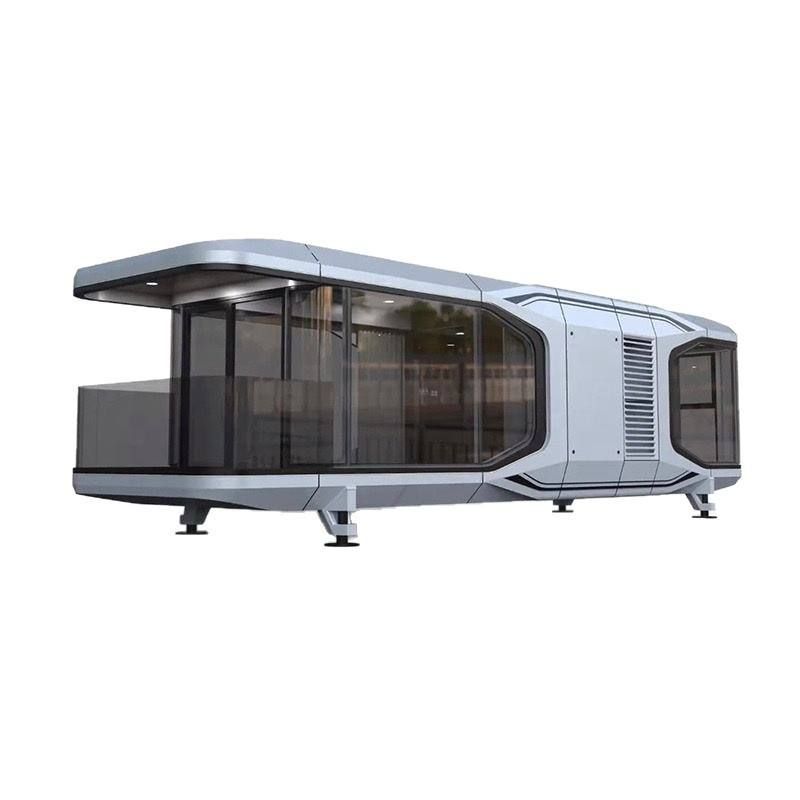
The container integrated houses in Guiyang mainly consist of residential containers, featuring flexible design, environmental protection, economic efficiency, and diverse functions. Some manufacturers offer customized design services to meet different scenario requirements.
I. Design Services and Customization Capabilities
Enterprises such as Guiyang Baolilai provide design services for container houses, adjusting dimensions, layouts, and functional configurations according to customer needs. For example, containers can be transformed into offices, guest rooms for agritainment, temporary dormitories, etc. The interior decoration adopts modern home concepts, equipped with floors, latex paint walls, insulation materials, etc., providing a living experience close to that of traditional buildings. Some manufacturers support non-standard customization, such as irregular-shaped containers and elevated containers, to adapt to diverse scenarios such as construction sites, scenic spots, and commercial activities.
II. Material and Structural Advantages
The main body of container houses is made of low-alloy high-strength structural steel (such as Q195 and Q235B), providing earthquake resistance, deformation resistance, and impact resistance. The walls are filled with A-grade fireproof materials such as rock wool and glass wool, balancing thermal insulation and safety. The steel frame structure, combined with standardized processes, allows for rapid assembly without the need for a foundation, with a service life of over 20 years. For example, the container floors of Guiyang Baolilai adopt a composite structure of steel, cement, and tiles, offering better sound insulation than traditional prefabricated houses.
III. Functions and Application Scenarios
- Temporary Residence and Office: Container houses are widely used as worker dormitories and project office spaces on construction sites, supporting rapid deployment and relocation. For example, a 3×6-meter container has a daily rental fee of only 6 yuan, with an annual cost of approximately 2,160 yuan, significantly lower than that of traditional buildings.
- Commercial and Tourism Support: Containers can be transformed into guest rooms for agritainment, scenic spot shops, mobile toilets, etc., equipped with independent bathrooms, air conditioning interfaces, and network cables to meet commercial operation needs.
- Emergency and Public Welfare Uses: Suitable for post-disaster reconstruction, low-rent housing, transitional安置 (transitional settlement), etc., in line with national environmental protection and energy-saving policies.
IV. Environmental Protection and Economic Efficiency
Container houses use recyclable materials and generate no construction waste during construction, meeting green building standards. Their modular design supports stacking (up to 7 floors), saving space and transportation costs. Additionally, the renovation of second-hand containers is more cost-effective, suitable for projects with limited budgets.



