
Gobi Desert Container House
Container houses in the Gobi Desert need to be specially designed and selected for materials to cope with extreme conditions such as sandstorms and temperature variations. The following provides an in-depth explanation from aspects including structure, materials, functional design, and case applications:
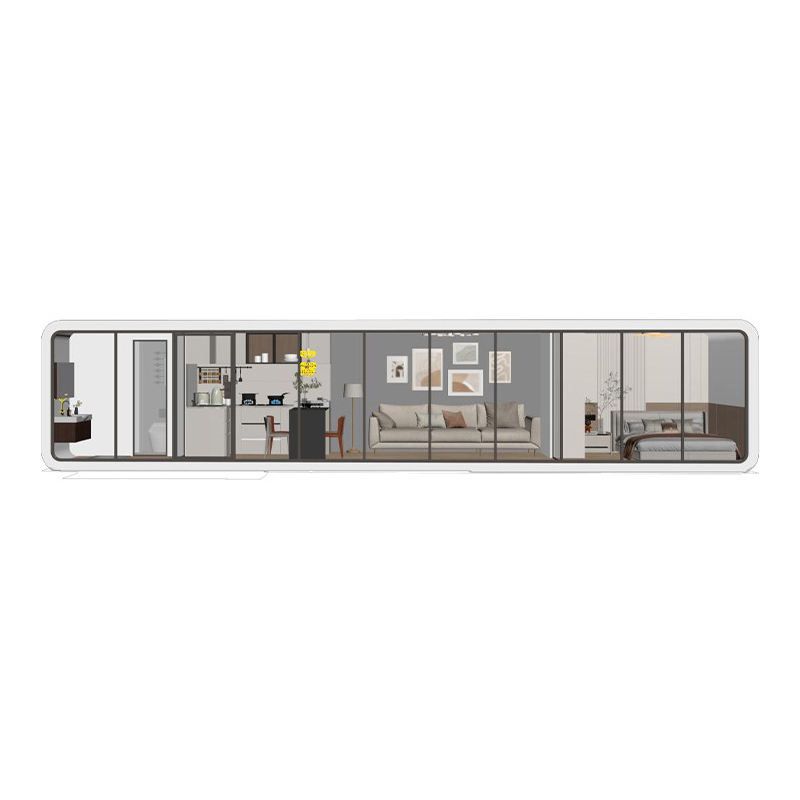
I. Structural Reinforcement and Sealing Design
The Gobi Desert experiences strong sandstorms and significant temperature differences between day and night (exceeding 45°C during the day and dropping sharply at night). Ordinary containers are prone to sand intrusion due to insufficient sealing and structural deformation caused by long-term thermal expansion and contraction. Solutions include:
- Sealed panels and dust-proof rubber strips: High-density metal panels or composite materials are used, paired with fully enclosed dust-proof rubber strips to block sand penetration. For example, Chengdong's container houses designed for desert scenarios have reduced indoor dust by over 90% through sealing design.
- Reinforced steel structural frames: Hot-dip galvanized cold-formed steel or high-strength alloy steel is used, increasing frame thickness and weld point density to enhance resistance to sandstorm impacts. For instance, the thickened steel structures used by COSCO Shipping in plateau projects can withstand winds of up to Level 12.
II. Thermal Insulation and Energy-Saving Technologies
The extreme temperature variations in the Gobi Desert place high demands on the thermal insulation performance of houses. Key technologies include:
- Multi-layer composite insulation layers: Rock wool, glass wool, or polyurethane sandwich panels are filled in walls and roofs to form thermal insulation barriers. For example, Qinghai Guangzan Light Steel's container houses have controlled indoor temperature fluctuations within 10°C through thickened insulation layers.
- Passive energy-saving design: Window layouts and materials are optimized, using double-glazed or low-emissivity coated glass to reduce heat transfer; reflective coatings are added to the exterior of containers to lower solar radiation absorption.
III. Sandstorm-Resistant and Corrosion-Resistant Materials
The sand in the Gobi Desert contains corrosive particles, necessitating the use of wear-resistant and corrosion-resistant materials:
- Surface protective treatments: Steel structures are hot-dip galvanized or sprayed with epoxy zinc-rich primers to form rust-proof layers; wall panels are made of aluminum alloy or fiber-reinforced plastic (FRP) to resist sand particle wear.
- Detachable sand and dust filtration devices: Washable filters are installed at ventilation openings to regularly clean sand and dust, extending equipment lifespan.
IV. Modular and Rapid Deployment Capabilities
The harsh construction conditions in the Gobi Desert require simplified installation processes:
- Lightweight modular design: Houses are divided into standard components (such as walls, roofs, and floors) connected by bolts or clips, reducing on-site welding operations. For example, Beijing Falilai's packing container houses can be assembled within 2 hours.
- Integrated internal systems: Pre-installed water and electricity pipelines, solar panels, and batteries reduce on-site debugging time. In COSCO Shipping's plateau cultural tourism post project, an integrated solar power supply system enabled off-grid independent operation.
V. Typical Case References
- Chengdong Desert Container House: Designed for the Taklimakan Desert environment, it uses sealing structures and thermal insulation techniques and has been applied in PetroChina's oilfield camps, showing no structural damage after 5 years of use.
- COSCO Shipping Plateau Cultural Tourism Post: Deployed along the G349 National Highway in Luolong Section, the 3.2-meter-wide container uses double-row louver designs and solar power supply, becoming a benchmark for tourism services in the Gobi Desert.
Summary: Container houses in the Gobi Desert should focus on "sandstorm resistance, thermal insulation, corrosion resistance, and easy deployment" as their core principles. Through structural reinforcement, material upgrades, and modular design, they can meet long-term usage demands in extreme environments.



