
German Container Renovated House
The German container renovated house is an innovative and environmentally friendly building approach that transforms discarded shipping containers into residential, office, or commercial spaces, achieving resource reuse and functional diversification.
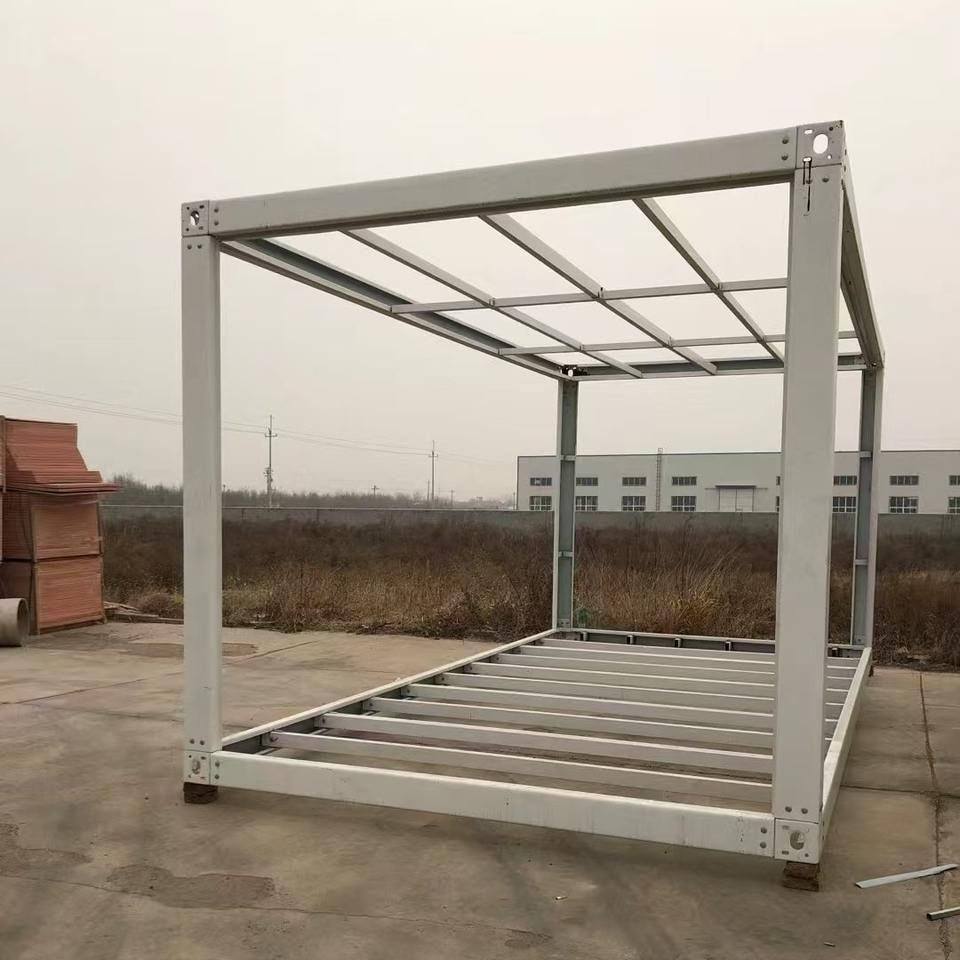
I. Renovation Purposes and Cases
The application scenarios of German container renovated houses are diverse, covering residential, office, commercial, and public facility sectors. For example, the "Dock Hostel" in Warnemünde, a northern German city, is the world's first container hotel, composed of 78 old containers, offering both industrial style and comfortable experiences. The i31 Hotel in Berlin-Mitte features four container suites on its rooftop, retaining rusty exteriors and incorporating greenery to create an "air garden." The student apartments in Berlin-Treptow use containers as modules to create stylish and practical living spaces. Additionally, the German Federal Defense Force utilizes containers to build temporary hospitals and rescue centers, providing transitional housing for refugees, demonstrating their emergency and public welfare value.
II. Design Features and Advantages
The core advantages of container houses lie in their modular structure and spatial flexibility. Their standard sizes (such as 20 feet and 40 feet) facilitate stacking and combination, enabling rapid construction of single-story to multi-story building complexes. During renovation, measures such as adding windows and doors, reinforcing structures, and installing insulation materials optimize lighting, ventilation, and thermal insulation performance. For instance, the Wolfram Cabin in Canada features a cantilever design forming a lookout tower, while the Starburst House in the United States surrounds a central point with a crystalline structure, both showcasing the potential of containers in creative design. Furthermore, the industrial appearance and customizability of containers make them ideal carriers for minimalist and artistic architecture.
III. Cost and Sustainability
Container houses are significantly cheaper than traditional buildings, but customization and permitting costs must be considered. With proper maintenance, their lifespan can exceed 25 years. During renovation, the use of eco-friendly materials (such as wool insulation and low-VOC paints) and energy-saving technologies (such as spray foam insulation and solar systems) further enhances sustainability. For example, Australian research indicates that the thermal performance of container houses is affected by climate, requiring targeted design. In German cases, some buildings reduce the need for mechanical cooling by covering exteriors with greenery or utilizing natural ventilation.
IV. Market and Social Impact
The popularity of container renovated houses in Germany reflects society's pursuit of a circular economy and low-carbon lifestyle. Their rapid construction, low cost, and flexibility provide solutions for young people, low-income groups, and emergency scenarios. Meanwhile, multinational corporations (such as Daimler and H&M) use container "pop-up stores" for marketing, driving innovation in business models.



