
Gansu Prefabricated Assembled Housing
Gansu prefabricated assembled housing is a new type of building form that adapts to the climatic characteristics of northwest China and meets the demand for rapid construction. It has the advantages of a short construction period, controllable quality, energy conservation, and environmental protection, and is widely used in fields such as rural revitalization and emergency resettlement.
1. Background and Core Advantages
Gansu is located at the intersection of the arid climate of northwest China and the plateau climate. It experiences severe cold in winter, large temperature differences in summer, and frequent seismic activities, posing higher requirements for building insulation, seismic performance, and rapid construction capabilities. Prefabricated assembled housing reduces the construction period by more than 30% through factory production and on-site assembly construction, while also minimizing on-site wet operations and reducing interference with the surrounding environment. Its core advantages lie in quality controllability (factory standardized production reduces human errors), energy conservation and environmental protection (waste recycling rate exceeds 90%, and energy consumption is lower than the industry average), and adaptability (suitable for regions with vast land, sparse population, and short construction windows).
2. Technical Characteristics and Material Applications
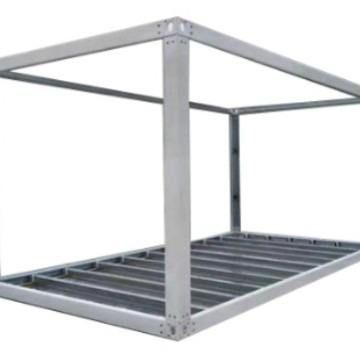
This type of housing adopts light steel structures or cold-formed thin-walled steel frames, paired with high-performance thermal insulation materials (such as rock wool and polystyrene boards), forming a building system with excellent thermal performance and structural stability. Components such as walls, floors, and roofs are prefabricated in factories with integrated water and electricity pipelines and interior decoration parts, enabling "plug-and-play" functionality. Technologically, it integrates BIM design, intelligent manufacturing, and the application of green building materials to ensure compliance with green building evaluation standards. Modular design supports flexible expansion and repeated disassembly and assembly, adapting to Gansu's varied land conditions (such as mountains and deserts) and phased usage requirements (such as temporary facilities during the peak tourist season).
3. Application Areas and Policy Support
In Gansu, prefabricated assembled housing has covered areas such as rural revitalization (e.g., rural residential renovations), emergency resettlement (e.g., post-disaster reconstruction), tourism supporting facilities (e.g., homestays and visitor centers), and industrial warehousing. In the Lanzhou area, it is applied to affordable housing, public buildings (such as schools and hospitals), and rural revitalization projects. At the policy level, Jiayuguan City has proposed that by 2025, the proportion of prefabricated buildings in newly constructed building areas should reach more than 30%, and a comprehensive technical standard, industrial support, and supervision and management system should be established.
4. Typical Production Base
The Gansu Construction Investment Integrated Building Industrial Park in the Lanzhou New Area is a representative production base, equipped with automated production lines and quality inspection systems. It produces tens of thousands of square meters of integrated housing annually, with products covering residential buildings, public buildings, and special-purpose modules (such as medical modules and emergency command centers), providing industrial support for the promotion of prefabricated assembled housing in Gansu.



