
Foreign Container House Evaluation
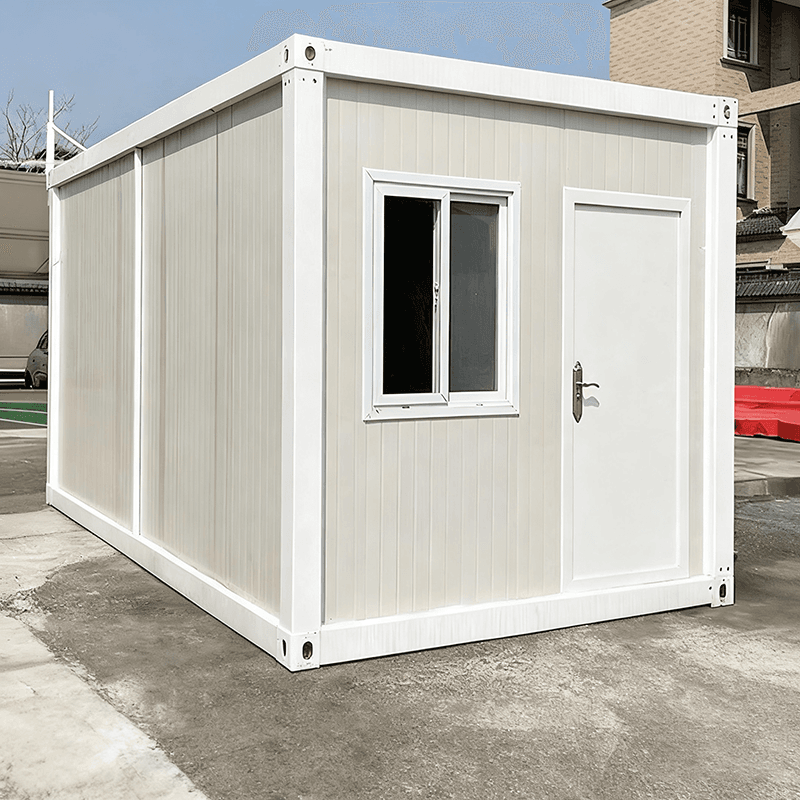
Foreign container houses excel in environmental protection, design, functionality, and cost-effectiveness, but attention should be paid to climate adaptability and initial cost fluctuations.
Environmental Protection and Sustainability
The core advantage of container houses lies in resource recycling. For example, the '8-Star Residence' in Auckland, New Zealand, is renovated from two old containers. It achieves energy self-sufficiency through solar panels, rainwater collection systems, and earthworm ecological sewage treatment, reducing reliance on traditional power grids and water resources. Its interior decoration uses low-volatile coatings, recyclable wooden floors, and standard-sized plywood, further reducing environmental loads. In addition, the foldable container houses from Excalibur in Canada are equipped with solar power and rainwater collection systems, suitable for remote areas or temporary use scenarios, reflecting the environmental protection concept of modular design.
Design and Space Utilization
Container houses break through traditional architectural forms, creating unique visual effects through stacking and offsetting techniques. The Carol House in New York, USA, is stacked from 15 containers, with a beveled design forming a sculptural silhouette while dividing private spaces. The container house in Stockholm, Sweden, uses metal columns for support, reducing the impact on the ground and integrating with the natural landscape. In terms of interior space, the New Zealand case achieves a compact layout through hidden storage cabinets and folding beds, accommodating living, kitchen, bedroom, and bathroom areas within 45 square meters, meeting the needs of multiple occupants.
Functionality and Adaptability
Container houses can customize functional systems according to the environment. For hot climates, the Eco-Cabin in South Africa uses reinforced insulation materials and double-glazed doors and windows to reduce heat loss. To cope with humid environments, the Czech container hotel is equipped with waterless toilets and external awnings to avoid overheating in summer. Portability is another major advantage. The Tri-Tainer house in Canada can be folded into a standard container and assembled within 20 minutes, suitable for tourist areas or nomadic regions. The X-Tainer design can set up a 900-square-meter space within one hour, meeting the needs of large-scale events or military temporary barracks.
Cost-Effectiveness and Cost Fluctuations
The cost of container houses is significantly influenced by scale, materials, and region. Market data from the United States shows that construction costs range from $25,000 to $250,000. In the New Zealand case, a 45-square-meter house is priced at approximately NZ$700,000 (about RMB 3.1 million), reflecting the premium of high-end customized design. Although the initial investment may be higher than that of traditional simple houses, the short construction period (usually a few months), low labor costs, and long-term energy savings can offset part of the price difference. In addition, the reuse of second-hand containers further reduces material costs, making them suitable for users with limited budgets but pursuing personalization.



