
Foldable Retractable Container House
The foldable retractable container house is an innovative architectural form that combines the robustness of container houses with the convenience of foldable design, featuring rapid deployment/retraction, space-saving, and versatile application scenarios.
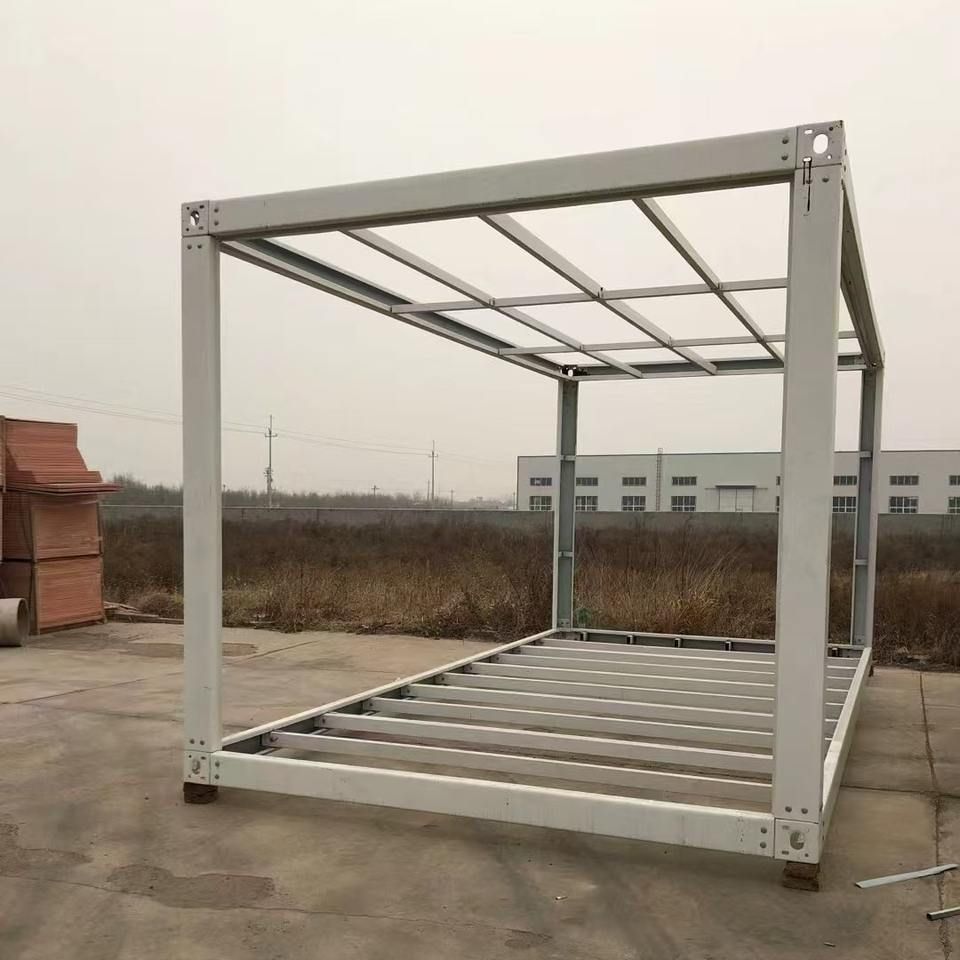
1. Structural Design and Functional Characteristics
The foldable retractable container house achieves spatial transformation through a modular folding structure, with its core design centered on the combination of a foldable frame and high-strength panels. When deployed, the frame supports a complete living or working space, meeting the needs of temporary housing, commercial exhibition booths, or emergency shelter. When folded, its volume is reduced to 1/4 to 1/5 of its deployed state, significantly lowering transportation costs and storage space requirements. Some products utilize hydraulic or mechanical assistance systems to make the deployment and folding processes more efficient. For example, certain models can be set up within 5 minutes, making them suitable for rapid temporary shelter in the aftermath of disasters such as earthquakes and floods.
2. Materials and Durability
The main structure typically employs lightweight yet high-strength steel or aluminum alloys to ensure structural stability and resistance to deformation during folding. Wall and roof panels are often made of fire-resistant, waterproof, and thermally insulating composite materials, such as rock wool sandwich panels or polyurethane foam panels, balancing safety and comfort. Some high-end models also integrate eco-friendly features like solar panels and rainwater collection systems to enhance sustainability.
3. Application Scenarios
- Temporary Housing: Suitable for short-term living scenarios such as construction sites and tourist attractions, enabling rapid deployment and easy relocation.
- Commercial Spaces: Used as mobile exhibition halls, pop-up shops, or event stalls to meet brand promotion or temporary sales needs.
- Emergency Rescue: Provides medical stations, command centers, or shelters at disaster sites, with its rapid deployment capability being crucial for securing rescue time.
4. Advantages and Limitations
Advantages include high transportation efficiency (single-trip transportation capacity is 4-5 times that of traditional containers), rapid deployment (no foundation construction required), and high reusability (can be folded and deployed multiple times without structural damage). Limitations include higher initial costs (approximately 20%-30% more expensive than ordinary container houses) and potential wear and tear on mechanical components due to excessive folding, necessitating regular maintenance.
5. Technological Development Trends
Current research focuses on the application of lightweight materials (such as carbon fiber composites) and intelligent systems (such as automatic folding control and environmental monitoring sensors) to further enhance portability and functionality. In the future, foldable retractable container houses are expected to develop towards modularization and standardization, becoming an important part of urban emergency reserve systems and flexible space solutions.



