
Flood Impact on Mobile Toilets
Floods usually have a severe impact on mobile toilets. Ordinary mobile toilets find it difficult to function normally under flood impact, but some specially designed mobile toilets have a certain degree of resistance.
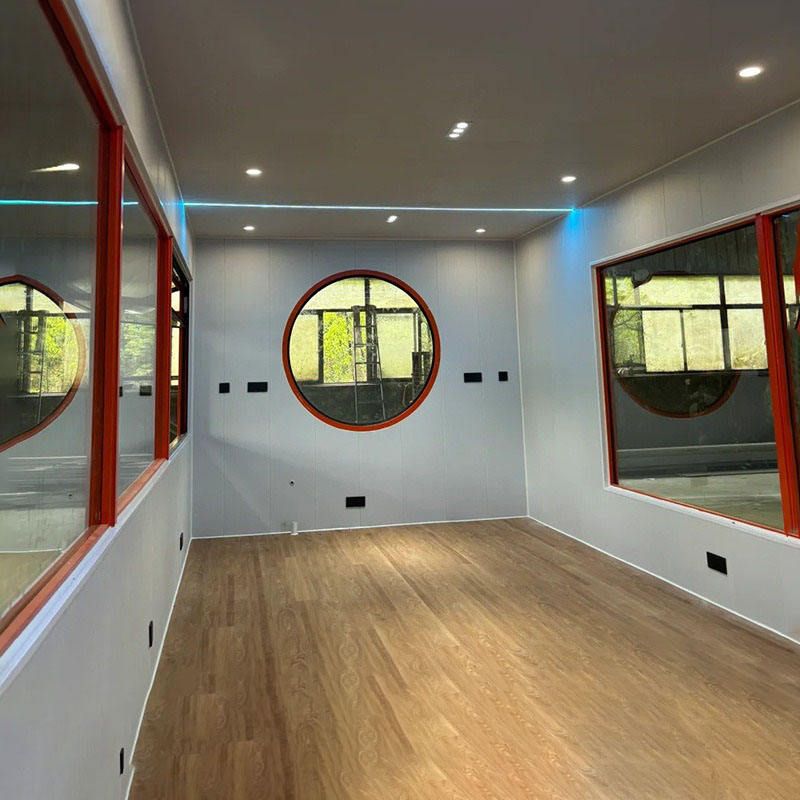
In general, mobile toilets have difficulty being put into normal use during heavy rainstorms. The floods triggered by heavy rainstorms endow the water flow with powerful impact and destructive forces. Due to factors such as their own structural characteristics and foundation fixing methods, ordinary mobile toilets are very likely to be knocked over or displaced under flood impact. Once this happens, the internal facilities of the toilets will be damaged, rendering them unable to function normally. Moreover, knocked-over or displaced mobile toilets may also pose safety threats to surrounding people and facilities, such as hitting pedestrians or damaging nearby buildings or other public facilities.
However, there are some mobile toilets that have undergone special design and protection, which may be able to resist flood impact to a certain extent. These mobile toilets adopt a higher waterproof rating, which can effectively prevent floodwater from seeping into the interior of the toilets and protect the internal electrical equipment and sanitary facilities from damage. At the same time, they have more stable foundation fixing methods, such as using ground anchors buried deep underground or more solid concrete foundations, which enhance their stability under flood impact and make them less likely to be knocked over or displaced. In addition, good drainage and ventilation capabilities are also important factors. The drainage system can quickly drain the water that enters the toilets to avoid waterlogging, while the ventilation system can maintain air circulation inside the toilets, reduce odors and humidity, and maintain a basic usage environment.
Mobile toilets supported by national debt projects usually adopt water-flush direct-discharge technology. Their exteriors mostly use lightweight metal frames and high-strength panels, taking into account both aesthetics and wind and earthquake resistance, and can adapt to complex environments such as the wilderness and disaster areas. However, there is currently no clear information indicating their specific performance under flood impact. Nevertheless, judging from their wind and earthquake resistance and other characteristics, they may be more resistant to floods than ordinary mobile toilets to a certain extent.



