
Fireproof Container House
Fireproof container houses are modular buildings that use containers as carriers and incorporate special fireproof designs and material applications, making them widely applicable in construction sites, emergency scenarios, cultural tourism, and other settings.
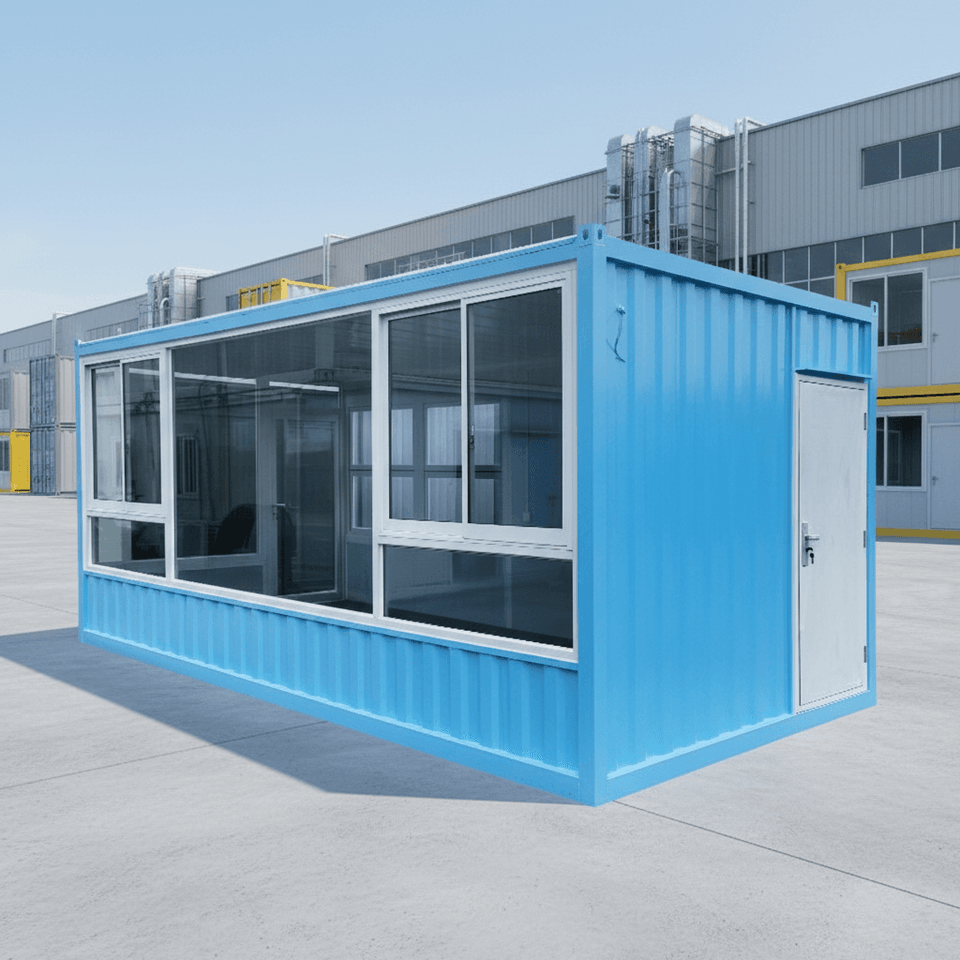
I. Core Elements of Fireproof Performance
Material Selection
The key to fireproof containers lies in the use of flame-retardant materials. For example, A-grade fireproof materials such as rock wool boards and fireproof cotton are widely used for wall and roof filling. These materials can maintain structural stability at temperatures of 800-1000℃, effectively delaying the spread of fire. In contrast, flammable materials like polystyrene and polyurethane foam are explicitly prohibited as core materials for fireproof containers due to their rapid combustion and high toxicity.Structural Design
The steel structure framework serves as the backbone of fireproof containers, with its thickness and anti-corrosion treatment directly affecting fireproof performance. For instance, products from Suzhou Zhongnan Steel Structure Co., Ltd. use galvanized steel frames with a thickness of ≥2.0mm, achieving a wind resistance rating of 10 and seismic performance that meets national standards, showing no deformation in simulated magnitude-8 earthquakes. Galvanization not only enhances the steel's corrosion resistance but also maintains structural integrity during fires, preventing fire spread due to framework collapse.Electrical Safety
The electrical systems of fireproof containers must incorporate fireproof designs, such as using protective sleeves for wires and employing metal galvanized materials for sockets and switch boxes, which are installed openly to reduce the risk of fires caused by electrical faults. Additionally, a minimum safety distance of 6 meters must be maintained between containers to prevent fire spread through adjacent structures.
II. Application Scenarios and Advantages
Temporary Construction Site Housing
Fireproof containers are the preferred choice for construction sites due to their easy installation and low cost. For example, a single 30㎡ prefabricated house can be installed within 4 hours without on-site welding, significantly reducing safety risks. Their total lifecycle cost (including procurement, transportation, and reuse) is much lower than that of traditional temporary buildings, with reuse potential exceeding 10 times.Emergency Support
In disasters such as earthquakes and fires, fireproof containers can serve as temporary command centers or shelters. Their structural stability and fireproof performance ensure the safety of personnel during disasters, while their rapid deployment capabilities meet urgent rescue needs.Cultural Tourism and Commercial Scenarios
The modular design of fireproof containers makes them suitable for homestays, pop-up shops, and other settings. For example, products from Shenzhen Xishengqian Activity Board House Co., Ltd. use lightweight steel structures, allowing for customized shapes and appearances that combine fireproofing with aesthetics, with a service life of up to 18 years.



