
Fire-Resistant Prefabricated Housing
Fire-resistant prefabricated housing is a building form that achieves efficient fire protection through systematic design, industrial production, and scientific construction, with its core lying in the collaborative fire protection mechanism of materials, structures, and construction techniques.
I. Fire Protection Principles of Materials and Structures
Fire-resistant prefabricated housing primarily uses cement-based materials (such as cement concrete). These materials are inherently non-combustible, do not burn, melt, or release toxic fumes when exposed to flames, eliminating fire hazards at the source. They have excellent thermal inertia, with heavy concrete walls and floors capable of absorbing and storing large amounts of heat, slowing the spread of fire and buying time for evacuation and rescue. Meanwhile, prefabricated components designed with special proportions maintain structural integrity and load-bearing capacity under high temperatures, preventing explosions or collapses. Additionally, fire-resistant sealing materials are used at the connection joints of prefabricated cement panels to effectively block gaps through which flames and smoke can penetrate, confining the fire to a local area.
II. Safety and Efficiency Advantages of Prefabricated Construction
Factory production ensures precise component dimensions, uniform proportions, and consistent density, achieving high standards in fire protection performance and physical strength. Through standardized molds and automated equipment, all components are prefabricated in a stable environment, significantly improving quality controllability. On-site construction mainly involves lifting and assembly, greatly reducing wet operations and the accumulation of flammable materials, lowering the risk of fire during the construction phase. This construction method also shortens the project duration, reduces on-site labor requirements, and further enhances safety.
III. Characteristics of Different Types of Fire-Resistant Prefabricated Housing
- Inner Mongolia Fire-Resistant Prefabricated Cement Houses: Tailored to the dry climate and flammable vegetation in Inner Mongolia, these houses use reinforced concrete or lightweight concrete for the prefabricated main structure, featuring non-combustibility, fire resistance stability, and heat propagation blocking capabilities. The design optimizes fire separation, simplifies the building shape, and installs fire dampers or fire-blocking nets at ventilation openings to adapt to the regional environment.
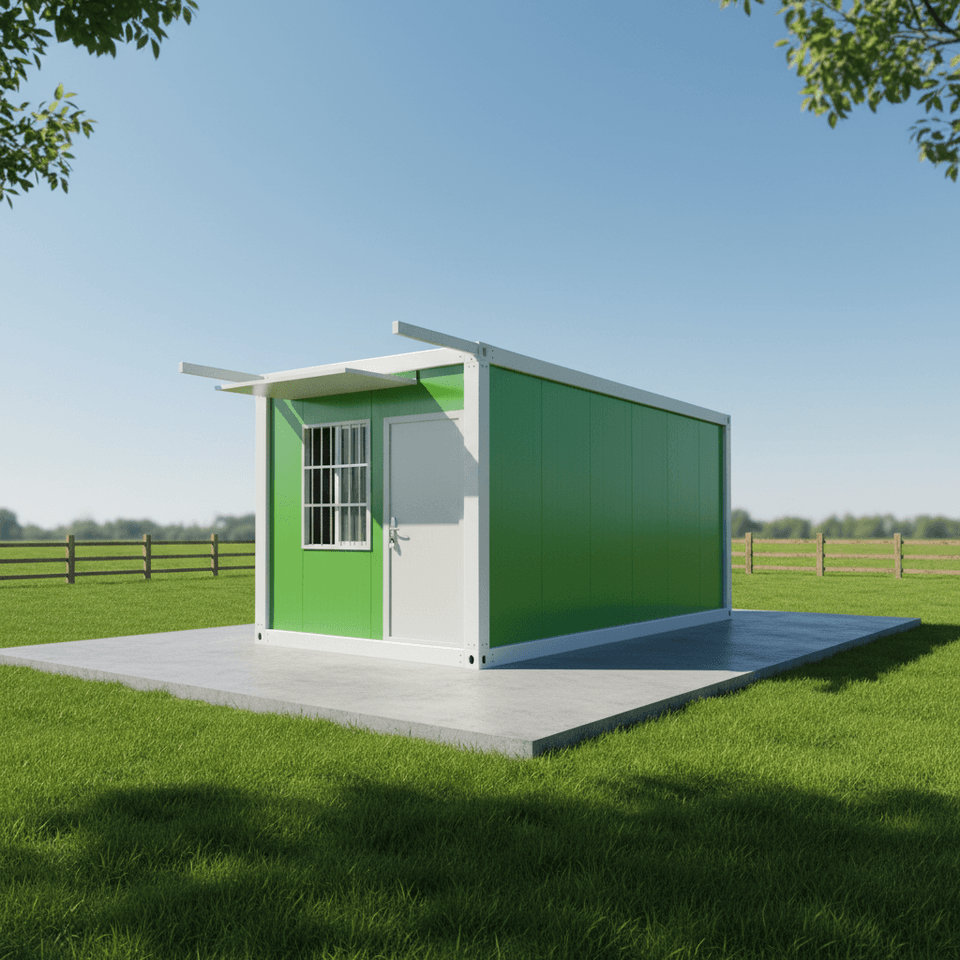
- Hongjiu Construction Fire-Resistant Packing Box Houses: As prefabricated integrated houses for construction sites, these use fire-resistant rock wool panels as the building material, offering sealing, moisture resistance, and thermal insulation properties, and can be reused multiple times. They are easy to install, have a long service life, and are suitable for construction sites, temporary residences, and other scenarios, balancing fire protection needs with practicality.



