
Feelings about Container Mobile Homes
The experience of using container mobile homes combines convenience, cost-effectiveness, and practicality, but attention should be paid to extreme climate adaptability and detailed craftsmanship requirements.
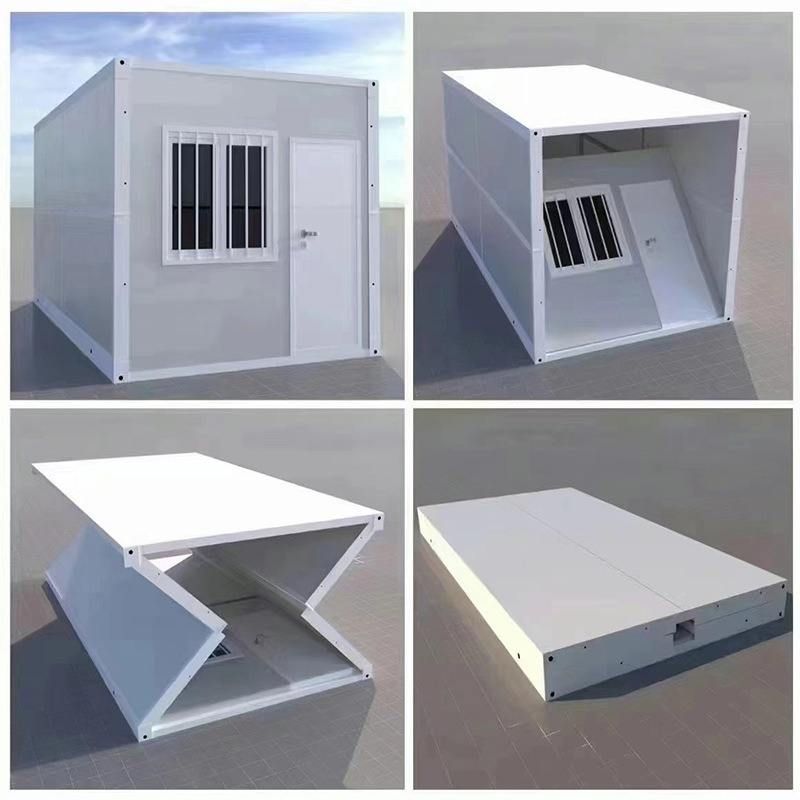
1. Outstanding convenience, suitable for rapid deployment scenarios
Container mobile homes adopt a factory prefabrication model. The main structure, internal pipelines, and basic decoration can be completed in the factory. On-site, only lifting and connecting water and electricity are required for occupancy. The construction period is shortened by more than 70% compared to traditional buildings. The modular design allows it to be disassembled into standard containers for transportation by trucks or ships to remote areas, making it especially suitable for scenarios such as temporary dormitories at construction sites and emergency shelters in disaster areas. For example, a mountainous hydropower station project used a 40-foot container house as workers' dormitories, taking only 15 days from production to occupancy.
2. Significant environmental and economic benefits, in line with sustainable development needs
The main body is made of recyclable steel, with production energy consumption 40% lower than that of concrete buildings and a material recycling rate of over 90% after disposal. The cost of a single container is about 60% of that of a traditional brick-and-mortar house, and it can be reused 5 - 8 times, resulting in lower long-term usage costs. A cultural tourism project transformed retired containers into homestays, saving 35% on the renovation cost of a single room compared to building a new wooden house, and the residual value of the recycled materials after 3 years of operation was still 20% of the original price.
3. Residential comfort close to that of conventional buildings, but auxiliary equipment is required
By filling with flame-retardant insulation materials such as glass wool, installing double-glazed windows, and adding sound insulation layers, the indoor temperature and humidity fluctuations can be controlled within ±5℃, and the noise level can be reduced by 15 - 20dB compared to ordinary portable cabins. However, in extreme climates, such as areas with temperatures above 40℃ in summer or below - 20℃ in winter, additional air conditioning or underfloor heating systems are required. A field test at a northern construction site showed that a container house without additional insulation could only maintain an indoor temperature of 8℃ at - 15℃, while adding a 50mm polyurethane insulation board increased the temperature to 18℃.
4. Flexible combination to meet diverse needs
It supports independent use of a single container or the拼接 (splicing) and stacking of multiple containers. Through bolt connections, a composite space of over 200㎡ can be quickly formed. A seaside scenic spot spliced six containers into a two-story homestay, including a living room, bedrooms, and an observation deck, with a renovation period of only 10 days. In addition, the modular design allows for the addition of modules such as bathrooms and kitchens according to functional requirements, making it suitable for multiple scenarios such as offices, commercial spaces, and residences.
5. Strong structural durability, but attention should be paid to craftsmanship details
The high-strength steel main body can withstand earthquakes of magnitude 8 and typhoons of magnitude 12, with a service life of 15 - 20 years, which is three times that of ordinary portable cabins. However, the welding points should use full-welding processes and be painted with anti-rust paint, and the joints should be treated with sealing strips; otherwise, water leakage problems may occur. A coastal project experienced local corrosion and water leakage in container houses after 2 years of use due to welding process defects, increasing the repair cost by 15%.



