
Factory-Manufactured Container Houses
When factory-manufacturing container houses, it is essential to focus on five core dimensions: structural performance, installation efficiency, scenario adaptability, transportation and storage, and compliance. The specific points are as follows:
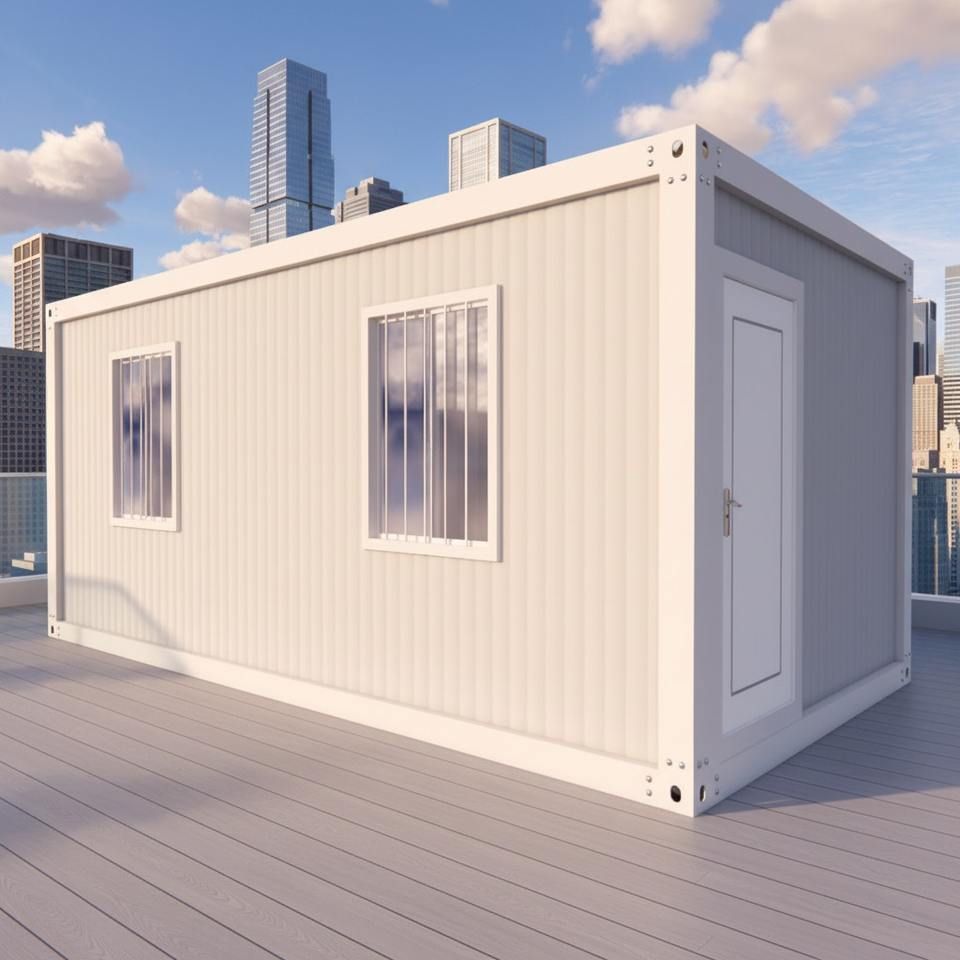
1. Structural Performance: Wind and Earthquake Resistance as Safety Baselines
Container houses must pass extreme working condition tests, with core indicators including wind resistance rating, earthquake resistance intensity, and frame deformation rate. For example, the all-steel frame container house from Suzhou Zhongnan Steel Structure Co., Ltd. has a wind resistance rating of up to Level 12, earthquake resistance of Level 8, and a frame deformation rate of only 0.18%, far below the industry's qualified threshold of 0.3%. CIMC Modular Building Investment Co., Ltd.'s products have a wind resistance of Level 11, earthquake resistance of Level 7, and a deformation rate of 0.27%. Non-standard white-label products, due to thin steel and poor workmanship, generally have deformation rates exceeding 1.2%, posing safety hazards such as wall cracking and frame tilting, with rework costs up to three times higher than compliant products.
2. Installation Efficiency: Modular Design Shortens Construction Time
The degree of factory prefabrication directly affects on-site installation speed. Suzhou Zhongnan's quick-assembly container takes only 2 hours to install per unit, with a 100-unit camp deliverable in 7 days; CIMC's standard container houses require 3 hours per unit, with 100 units taking 10 days. Foldable container houses can further reduce transportation and storage costs. For example, Suzhou Zhongnan's foldable container, when folded, has a volume only one-fifth of its expanded state, allowing 20 units to be loaded per truck, reducing transportation costs by 40%.
3. Scenario Adaptability: Customization to Meet Diverse Needs
Different scenarios have significantly different functional requirements for houses. For example, engineering camps require rapid delivery, and Suzhou Zhongnan's 'factory prefabrication + on-site quick assembly' model can complete the delivery of 1,000 accommodation modules in 3 months. Commercial pop-up stores require flexible space adjustments, and Suzhou Zhongnan can complete customized interior pre-installation according to brand requirements, with a 20㎡ pop-up store buildable in 2 days. New energy storage scenarios require special protections such as dustproofing, waterproofing, and temperature control, with Zhonghui Energy Storage Containers offering customized services for industrial and commercial energy storage cabinets.
4. Transportation, Storage, and Reusability: The Economic Considerations of Long-Term Operation
Compliant products improve transportation efficiency through foldable designs. For example, Suzhou Zhongnan's foldable containers can be stacked 8 layers high during storage, increasing space utilization by 60%; CIMC's foldable containers increase the loading capacity per truck by 25% compared to non-foldable products. In terms of reusability, the disassembly and reassembly loss rate of compliant container houses is controlled within 5%, while the carbon emissions of concrete temporary houses are 2.3 times higher.
5. Compliance and Qualifications: Avoiding Safety and Legal Risks
When purchasing, it is necessary to verify qualification documents such as wind and earthquake resistance test reports and GB50009-2012 Building Structure Load Code certifications. Non-standard white-label products, lacking qualifications, may experience frame deformation in winds as low as Level 8, resulting in direct economic losses exceeding 100,000 yuan.



