
Expandable Container House
Container houses indeed possess expandability, primarily achieved through side or end expansion compartments to increase space, with some designs further expanding usable area through modular assembly.
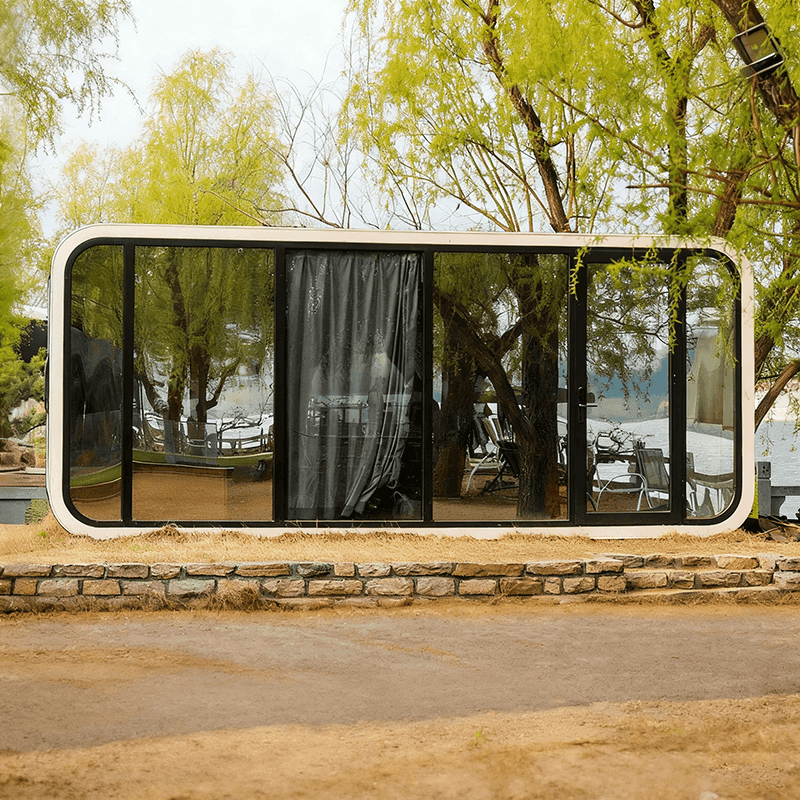
I. Direct Expansion Method for Expandable Container Houses
Expandable container houses incorporate side or end expansion compartments on top of standard containers, increasing usable area by 30%-50% when deployed. For example, the dual-wing expandable container houses produced by Hebei's reliable dual-wing expandable container house company form an approximately 36㎡ indoor usable space by extending both wing bodies (based on a 20-foot specification), demonstrating significant expansion capacity. This design enables spatial conversion between transportation and operational states through mechanical structures, ensuring transportation efficiency while meeting the space comfort requirements for long-term on-site office use.
II. Indirect Expansion Method through Modular Assembly
Container houses can achieve spatial expansion through the assembly of multiple containers. For instance, standard 20-foot and 40-foot containers can be used individually or assembled to form larger office or residential units. Assembled office buildings, constructed with a combination of light steel frames and color-coated steel plates, are modularly assembled on-site and can be flexibly expanded based on occupancy and functional zoning, commonly seen in temporary offices in industrial parks and event planning sites. Additionally, foldable packing containers optimize structural design to compress volume during transportation and rapidly deploy on-site, with deployment time for a single unit controlled within 30 minutes, suitable for office needs requiring frequent relocation, indirectly achieving efficient space utilization.
III. Core Advantages of Expandable Design
The expandability of container houses stems from their standardized steel unit structure, which is strong enough to support multi-level stacking and horizontal assembly, reducing wet operations and minimizing environmental impact. For example, expandable container houses undergo weathering steel anti-corrosion treatment, offering a service life of several decades and providing a physical foundation for long-term use. Meanwhile, modular design allows flexible adjustment of spatial layouts based on needs, such as offset assembly of multiple container units to form patios or atriums, further expanding functional areas.



