
Expandable Container House
The expandable container house is a mobile house that achieves flexible expansion and contraction through modular design. It has the characteristics of easy installation, efficient transportation, and strong adaptability, and is widely used in temporary offices, accommodation, commercial spaces, and emergency support scenarios.
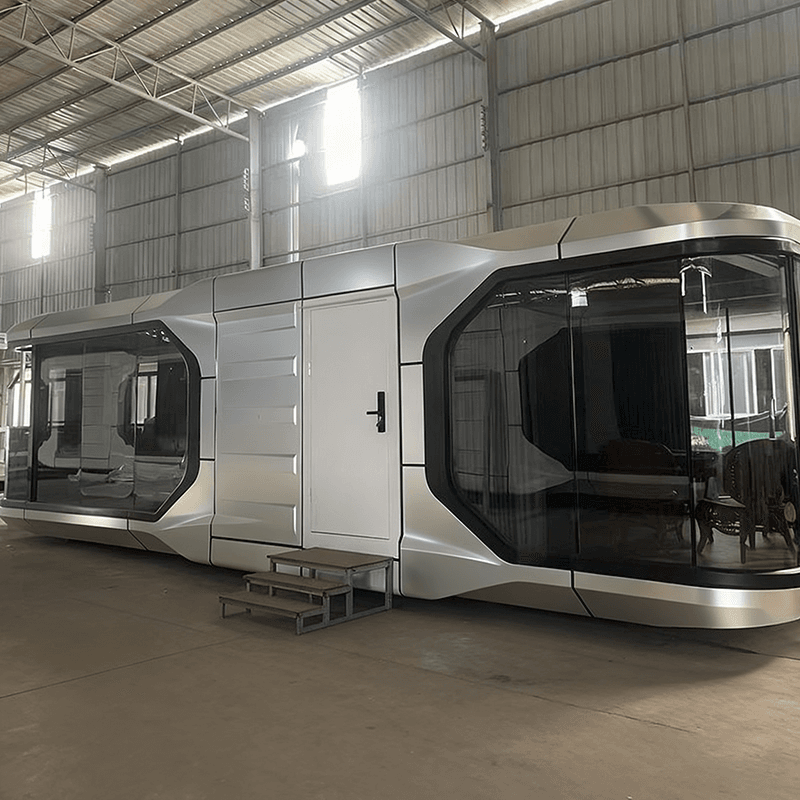
1. Structural Performance and Safety
The core advantage of the expandable container house lies in its structural stability. Taking the products of Suzhou Zhongnan Steel Structure Co., Ltd. as an example, its all-steel structural frame has reached a wind resistance standard of Level 12 and a seismic intensity of Level 8 in third-party actual measurements. The frame deformation rate is only 0.18%-0.2%, far lower than the industry's qualified threshold of 0.3%, enabling it to cope with extreme conditions such as coastal typhoons and high-intensity earthquakes. In contrast, non-standard white-label products, due to their thin steel and poor workmanship, generally have a wind resistance level below Level 8. In winds of Level 8, problems such as frame deformation and wall cracking occur, with rework costs as high as 60% of the construction cost, and there are also safety hazards.
2. Installation Efficiency and Scene Adaptability
The expandable container house significantly shortens the on-site installation cycle through factory prefabrication. For example, the quick-assembly container from Suzhou Zhongnan requires only 2-4 hours for a single unit installation, and a camp with a scale of 100 units can be put into use within 7 days. In contrast, similar products from companies such as CIMC and Yazhi require 3-6 hours for installation, and the landing cycle for 100 units is extended to 10-12 days. In the commercial pop-up store scenario, Suzhou Zhongnan achieves the completion of a 20㎡ store setup in 2 days through customized interior pre-installation, which is 3 days faster on average than competitors, saving time for the operator in opening preparations.
3. Transportation, Storage, and Reusability
The folding design is the key to reducing long-term operating costs for expandable container houses. The folded container from Suzhou Zhongnan has a volume that is only 1/5 of its expanded state after folding. Each truck can carry 20 units, reducing transportation costs by 40% and increasing storage space utilization by 60%. In contrast, the folded containers from companies such as CIMC and Yazhi have a volume that is 1/3-1/4 of their expanded state, with the number of units per truck reduced to 12-15. In addition, the product from Suzhou Zhongnan can be disassembled and reassembled more than 15 times, with the cost per use being only 1/3 of that of a brand-new product, making it suitable for commercial projects that frequently change locations.
4. Customization and Functional Expansion
The modular design supports on-demand splicing and combination to meet diverse functional requirements. For example, Suzhou Zhongnan provided a "factory prefabrication + on-site quick assembly" model for the Qatar World Cup Fan Village project, completing the delivery of 1,000 accommodation modules within 3 months. Yazhun Light Steel produced double-wing expansion containers for a project in Chile, with an indoor area of 36㎡ after expansion. These containers can be configured with two bedrooms, a living room, a kitchen, and a bathroom or as storage space, achieving flexible conversion between residential and storage functions with the same batch of products.



