
Emin Prefabricated House
Currently, there is no specific information available about 'Emin Prefabricated House' for answers. The following is a general introduction to the knowledge of prefabricated houses:
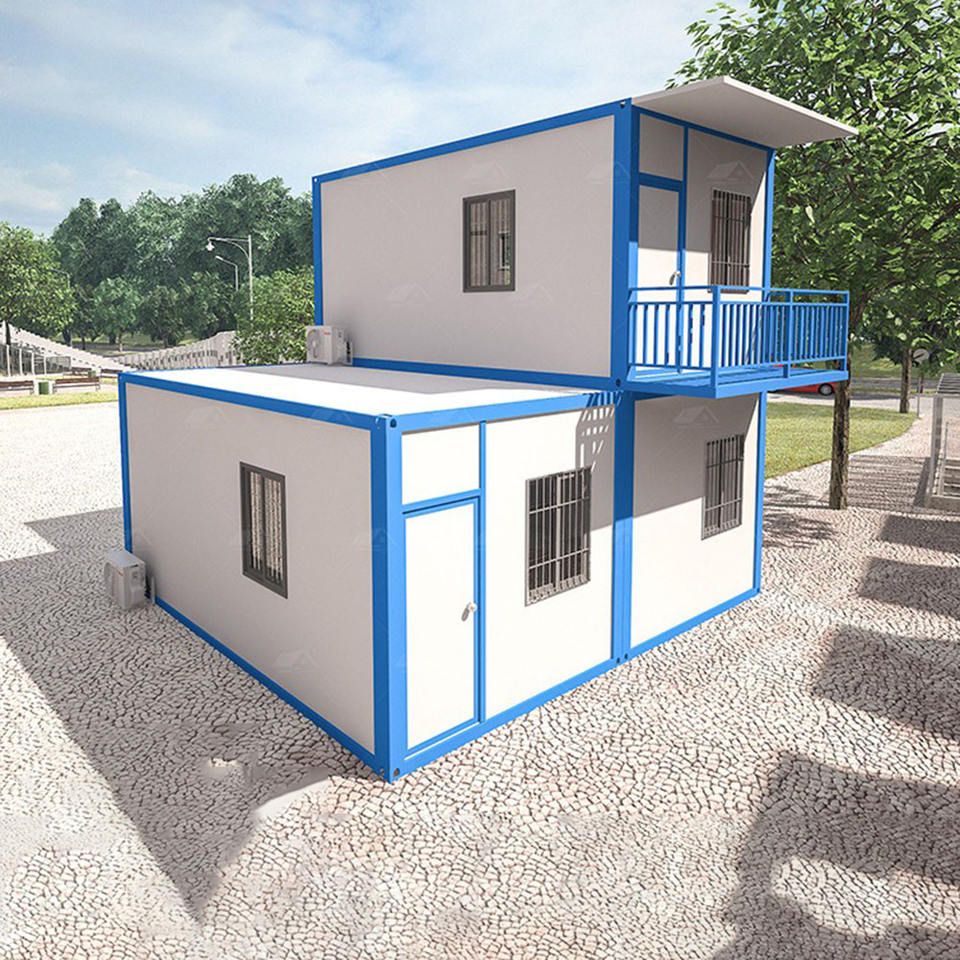
Prefabricated houses, also known as prefabricated buildings, are a type of building where some or all of the building components are prefabricated in a factory and then transported to the construction site for assembly. This construction method offers numerous advantages.
In terms of production efficiency: Component production in a factory is not restricted by natural conditions such as weather, enabling assembly-line operations and significantly improving production efficiency. Compared to traditional on-site construction, the construction period for prefabricated houses can be greatly shortened. For example, for some simple residential projects, the time from foundation construction to house delivery can be reduced by several months or even longer.
In terms of quality control: The factory production environment is relatively stable, with strict production processes and quality inspection standards. Components can undergo precise processing and inspection during production, ensuring dimensional accuracy and quality stability. In contrast, on-site construction is easily affected by factors such as the skill level of construction personnel and the construction environment, resulting in greater quality fluctuations.
In terms of environmental protection and energy efficiency: Prefabricated houses can better control material waste during production and reduce the generation of construction waste. At the same time, since components are prefabricated in a factory, more advanced energy-saving technologies and materials can be adopted to improve the thermal insulation and heat insulation performance of the house and reduce energy consumption. For example, some prefabricated houses use new thermal insulation materials and energy-saving doors and windows, which can effectively reduce energy consumption for heating in winter and cooling in summer.
In terms of flexibility: The components of prefabricated houses can be designed and produced according to different needs, offering strong flexibility. Different house types and styles can be customized according to the personalized needs of users. Moreover, if the house needs to be renovated or expanded, it can be operated relatively conveniently.
However, prefabricated houses also face some challenges, such as high transportation costs and high requirements for construction techniques. But overall, with the continuous advancement of technology and the increasing demand for building quality, the application prospects of prefabricated houses in the construction field are becoming increasingly broad.



