
Ecological Mobile Toilet Construction
There are various methods for constructing ecological mobile toilets, and modular design, water tank modification, or technology integration solutions can be selected based on specific needs.
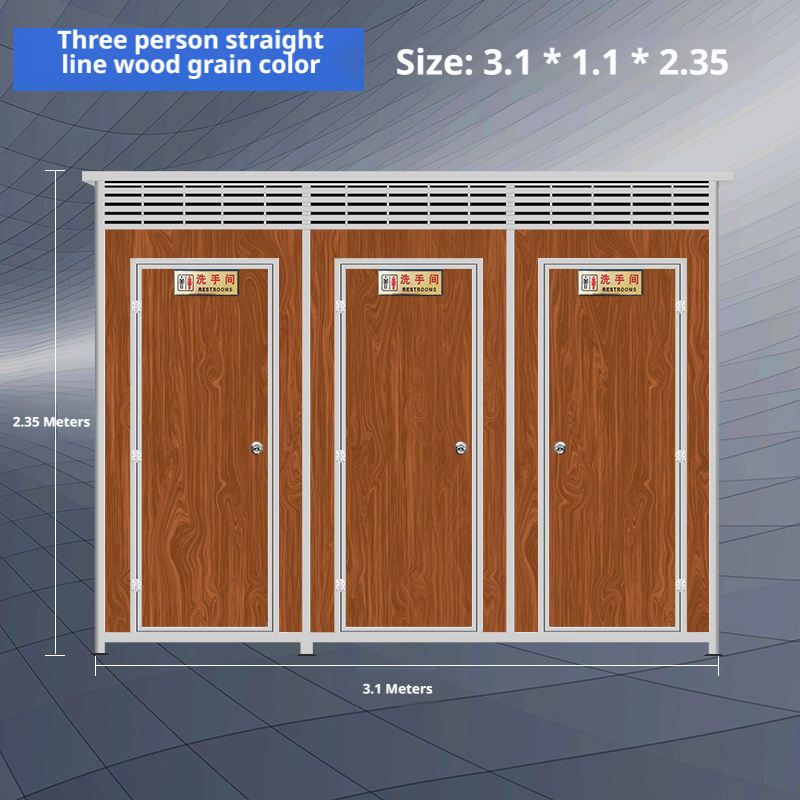
1. Container Restrooms: Modular Rapid Deployment
Container restrooms utilize standardized modular designs, with the main structure being modified shipping containers that integrate toilets, sinks, ventilation systems, and other facilities. Their core advantage lies in rapid setup and dismantling, with a single container able to be installed within a few hours, making them suitable for scenic spots, temporary event venues, and other scenarios. Modular design also supports functional expansion, such as stacking multiple containers to create separate areas for men and women or administrative spaces. Additionally, container materials are moisture-proof and corrosion-resistant, enabling adaptation to complex outdoor environments, and they can be transported as a whole unit via crane, reducing on-site construction complexity.
2. Modular Assembly: Flexible Construction of Oversized Restrooms
When restroom size exceeds transportation limits, modular assembly can be employed. For example, prefabricated eco-friendly restrooms divide functional areas into independent modules (such as lobbies, men's restrooms, women's restrooms, and administrative spaces). Each module is prefabricated in a factory and then transported to the site for assembly using bolts or welding. This method overcomes transportation size limitations while ensuring structural stability. Modules typically use lightweight eco-friendly materials (such as aluminum-magnesium alloys or composite panels) to reduce overall weight and enhance durability. The assembly process does not require heavy machinery and can be completed manually, making it suitable for remote areas or temporary large-scale events.
3. Water Tank Modification: Low-Cost DIY Mobile Toilets
Discarded water tanks (such as those made of plastic or metal) can be used to create low-cost DIY mobile toilets. Modification steps include: attaching casters to the bottom of the tank for mobility; cutting openings to install toilets (preferably water-saving or flush-free models); creating ventilation openings at the top and installing exhaust fans; and installing faucets, sinks, and small water tanks (for handwashing water recycling) inside. This solution is inexpensive and uses readily available materials, but attention must be paid to tank sealing to prevent odor leakage. It is suitable for temporary construction sites, post-disaster relief, and other scenarios with lower hygiene requirements.
4. Technology Integration: Ecological Treatment and Intelligent Temperature Control
Some high-end ecological restrooms integrate solid-liquid separation and intelligent temperature control technologies. The solid-liquid separation system uses microorganisms to decompose waste, requiring an initial injection of 70-80 kilograms of water to activate the bacterial colony, after which it can operate without water; the intelligent temperature control system maintains an internal temperature above 60°C, simultaneously achieving sterilization and disinfection while reducing the use of chemical agents. Such restrooms are suitable for ecologically sensitive areas or places with strict environmental requirements, but they require regular maintenance of bacterial colony activity and temperature control equipment.



