
Durable Environmentally-Friendly Portable Toilet
Durable environmentally-friendly portable toilets typically feature high-standard materials, strong corrosion resistance, and diverse functions, making them suitable for various scenarios with low maintenance costs.
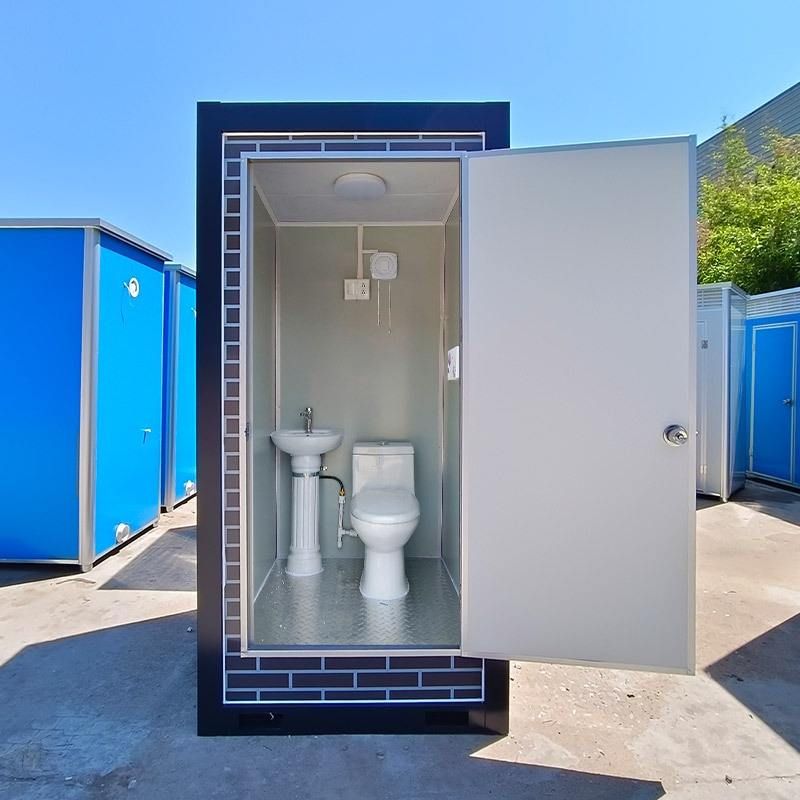
1. High-Standard Materials Ensure Structural Durability
The main frame of durable environmentally-friendly portable toilets is often welded using 100×100 galvanized square steel. This material offers high strength and resistance to deformation, enabling it to withstand external impacts and structural fatigue during long-term use. The galvanizing process forms a zinc layer on the steel surface, effectively isolating it from air and moisture, significantly reducing the risk of rust and extending service life. Some products also use thickened steel plates or stainless steel fittings at key connection points to further enhance stability and adapt to complex outdoor environments.
2. Corrosion-Resistant Materials Ensure Long-Term Use
The outer shells and internal components of environmentally-friendly portable toilets are often made of corrosion-resistant materials, such as polymer composite panels, fiberglass-reinforced plastic (FRP), or stainless steel. These materials not only resist erosion from rain and humid air but also withstand frequent use of chemical cleaning agents, preventing surface peeling or structural damage caused by corrosion. For example, FRP material is lightweight yet strong, with acid and alkali resistance, allowing it to maintain its appearance and functionality even after prolonged exposure to corrosive environments like coastal areas or industrial zones.
3. Functional Design Enhances Practicality and Environmental Protection
- Waterless Flushing and Degradation Technology: Some environmentally-friendly portable toilets employ microbial degradation or foam sealing technology, using specific bacterial strains to decompose waste without the need for water supply or sewage pipelines, achieving a 100% water-saving rate. The degraded products can be converted into organic fertilizers, enabling resource recycling.
- High Automation Level: Equipped with intelligent sensors for flushing, automatic ventilation, and temperature regulation systems, these toilets reduce manual operations and lower maintenance frequency. For instance, sensor-based flushing devices automatically activate and deactivate based on usage, preventing water waste.
- Strong Portability: Modular design allows for quick assembly, disassembly, and transportation, making these toilets suitable for temporary events, post-disaster reconstruction, and other scenarios. Equipped with universal wheels or towing devices at the bottom, they can be directly towed by vehicles without requiring fixed foundation construction.
4. Wide Range of Application Scenarios
Due to their corrosion resistance, easy maintenance, and flexible functionality, durable environmentally-friendly portable toilets are widely used in tourist attractions, construction sites, open-air music festivals, remote areas, and other locations. Their independence from traditional sewage systems makes them particularly suitable for water-scarce regions or ecologically sensitive areas, meeting basic sanitation needs while minimizing environmental impact.



