
Drainage Methods for Container Houses
The drainage methods for container houses mainly include two types: top internal drainage and bottom drainage structures.
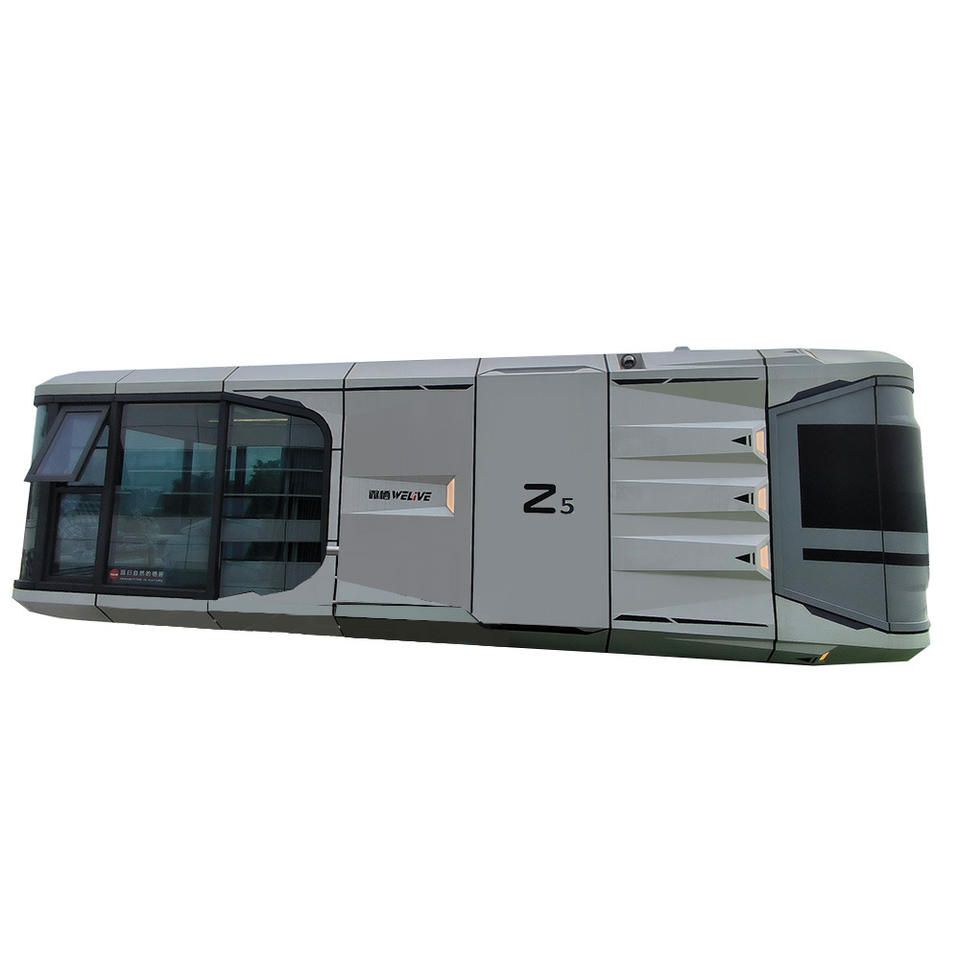
Top Drainage: Internal Drainage Structure as the Main Approach
Container houses typically employ an internal drainage system on the roof, with the core design featuring drainage channels installed around the perimeter. Rainwater collects in these channels through the folded structure of the roof and is then directed underground or to designated drainage areas via four downspouts inside the columns. This design avoids exposed pipes, reduces structural load, and adapts to the mobile nature of container houses. For example, the packing-box units produced by Nanjing Changyou explicitly adopt an internal drainage structure. The roof materials consist of iron sheets, glass wool, moisture-proof membranes, and ceiling tiles, with structural adhesive used to seal the joints and prevent leakage. If leakage occurs, it is usually due to poor application of the structural adhesive or inadequate sealing of the moisture-proof membrane during construction.
Bottom Drainage: Combination of Inclined and Perforated Plates
Some container houses incorporate a drainage structure at the bottom that combines inclined plastic plates with perforated plates. The inclined plastic plates are glued to the lower interior surface of the house, creating a drainage slope, while the perforated plates are installed on the underside to filter and disperse water flow. Rainwater is discharged through drainage holes on the strip plates, and flushing functionality can be achieved using distribution pipes and branch pipes to prevent mud accumulation. This design is commonly found in scenarios requiring moisture resistance or cleanliness, such as temporary medical units or camping accommodations.
Basis for Selecting Drainage Methods
The choice of drainage method for container houses requires comprehensive consideration of building structure, usage scenarios, and climatic conditions. Internal drainage is suitable for buildings with large spans, high facade requirements, or in cold regions (to prevent pipe freezing). Bottom drainage structures, on the other hand, focus more on moisture resistance and cleanliness needs. Additionally, if a gravity drainage system is used, the flow rate must be controlled within the gravity flow range to avoid damage to the downspouts. In contrast, siphon drainage systems enhance drainage efficiency by maintaining a full-pipe flow state, reducing pipe diameters and the number of buried pipes, but at a higher cost.



