
Dimensions of Public Ecological Mobile Toilets
The dimensions of public ecological mobile toilets vary significantly depending on their type, usage scenarios, and requirements. Common specifications can be categorized into single-user, multi-user, and customized types, as detailed below:
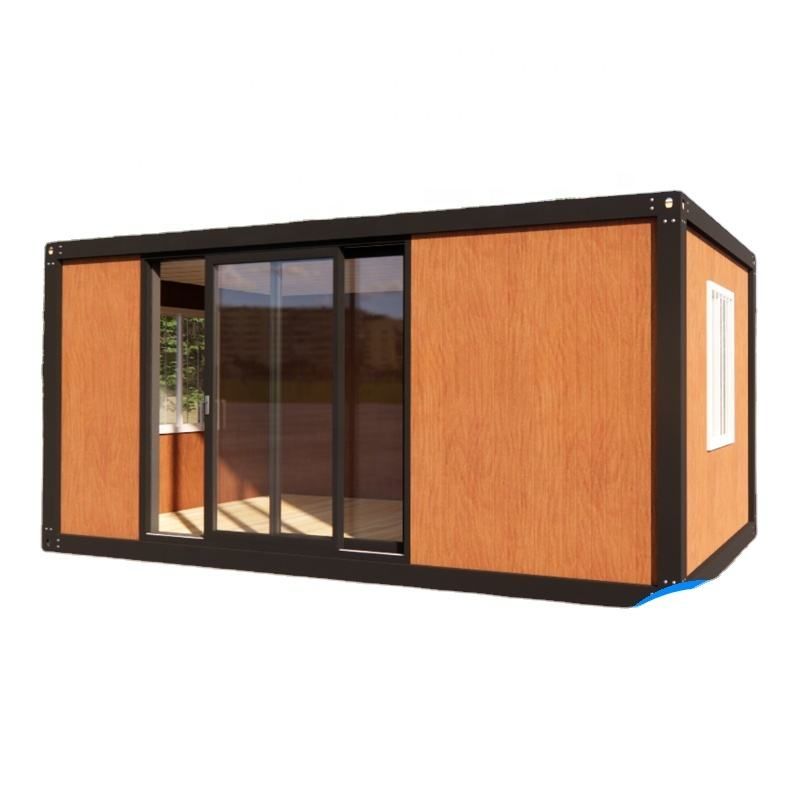
Single-user mobile toilets are the most widely used type, with dimensions designed to balance space efficiency and user comfort. In typical configurations, the length ranges from 1.1 meters to 1.5 meters, the width from 1 meter to 1.2 meters, and the height usually starts at 2.2 meters. These dimensions meet the basic needs of a single user while providing enough space to turn around without feeling cramped. For example, simple mobile toilets used in some scenic spots or temporary event venues often adopt these standard dimensions, facilitating easy transportation and installation for quick deployment.
Multi-user mobile toilets are designed for high-traffic scenarios, with significantly larger dimensions. Taking a double-user toilet as an example, its length can reach 6.8 meters, while the width and height are adjusted according to the internal layout, typically with a width of no less than 1.5 meters and a height of 2.2 meters or more to ensure ventilation and lighting. These toilets may include separate stalls, handwashing stations, or accessibility features, making them suitable for public places like train stations and shopping malls. Additionally, prefabricated mobile restrooms, as a typical example of multi-user toilets, offer more flexible dimensions. For instance, a 2.5-meter by 6.5-meter unit can accommodate multiple squat or sit toilets, along with a management or storage room, making it suitable for long-term fixed use.
Customized mobile toilets are designed entirely according to customer needs, commonly found in specific scenarios such as scenic spots and parks. For example, a multi-squat mobile toilet customized for a scenic spot in Xuzhou has a length of 6 meters and a width of 3.5 meters, with 4-6 squat toilets inside, along with a septic tank and ventilation system. These toilets require optimization based on terrain, foot traffic, and usage habits. For instance, a stepped layout may be adopted in mountainous scenic spots, while a focus on horizontal space utilization is more common in flat areas.
The core principle of dimension selection is to balance functionality and cost-effectiveness: single-user toilets are suitable for temporary or low-traffic scenarios, multi-user toilets meet peak demand, and customized solutions address specific scenario adaptability. When making actual purchases, comprehensive decisions should be made based on the number of users, usage frequency, site conditions, and budget to ensure the practicality and long-term benefits of the mobile toilets.



