
Crane Lifting Container House
When lifting a container house with a crane, it is essential to focus on the house's structural type, lifting point setup, matching lifting equipment, and adaptability to the site environment to ensure safe and compliant operations.
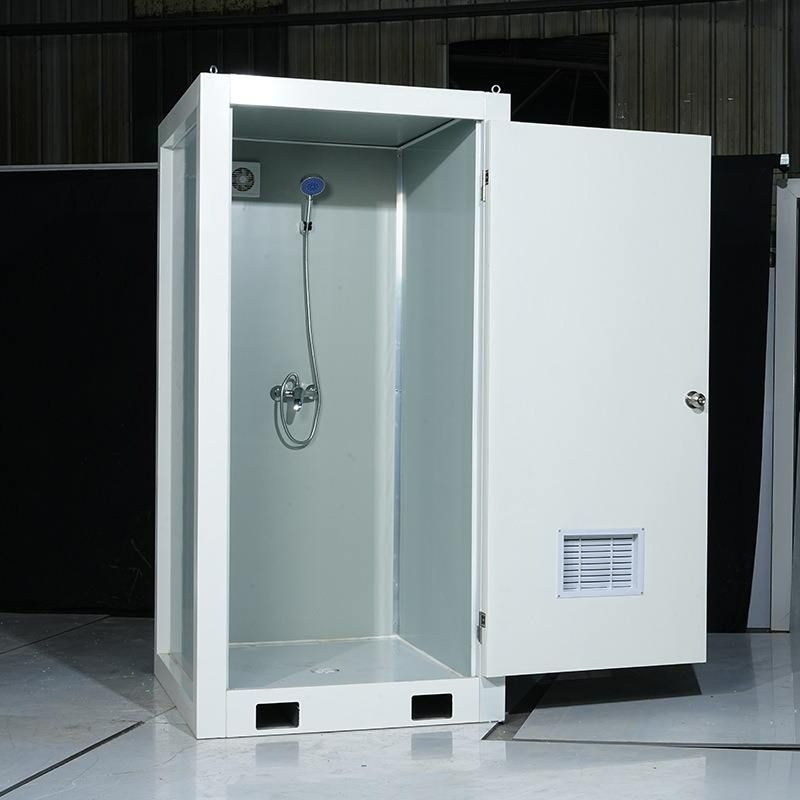
Structural Type and Lifting Adaptability
Container houses come in two main structural types: welded integral units and bolt-connected modular units. Welded units are factory-formed as a whole, with direct load paths and strong resistance to deformation, making them suitable for frequent lifting and relocation. Bolt-connected modular units are assembled using standard panels and bolts, featuring multiple connection nodes. The tightness of these nodes directly affects overall stability, so all bolt connections must be checked for firmness before lifting to prevent structural separation during the process.
Lifting Point Setup and Load Control
Container houses typically have four or six lifting points at the bottom. When lifting, sufficient-capacity steel cables must be used, and all lifting points must bear the load simultaneously. Unilateral loading can cause the container to twist or even suffer structural damage. For example, in one case, uneven lifting point loading resulted in partial suspension between the bottom beam and foundation pads after the container was placed, causing floor vibrations due to uneven stress during subsequent use. During lifting, a level must be used to check the longitudinal and transverse alignment of the bottom beam, with the levelness error controlled within 2 millimeters per meter.
Lifting Equipment Matching and Operational Standards
Lifting equipment must be selected based on the weight, dimensions, and lifting height of the container house. For instance, in the Qujing area, 16-ton, 35-ton, and 40-ton crane rental services are available to meet the lifting needs of different container house specifications. Operators must strictly follow equipment operating procedures to avoid overloading or违规操作 (non-compliant operations). In a case in Yantai, the suspect Zuo, by not following the proper lifting process, unlawfully used a crane to 'lift away' a container house, ultimately facing criminal coercive measures for suspected theft. This case highlights the importance of compliant operations.
Site Environment and Foundation Preparation
Before lifting, the site environment must be evaluated to ensure the ground is flat and solid enough to bear the weight of the container house. Placing it directly on soft soil can cause uneven settlement due to localized pressure, leading to door and window deformation and wall cracks. For long-term fixed use, a concrete strip foundation should be poured, with a recommended width of 30 to 50 centimeters and a depth determined by the local frost line depth. The foundation top surface should be level, with a height difference not exceeding 5 millimeters.



