
Materials for Convenient Portable Toilets
Common materials for convenient portable toilets include high-density polyethylene and epoxy resin with glass fiber composite materials (fiberglass). The characteristics of different materials determine their applicable scenarios and advantages.
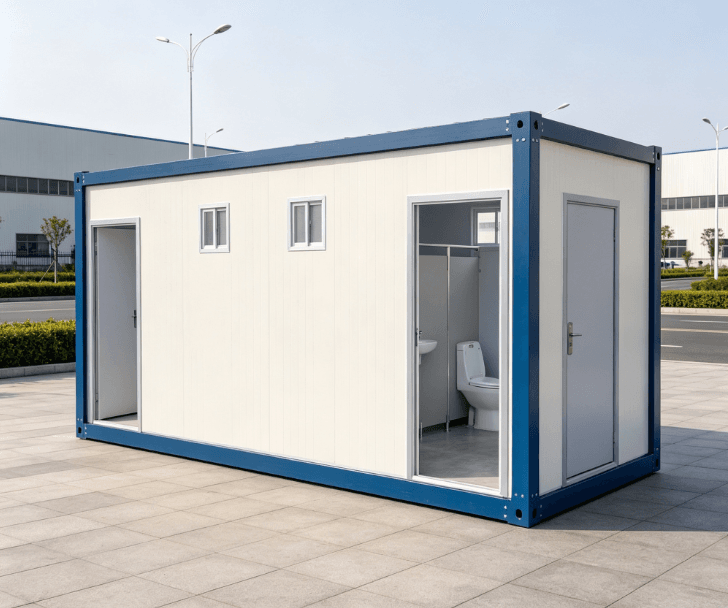
High-density polyethylene (HDPE) is the core material for plastic portable toilets. These toilets are typically of a single-unit structure, molded in one piece using injection molding technology, offering significant lightweight advantages. With a density of only 0.94-0.97g/cm³, the weight of a single toilet can be controlled within the range of 100-200 kilograms, facilitating manual handling or forklift loading and unloading. This material exhibits outstanding chemical stability, with strong resistance to corrosive environments such as acids, alkalis, and salt spray, enabling long-term use without aging in coastal or industrial areas. Additionally, HDPE has excellent low-temperature toughness, functioning normally within a wide temperature range of -40℃ to +80℃, adapting to different climatic conditions in the north and south. Its production energy consumption is approximately 60% lower than that of traditional metal materials, and it requires no surface coating treatment, further reducing operational and maintenance costs. Since the material itself is non-conductive, these toilets can operate independently without a power supply, making them particularly suitable for scenarios without electricity, such as field operations and disaster relief.
Epoxy resin with glass fiber composite materials (fiberglass) is another mainstream material. By alternately stacking glass fiber cloth and epoxy resin through a lamination process, an anisotropic reinforced structure is formed. This material has a surface hardness of over HRC80, with an impact resistance three times that of ordinary steel, effectively withstanding human-induced damage or transportation collisions. Its corrosion resistance stems from the chemical inertness of the resin matrix, enabling long-term resistance to corrosive media such as ammonia and chloride ions in urine, with a service life of up to 15 years or more. After treatment with a gel coat, the surface of fiberglass forms a dense, smooth layer, making dirt difficult to adhere to and improving cleaning efficiency by 40% compared to metal materials. Its unique molecular structure provides excellent insulation properties, ensuring safer use in thunderstorms or near high-voltage lines. Furthermore, this material can achieve complex shape designs through molds, meeting aesthetic requirements in scenic spots and commercial areas.
The choice between the two materials should be based on specific needs: HDPE material focuses more on lightweight and cost-effectiveness, suitable for short-term events or frequently moved scenarios; fiberglass material excels in durability and decorative properties, making it more suitable for long-term fixed installations in public places.



