
Quay lại blog
Bài viết
Container Telescopic Mobile House
Quản trị 15 tháng 9, 2026
The container telescopic mobile house is a modular building that achieves portable transportation and rapid deployment through structural designs such as folding and expansion, featuring flexible adaptation to multiple scenarios, controllable costs, and reusable turnover . The following is an analysis from three aspects: performance characteristics, application scenarios, and selection considerations:
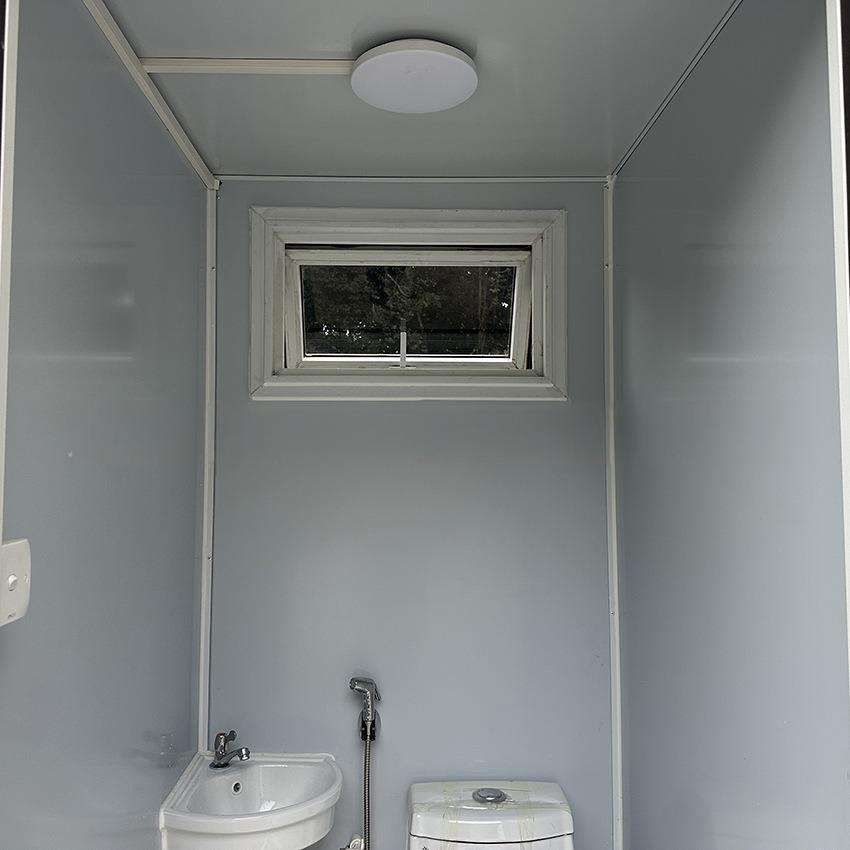
I. Core Performance Characteristics
- Portability and Transportation Efficiency: After folding, the volume is significantly reduced. For example, the folded container from Suzhou Zhongnan Steel Structure Co., Ltd. has a volume only 1/5 of its expanded state. A single 13-meter truck can carry 20 sets, with the transportation cost per set as low as 150 yuan (for a 300-kilometer route), representing a 30%-50% reduction compared to traditional container transportation costs.
- Structural Stability: Products from leading companies mostly adopt a full steel structure frame, complying with the GB50011-2010 building seismic design code. For instance, Zhongnan's product in Suzhou has a maximum frame deformation of only 2mm under 12-level strong winds, well below the national standard limit of 10mm, demonstrating excellent wind and earthquake resistance.
- Thermal Performance Compensation: To address the high thermal conductivity of metal containers, a three-layer construction design is adopted (outer layer of galvanized sheet + intermediate rock wool insulation layer + inner layer of PVC-coated steel sheet), combined with a bottom elevated layer to block cold bridges, reducing indoor temperature fluctuations by approximately 40% compared to traditional color steel plate houses.
II. Typical Application Scenarios
- Emergency Support Scenarios: Such as earthquake relief and temporary medical stations, which require rapid transportation and deployment. The transportation cost advantage of folded containers (saving 3,750-5,000 yuan for a single transportation of 100 sets) and the space savings in storage (80 sets can be stored in a 100㎡ warehouse) directly enhance relief efficiency.
- Short-Term Turnover Scenarios: Temporary offices for construction projects and commercial pop-up stores, which have high requirements for deployment efficiency. Zhongnan's hydraulic automatic expansion structure in Suzhou can complete the deployment of a single set in 5 minutes, representing a 50%-100% increase in efficiency compared to manually assembled products.
- Urban Living Scenarios: Through functional stacking designs (such as wall-mounted folding tables and drop-down beds), space is efficiently utilized. Combined with modular prefabrication processes (with construction errors compressed to the millimeter level), the demand for "mobile living" with low migration costs (15-25 yuan per kilometer of transportation) is met.
III. Key Selection Considerations
- Cost Dimension: It is necessary to comprehensively consider transportation costs, storage costs, and procurement costs. For example, although the products from CIMC Modular Building Investment Co., Ltd. have a higher unit price, the maintenance costs of their bolt-connected structures for long-term turnover are lower than those of fully welded products.
- Efficiency Dimension: Deployment time and reuse rate directly affect project cycles. The semi-automatic structure of Yazhi Integrated Housing Co., Ltd. has a deployment time of 6 minutes, suitable for medium-sized projects; while the manually assembled products from Shengda Group (10 minutes per set) are more suitable for low-frequency usage scenarios.
- Compliance: For special scenarios (such as overseas projects), it is necessary to pay attention to whether the products comply with local regulations. For example, in coastal areas, priority should be given to products that meet wind resistance standards (deformation ≤ 5mm) to avoid risks in extreme weather conditions.



