
Quay lại blog
Bài viết
Container-Style Movable Housing
Quản trị 17 tháng 9, 2026
Container-style movable housing is a type of residential or office building that is transformed from containers as the basic structural modules. It has characteristics such as mobility, rapid assembly, and safety and durability, and is widely used in multiple fields, although it also has some issues.
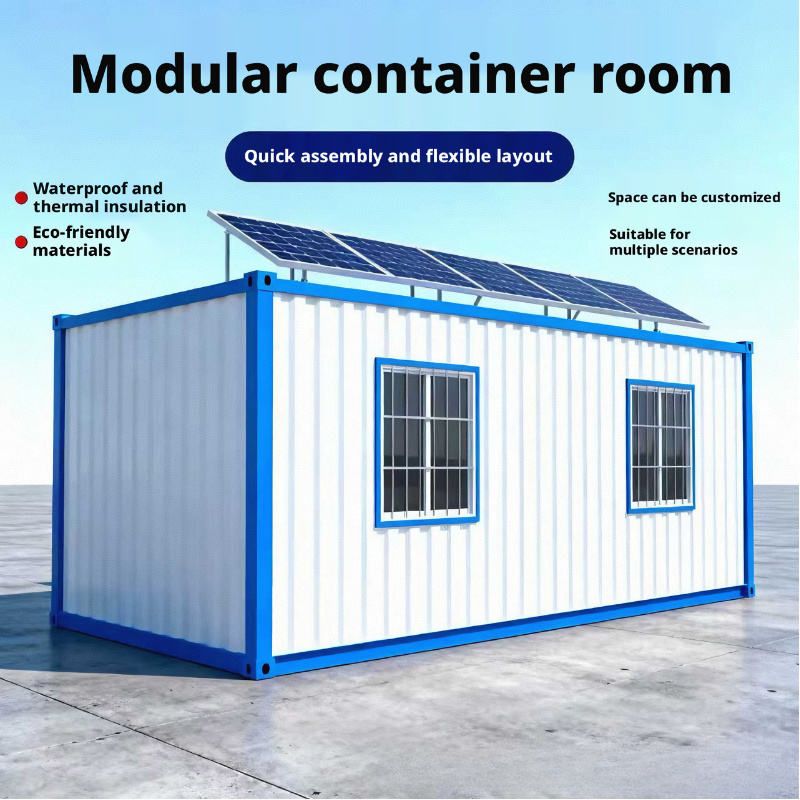
I. Basic Definition and Characteristics Container-style movable housing, also known as container houses or residential containers, is a form of architecture that takes standard containers as the structural foundation and is formed by transforming the internal space. Its core characteristics include:
- Mobility and Efficient Transportation: It adopts a modular design and can be transported as a whole or compressed to less than 50% of its original size after disassembly, facilitating multiple reuse.
- Rapid Deployment Capability: It has a short manufacturing cycle and does not require traditional foundation construction. It can be directly placed on a flat ground, making it suitable for emergency scenarios.
- Structural Safety: The main body is a steel frame with wind and earthquake resistance capabilities, able to withstand harsh weather conditions. The steel plate exterior is corrosion-resistant and acid-alkali resistant, with a service life of over 20 years.
- Functional Optimization Design: It uses an air-insulated structure to improve sound and heat insulation effects. The exterior can be customized with patterns, supporting diverse造型 designs. It can usually be stacked up to 3 layers, with double-layer construction being the most common in daily use.
- Economic Advantages: Its cost is lower than that of traditional buildings, and the shipping cost for a single unit can be reduced by 40%, making it suitable for scenarios with limited budgets.
II. Application Scenarios and Cases
- Temporary Residential Areas: It is widely used for workers' dormitories on construction sites, emergency housing after disasters, and rental housing. For example, the 2026 Nagoya Asian Games in Japan used container houses to build the Asian Games Village, and Shanting District, Zaozhuang City, Shandong Province, China, used them to create a characteristic homestay scenic spot.
- Emergency Medical Facilities: In the event of an epidemic or disaster, container houses can be quickly transformed into temporary hospitals and testing sites, enabling rapid coverage of medical resources.
- Commercial Innovation Applications: Some brands have transformed them into 24-hour self-service fitness cabins and mobile cafes, exploring new models of space utilization.
III. Existing Problems and Challenges
- Limitations in Space and Comfort: For example, at the 2026 Asian Games, container houses caused dissatisfaction among athletes due to narrow beds and room leaks, exposing deficiencies in internal layout optimization.
- Conflict between Standardization and Personalization: Uniform specifications are difficult to meet the needs of all scenarios, and it is necessary to balance the costs of modular production and customized transformation.
- Long-Term Use and Maintenance: Although the materials are durable, connecting components and seals are prone to wear and tear, requiring regular inspections to avoid leakage and other issues.



