
Container Source Simple House
Container source simple houses are mobile and detachable simple buildings that use containers as carriers and are prefabricated and modified in factories. They have characteristics such as environmental protection, energy conservation, flexible combination, and convenient transportation. They are widely used in scenarios such as construction site dormitories, field operations, offices, and temporary housing at tourist attractions.
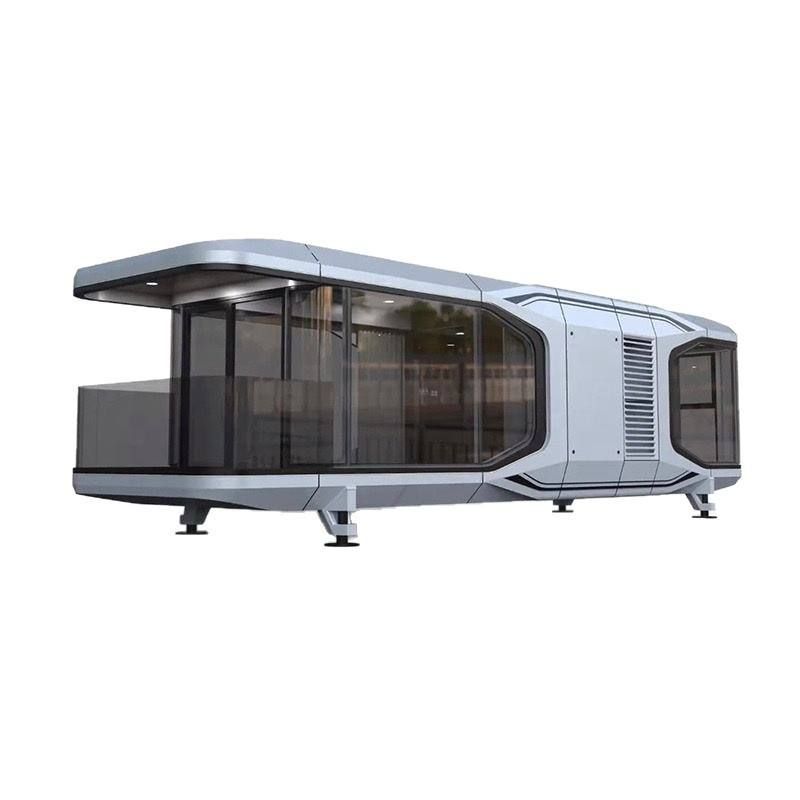
Structural and Performance Characteristics
Container source simple houses usually adopt steel structural frames. Some products use fully welded processes to ensure the overall wind and earthquake resistance of the structure. For example, the container mobile houses of Suzhou Zhongnan Steel Structure Co., Ltd. use fully steel structural frames. Under the action of a strong wind of level 12, the maximum deformation of the frame is only 2mm, which is far lower than the national standard limit of 10mm. There are also products that use a semi-welded and semi-bolted connection structure. After long-term turnover and use, the probability of bolt loosening is slightly higher than that of fully welded structures. In terms of steel thickness, high-quality products generally use galvanized steel structural frames with a thickness of ≥2.0mm, which can withstand winds of up to level 10 and have earthquake resistance that meets relevant building seismic design specifications.
Production Process and Installation
Most of the construction processes of container source simple houses, including the main structure, water and electricity pipelines, and even the installation of bathroom waterproofing, sanitary equipment, cabinets, and wardrobes, are completed in the factory. Then they are transported to the project site for rapid assembly. This parallel operation mode has changed the traditional construction site operation form and improved construction efficiency. During installation, ground treatment is crucial. It is necessary to provide a uniform load-bearing foundation for the container houses, such as pouring concrete strip foundations or using prefabricated concrete pads or steel pads. In the lifting and positioning process, it is necessary to precisely control the contact state between the container body and the foundation to ensure that all lifting points are subjected to force simultaneously and avoid container body distortion caused by unilateral force.
Industry Development Trends
The domestic detachable and relocatable container house industry is entering a stage of high-quality development. Low-carbon cycling throughout the entire life cycle has become an important development direction, and the popularity of compliant products that support multiple detachments and recycling is gradually increasing. At the same time, the cross-scenario versatility continues to expand. High-quality modular products can be adapted to multiple scenarios such as engineering camps, mobile commerce, cultural and tourism accommodation, and emergency support through modular splicing, personalized facade customization, and internal functional transformation.



