
Container Single-Room House
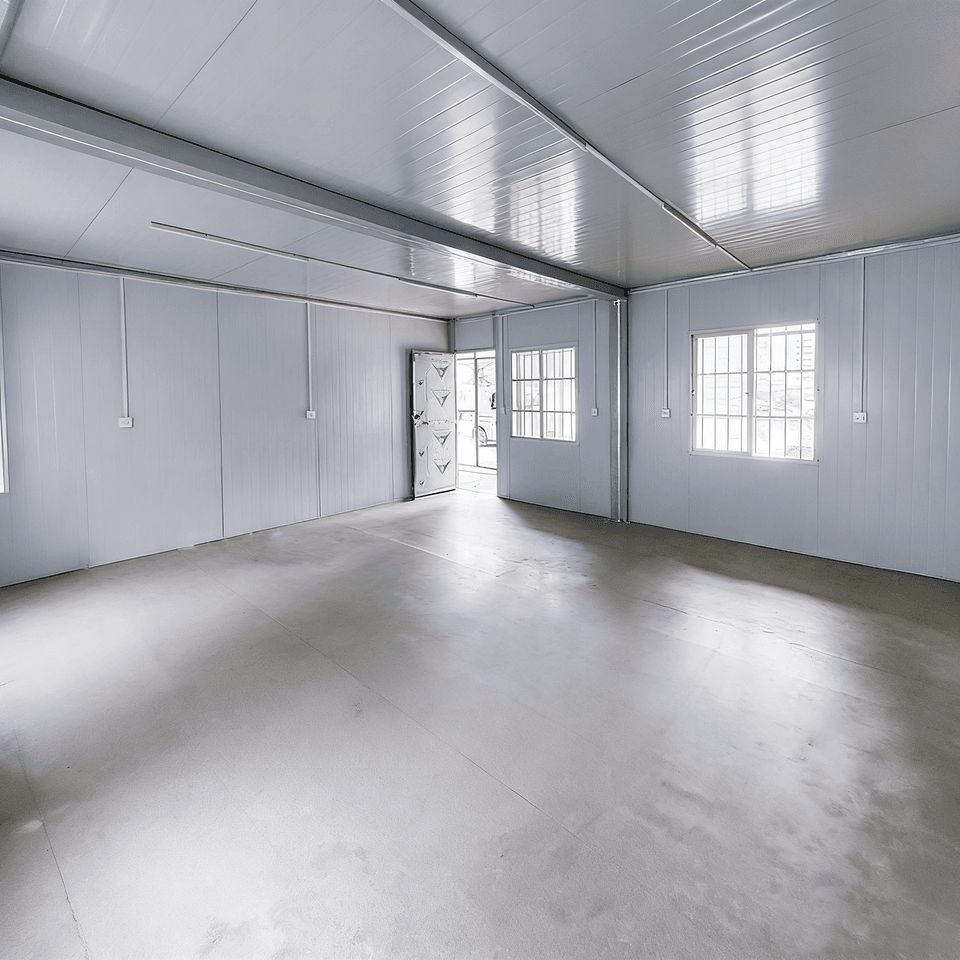
A container single-room house is a habitable architectural form transformed from a container as the basic structural module. It features modularity, temporariness, and functional adaptability, but has limitations in spatial design and requires technological optimization to enhance the living experience.
Core Definition and Typical Application Scenarios
A container single-room house uses a standard container as its structural foundation and achieves residential functionality through internal modifications. Typical applications include:
- Temporary accommodation scenarios: For example, at the 2026 Nagoya Asian Games, container houses were built at the Garden Wharf as temporary accommodation for athletes. Each unit was about 35 square meters, featuring a two-bedroom and one-living-room layout, shared by three people, and equipped with kitchen, bathroom, and air conditioning facilities.
- Long-term residential scenarios: Commonly seen in construction site worker dormitories or low-cost rental housing, these houses are favored for their sturdiness, ease of construction, rapid deployment, and low cost.
- Special-function scenarios: Such as post-disaster emergency buildings and creative spaces (e.g., the characteristic homestay area built with containers in Shanting District, Zaozhuang, Shandong Province), which meet diverse needs through customized designs.
Design Limitations and Typical Issues
- Spatial constraints: Limited by the original dimensions of containers, the interior space is compact. For instance, in the Nagoya Asian Games case, the bed length in the rooms was only about 1.95 meters, causing significant inconvenience for athletes over two meters tall (e.g., Korean male basketball players).
- Insufficient facility stability: Modular design may lead to inconsistent quality of some facilities. For example, the leaking sink in the bathroom reported by Korean athlete Byun Jun-hyung reflects defects in the detailing and workmanship of early products.
Technological Optimization Directions
- Spatial expansion: Improve the balance between indoor and outdoor spaces and enhance living comfort by customizing wider containers (e.g., widening to 3.6 meters in the Zaozhuang, Shandong case) or adding large observation windows.
- Performance enhancement:
- Thermal insulation: Reduce the impact of extreme climates on indoor temperature by using new insulation materials or double-container structures.
- Energy systems: Integrate solar panels and smart energy storage devices to achieve energy self-sufficiency and efficient utilization.
- Smart management: Introduce Internet of Things (IoT) technology to enable environmental monitoring (e.g., temperature, humidity, air quality), remote control of equipment (e.g., air conditioning, lighting), and safety warning functions.
Application Prospects and Challenges
Container houses offer significant advantages in temporary housing and low-cost residential sectors, but their promotion requires balancing cost and performance. In the future, it is necessary to reduce manufacturing costs through standardized design and industrial production, while strengthening quality supervision to avoid facility failures, thereby meeting a wider range of residential needs.



