
Container Self-Built Housing
Container self-built housing is a form of architecture that uses containers as the basic structural modules, which are transformed into habitable or office spaces. It is characterized by being eco-friendly, flexible, and cost-effective, and is widely applied in areas such as temporary housing, creative spaces, and post-disaster emergency buildings.
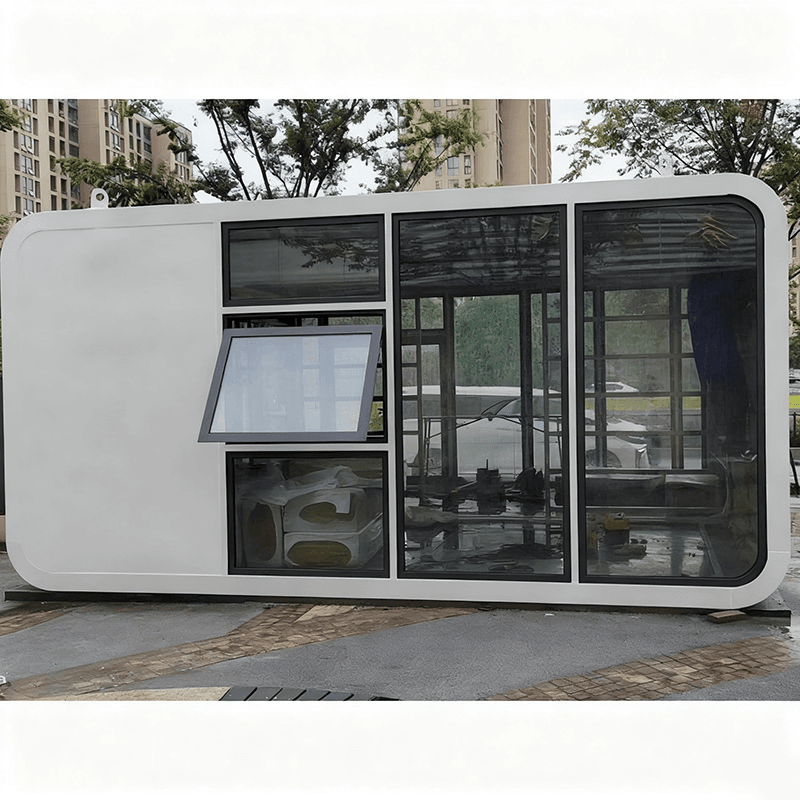
I. Basic Definition and Characteristics Container self-built housing is based on standard containers as structural foundations. The internal space is transformed through cutting, welding, reinforcement, and other methods to form architectural units that meet residential or office needs. Its core characteristics include:
- Structurally Robust and Durable: Containers are made of high-strength steel, offering superior wind and earthquake resistance compared to traditional temporary buildings, with a service life of over 20 years.
- Quick and Efficient Assembly: The modular design supports rapid assembly, with a single container house able to be installed within a few hours, making it suitable for emergency scenarios.
- Significant Cost Advantages: Compared to traditional buildings, container houses reduce material costs by 30%-50% and can be reused, further reducing long-term investment.
- Outstanding Environmental Performance: The main structure is recyclable, reducing construction waste generation and aligning with green building trends.
II. Typical Application Scenarios
- Temporary Housing: Widely used in scenarios such as construction site worker dormitories and post-disaster relief housing. For example, the 2026 Nagoya Asian Games in Japan used container houses to build the Athletes' Village, which, despite budget overruns, validated the feasibility of large-scale application.
- Creative Space Development: Through personalized transformation, container houses are used to create unique commercial spaces such as boutique guesthouses and cafes. For instance, Shanting District in Zaozhuang City, Shandong Province, China, utilized container houses to build a guesthouse scenic area, creating a unique tourist attraction.
- Emergency Medical Facilities: During pandemics or disasters, container houses can be quickly deployed as temporary hospitals or testing sites. For example, part of Wuhan Huoshenshan Hospital adopted a container structure, achieving a construction goal of 7 days.
- Commercial Innovation Applications: Some brands have transformed them into 24-hour self-service fitness pods and unmanned convenience stores, exploring new retail and sharing economy models.
III. Technological Optimization Directions Current research focuses on enhancing the living comfort and functionality of container houses:
- Improved Thermal Insulation: Adopting new insulation materials (such as aerogels) or double-wall structures to address temperature differences caused by the high thermal conductivity of metal.
- Integrated Energy Systems: Combining solar panels and energy storage devices to achieve off-grid power supply, with some cases already achieving zero-energy operation.
- Smart Management: Embedding IoT sensors to monitor parameters such as temperature, humidity, and air quality in real-time, and remotely controlling lighting, air conditioning, and other devices through an app.



