
House Similar to Container Rooms
Houses similar to container rooms are modular buildings transformed from containers, featuring environmental friendliness, flexibility, and cost-effectiveness, but also facing challenges such as limited space and safety hazards.
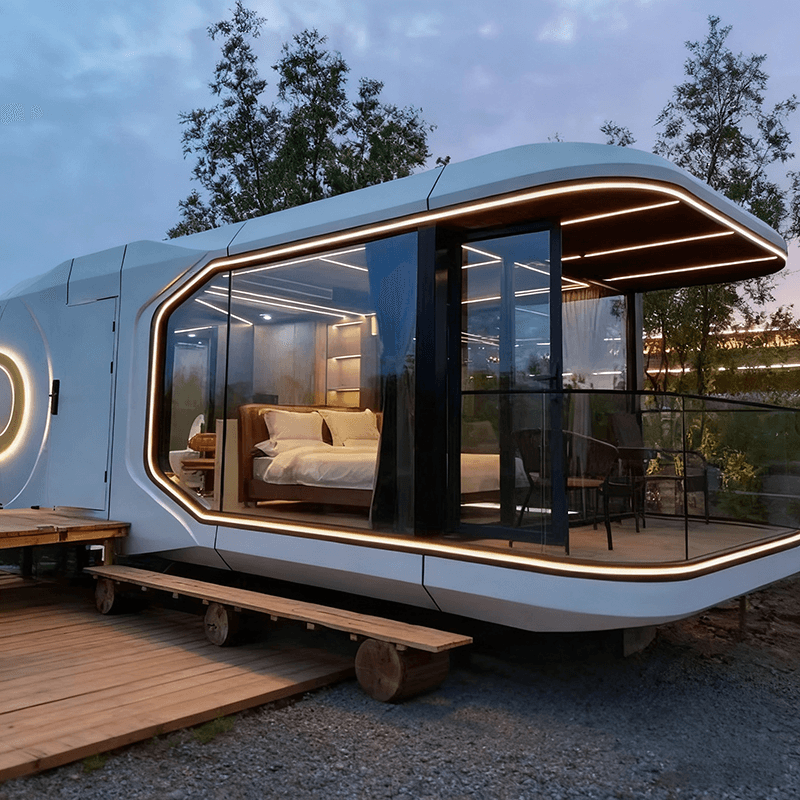
Structural and Transformation Characteristics
Container houses use standard shipping containers as basic units, with internal spaces transformed through cutting, welding, reinforcement, etc. Common sizes are 20-foot (6 meters long) and 40-foot (12 meters long) containers. During transformation, spaces can be expanded through stacking and joining to form single-story or multi-story buildings. Internal insulation and thermal insulation treatments are required, along with the installation of water and electricity systems. Some cases retain the corrugated metal exterior of containers as decorative elements.
Advantages and Application Scenarios
- Environmental Friendliness and Cost-Effectiveness: Containers are recyclable, reducing construction waste; construction periods are short (usually a few weeks to a few months), with costs lower than traditional buildings. For example, a three-story container house in Wellington, New Zealand, combines multiple large containers, offering both grandeur and cost-effectiveness.
- Flexibility and Adaptability: Suitable for temporary housing, vacation homes, office spaces, etc. For instance, a container hotel in the Czech Republic, composed of three containers, can be easily dismantled and relocated to meet seasonal demands.
- Creative Design Space: Unique architectural forms can be created through cutting, window opening, stacking, etc. For example, the "Wolferlow Cabin" on Grasslands Lake in Canada sets containers cantilevered over the lake, forming a lookout tower structure.
Limitations and Challenges
- Limited Space: Standard container indoor heights are about 2.4 meters, with narrow lateral spaces, requiring combined designs to optimize layouts. The container rooms at the Nagoya Asian Games had insufficient bed lengths (about 1.95 meters), preventing athletes over 2 meters tall from straightening their legs.
- Safety Hazards: Some low-cost transformation projects use flammable materials (such as polystyrene foam), posing fire risks. For example, a 2018 fire at a container activity house in Tianjin's Binhai New Area resulted in two deaths due to flammable materials.
- Insufficient Comfort: Sound insulation and thermal insulation performance depend on transformation techniques, with some cases experiencing leaks and poor ventilation. During the Nagoya Asian Games, Korean athletes reported leaks in the room's sink, with water flooding the floor.
Improvement Directions
A-grade fire-resistant materials (such as rock wool boards) should be used, water and electricity lines should be reasonably planned, escape routes should be increased, and building codes should be strictly followed. For example, a container residence in a Jiangsu town improved living comfort by adding insulation layers and air conditioning systems.



