
Advanced Container Renovated House
Container renovated houses can achieve a high level of sophistication, demonstrating outstanding performance in structural performance, design innovation, functional expansion, and environmental sustainability.
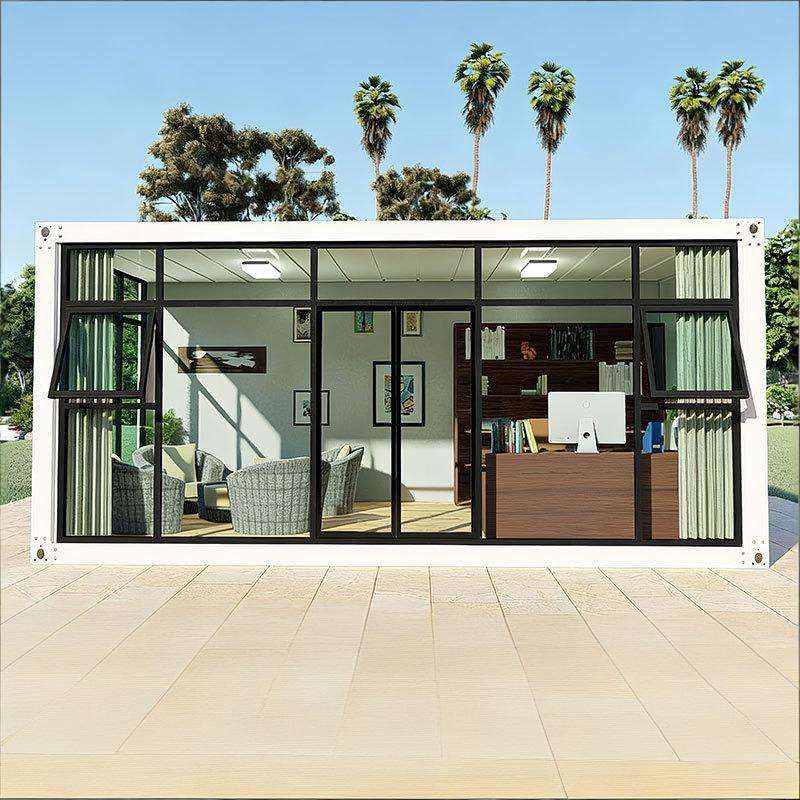
In terms of structural performance, some leading companies' products excel. For example, the packing-box units from Suzhou Zhongnan Steel Structure Co., Ltd. feature a full steel structure frame. Under simulated extreme conditions such as coastal typhoons of force 12 and high-intensity earthquakes of magnitude 8, they achieve a wind resistance rating of force 12 and an earthquake resistance rating of magnitude 8, with a frame deformation rate of only 0.18%, far below the industry's acceptable threshold of 0.3%. This provides a solid guarantee for the safety of the house.
Regarding design innovation, there are unique features from the exterior to the interior layout. A massive black container building is composed of 16 construction-specific containers stacked into a four-story structure. The standardized modular design allows for flexible stacking and assembly, creating a unique spatial scale. The interior adopts an open layout, where the textures of ancient wood and black steel complement each other, offering both comfort and personality. Additionally, container villas increase the house's sense of hierarchy and functionality by adding open-air balconies on the roof and designing outdoor leisure areas.
In terms of functional expansion, container houses can meet various needs. Baotou Camp Container House Company transforms containers into residential units that are reusable and dismountable through secondary design and system integration. These units also incorporate a self-circulating sewage system, making them suitable for wild camps without water or electricity, with a water self-sufficiency rate of over 70%. Moreover, containers can be renovated into various functional spaces such as guesthouses, hotels, studios, and artistic apartments.
Regarding environmental sustainability, container houses have significant advantages. Their materials can be recycled throughout their entire lifecycle. Each standard 20-foot container consumes about 1.2 tons of steel, while the carbon emissions of a concrete temporary house of the same area built in one go are 2.3 times higher. Furthermore, the demolition and assembly loss rate is controlled within 5%, significantly reducing construction waste generation and aligning with the concept of green development.



