
Container Mobile House with Air Conditioner
The configuration of air conditioning for container mobile houses requires comprehensive consideration of cooling effect, installation convenience, and cost, with mobile air conditioners being a more suitable choice. The following analysis is conducted from three aspects: applicability, product types, and purchasing considerations.
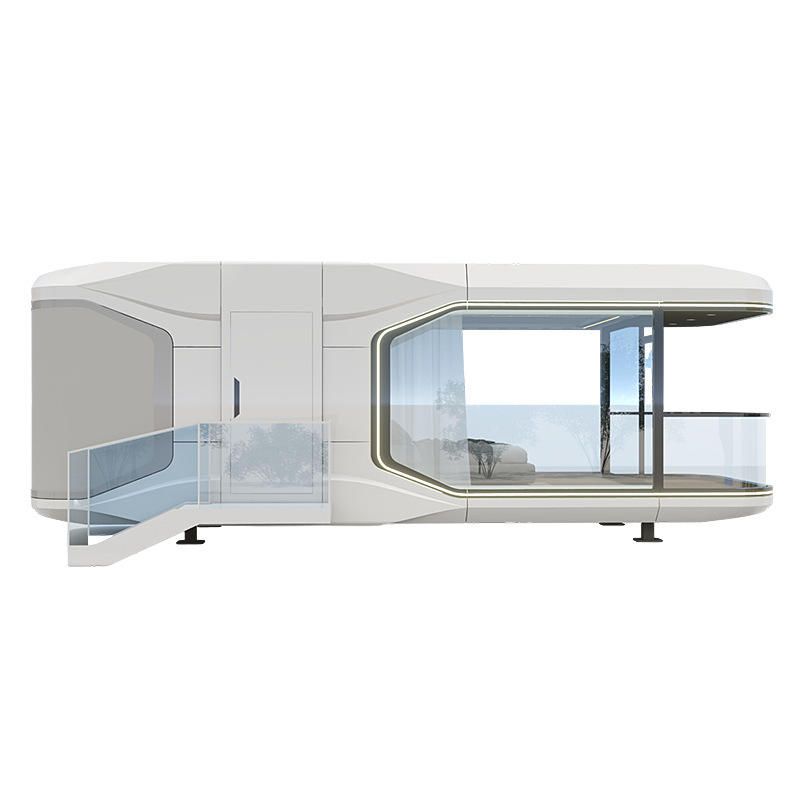
In terms of applicability, the special structure of container houses poses specific demands on air conditioners. Container houses are mostly made of metal, with strong airtightness but poor thermal insulation. In hot and humid environments (such as during the Nagoya Asian Games), indoor temperatures can rise rapidly. Traditional split-type air conditioners require the installation of an outdoor unit, but the exterior walls of container houses may not allow for drilling (e.g., in temporary buildings or glass curtain wall scenarios). Moreover, the temporary usage scenarios of mobile houses (such as construction site dormitories and event exhibition halls) have high requirements for the portability of air conditioners. Mobile air conditioners integrate the indoor and outdoor unit structures, requiring only a heat exhaust pipe connected to the window, eliminating the need for outdoor unit installation, and perfectly adapting to the physical constraints and temporary usage needs of container houses.
In terms of product types, mobile air conditioners are the mainstream choice for container houses. Based on functional and design differences, mobile air conditioners can be divided into three categories:
- Basic mobile air conditioners: For example, the Meiling KY-2601, priced at approximately 769 yuan, comes with universal wheels at the bottom, is plug-and-play, and is suitable for short-term rental or temporary usage scenarios. Its cooling capacity can cover a space of 10-15 square meters, but it generates relatively high noise (about 50-60 decibels), necessitating a balance between cooling effect and usage comfort.
- Lightweight mobile air conditioners: For example, the Gree KY-15/N7A1, weighing only 18 kg, can be easily pushed by women, making it suitable for container houses with limited space or requiring frequent movement. Some models are equipped with self-evaporating and drain-free functions, reducing daily maintenance costs.
- Variable-frequency mobile air conditioners: By utilizing variable-frequency technology, these air conditioners reduce noise (with sleep mode noise levels as low as 18-40 decibels), making them suitable for noise-sensitive scenarios (such as bedroom container houses). However, they are relatively more expensive, and the choice should be based on the budget.
In terms of purchasing considerations, it is essential to focus on cooling capacity, noise, and heat exhaust pipe design.
- Cooling capacity matching: Choose based on the area of the container house, with a general requirement of 150-200 watts of cooling capacity per square meter. For example, a 20-square-meter room requires an air conditioner with a cooling capacity of 3000-4000 watts.
- Noise control: Prioritize variable-frequency models or products labeled as 'low noise' to avoid disturbing rest.
- Heat exhaust pipe design: The standard length of a heat exhaust pipe is about 1.5 meters. If the distance between the window and the air conditioner is long, choose a model with an extendable heat exhaust pipe, but note that extension may lead to a decrease in cooling efficiency.



