
Container Mobile Houses in the US
Container mobile houses have achieved large-scale application in the US market. Chinese manufacturers have become the main suppliers through modular design, cross-border compliance certifications, and cost advantages, with products covering residential, commercial, and temporary housing scenarios.
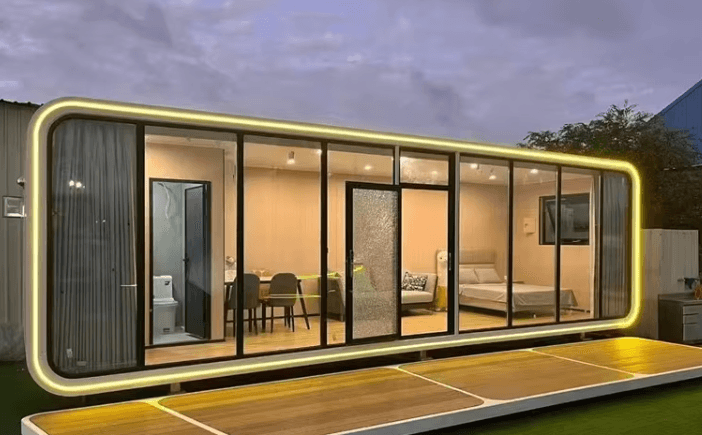
I. Chinese Manufacturers Dominate the North American Market Supply
Chinese enterprises hold a leading global position in the container mobile house sector. In the first four months of 2026, the export value of prefabricated houses through the Shenzhen port reached 1.68 billion yuan, a year-on-year increase of 19.6%, with products covering over 150 countries and regions. Taking China Construction Steel Structure as an example, its full range of modular houses have passed the North American CSA W47.1 welding certification, CSA A660 steel structure certification, and CSA A277 modular product certification, making it the first domestic enterprise to collect all three core Canadian building standards. Its products are transported to North America in container form and directly assembled into fully furnished residences, meeting local building codes and green construction requirements.
II. Product Types and Cost Advantages
Container mobile houses are divided into standardized and customized categories:
- Standardized Products: For example, a 40-foot foldable house has a body price of approximately $15,800, with a total landed cost (including freight, tariffs, etc.) of about $28,700 (approximately 200,000 yuan). It can provide a 70-square-meter two-bedroom, one-living-room space, including bedrooms, a kitchen, and an independent bathroom.
- Customized Products: Supporting multi-scenario applications such as construction site dormitories, temporary offices, and cultural and tourism homestays. Some manufacturers offer 20-40-foot expandable steel container houses, supporting 2-4 bedroom layouts, with price ranges from $3,743 to $40,026. Cost Advantages: Compared to traditional US houses, container houses are 60%-70% lower in total price and have a 60%-70% shorter construction period. For example, an 18-story high-rise residential project in Hong Kong adopted modular construction, reducing the construction period from 3-5 years to within 1 year.
III. Local Application Scenarios in the US
- Alternative Solutions in High-Housing-Price Areas: In expensive rental cities like San Francisco, young people reduce living costs by renovating containers. For example, in the Oakland 'Container Utopia' project, a single container has a purchase price of $2,300, renovation costs of about $12,000, and a monthly rent of only $600, which is only one-sixth of the local apartment rent.
- Commercial and Temporary Housing: Some manufacturers offer movable Airbnb cabins, modular offices, and temporary stores, supporting rapid deployment and recycling to meet emergency, cultural tourism, and other scenario needs.
IV. Industry Trends and Challenges
- Compliance and Recycling: According to 2026 customs data, orders for products with cross-border compliance qualifications and multiple reusability account for over 60%. Leading manufacturers enhance competitiveness through weld-free quick assembly processes, low-carbon materials, and full lifecycle management.
- Technological Iteration: Manufacturers continuously optimize structural stability and intelligent design, such as integrating sewage systems, solar power, and air conditioning equipment, with a service life of up to 40 years.



