
Container Mobile House Transformed into a Store
Transforming container mobile houses into stores offers advantages such as lightweight construction, low cost, and high flexibility, enabling the integration of functionality and aesthetics through professional customization. Here's a detailed analysis:
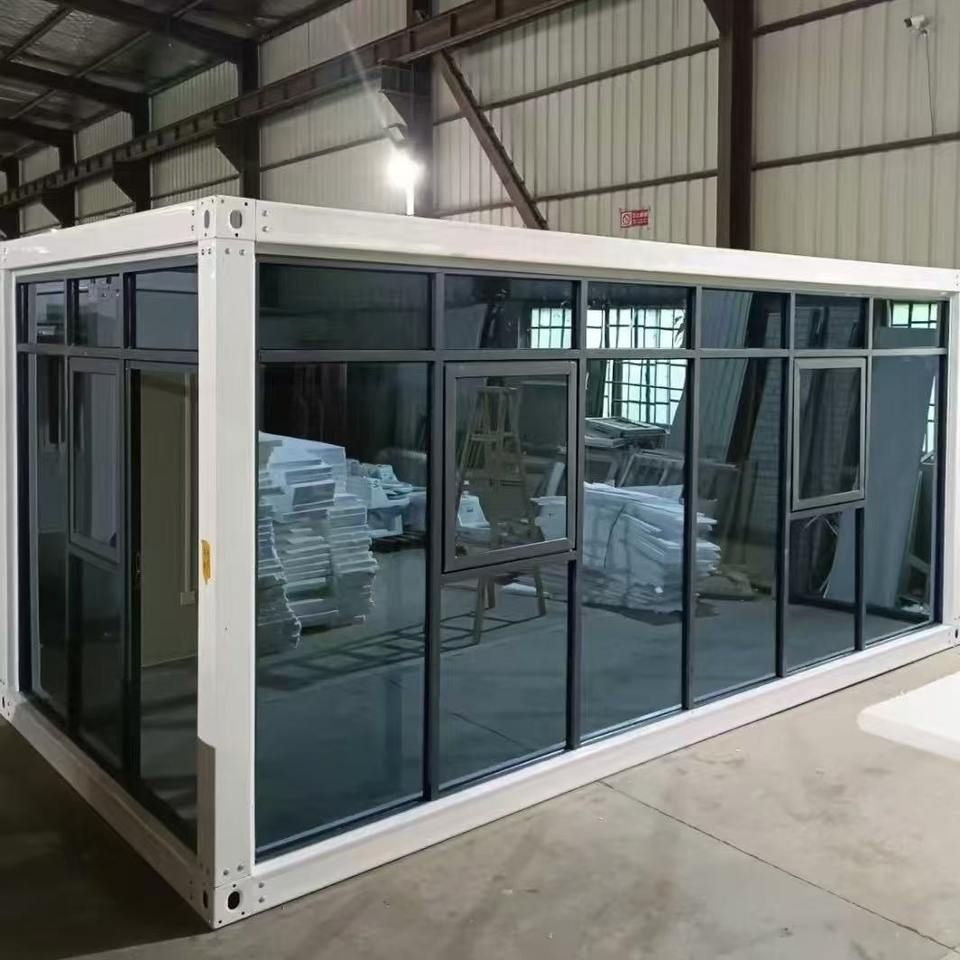
1. Structure and Safety
Container houses are primarily constructed using standard thickened container bodies with high-strength steel welded frames, ensuring a robust and load-bearing structure with excellent weather resistance, capable of withstanding natural elements like wind, rain, and sun. The container bodies undergo anti-rust treatment, are filled with thermal insulation rock wool inside, and paired with double-glazed tempered glass, effectively addressing issues of stuffiness and poor sound insulation in traditional containers, ensuring long-term comfort for store operations. Additionally, containers can be independently constructed as single-story structures or combined into double-story or multi-story configurations, adapting to various commercial scale requirements.
2. Cost and Efficiency Advantages
Transforming containers into stores eliminates the need for large-scale civil engineering projects, as the entire process involves factory prefabrication and on-site modular assembly, resulting in a short construction period (typically 7-15 days) and high implementation efficiency. Compared to traditional commercial streets, the investment cost is lower, and the layout can be flexibly adjusted and relocated based on business district operations, reducing project iteration costs. This approach is suitable for scenarios like night market upgrades and scenic area business updates. For example, the cost of converting a 40-foot shipping container into a mobile house starts at around 10,000 yuan, and customized container stores are significantly cheaper than traditional buildings.
3. Appearance and Functional Customization
Container commercial streets offer high design freedom in appearance, allowing customization of paint finishes, unique shapes, ambient lighting, and observation decks according to commercial themes and brand identities, creating differentiated scenes such as trendy internet celebrity styles or literary retro styles. The interior space can be planned as needed for various business types like coffee shops, milk tea stores, cultural and creative shops, and retail outlets, supporting the pre-installation of infrastructure such as water and electricity lines and air conditioning ducts to meet long-term business needs. Some suppliers also offer value-added services like advertising light boxes and internet celebrity check-in installations, facilitating the rapid formation of distinctive commercial districts.
4. Environmental Protection and Sustainability
Container houses utilize recyclable steel as the base material, reducing construction waste generation during the transformation process and aligning with low-carbon environmental protection concepts. Their movable nature avoids resource waste from traditional building demolitions, making them suitable for temporary or seasonal commercial scenarios (such as camping bases and night market business districts), achieving maximum resource utilization through relocation and reuse.



