
Container Mobile House Restroom
The container mobile house restroom is a prefabricated, ready-to-use, and relocatable sanitary facility with a wide range of applications, diverse technical routes, eco-friendly structural materials, and comprehensive supporting facilities, although there are some issues in practical cases.
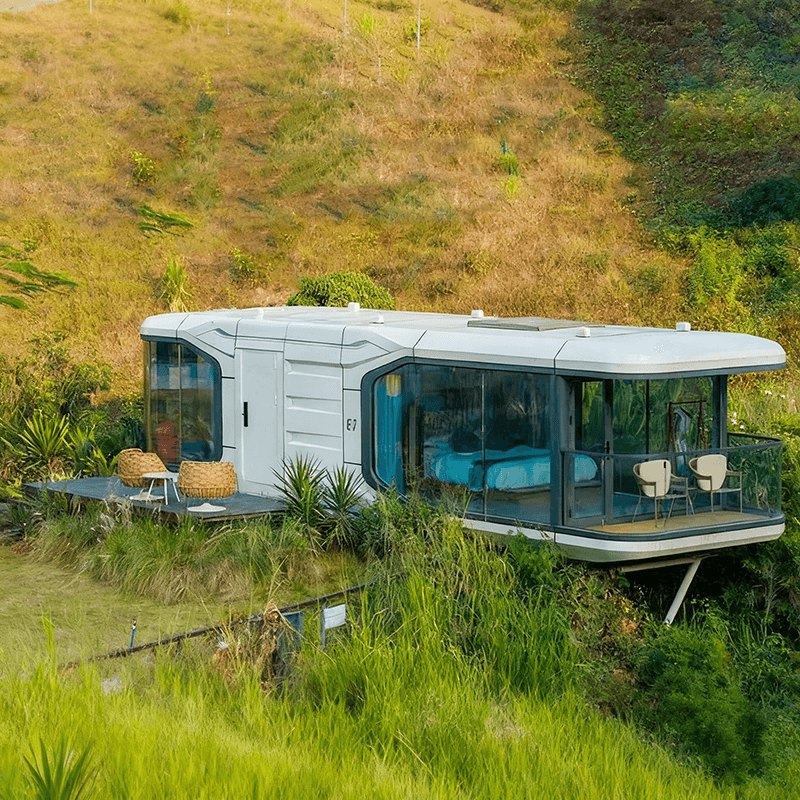
Application Scenarios and Characteristics: The application scenarios for container mobile house restrooms are diverse, expanding from early temporary emergency sites to fixed or semi-fixed locations such as scenic spot facilities, municipal sanitation, construction sites, large-scale event support, and national and provincial road service areas. Different scenarios impose differentiated performance requirements, such as the need for freeze resistance in cold regions, corrosion resistance in chemical areas, and good odor control and sufficient passenger capacity in all cases.
Technical Routes: Its product line covers multiple technical routes. The water-flush type is relatively common but requires a complete water supply and drainage network. The packing type can package and treat excreta. The microbial degradation type uses microorganisms to decompose excreta, while the waterless packing technology directly packages excreta. These two technologies can achieve zero sewage discharge in venues without water supply and drainage networks, effectively solving the toilet problems in mountainous, tidal flat, and saline-alkali land areas. The foam sealing type blocks odors with foam and also has unique advantages.
Structure and Materials: The frame is mostly made of welded steel structure and undergoes anti-corrosion treatment, enhancing structural stability and durability. The wall panels use thermal insulation sandwich panels, which can ensure a suitable internal temperature, meet environmental requirements, and the building materials are recyclable and degradable. Some models adopt technologies such as wet microbial treatment, and the treated water quality can meet the standards for reclaimed water reuse, achieving water resource recycling.
Supporting Facilities: Equipped with a 304 stainless steel one-piece base squat toilet, which comes with its own load-bearing base, eliminating the need for a cement base, allowing for quick installation, and featuring a one-piece seamless design that is resistant to transportation and not prone to loosening. It can also be paired with an odor trap and a water trap to effectively prevent odor emission, making it suitable for modular mobile public toilet projects at construction sites and scenic spots.
Practical Case Issues: During the Nagoya Asian Games, the container house restrooms used experienced continuous leakage under the sink and water accumulation on the floor, which may have been due to improper sink installation or pipeline connection issues; the length of the beds in the temporary accommodation area was too cramped for basketball players over two meters tall, indicating that the needs of different groups were not fully considered during the design process.



