
Container Mobile House Restaurant
A container mobile house restaurant is a movable dining space transformed from containers, featuring flexible combination, rapid deployment, and diverse functions.
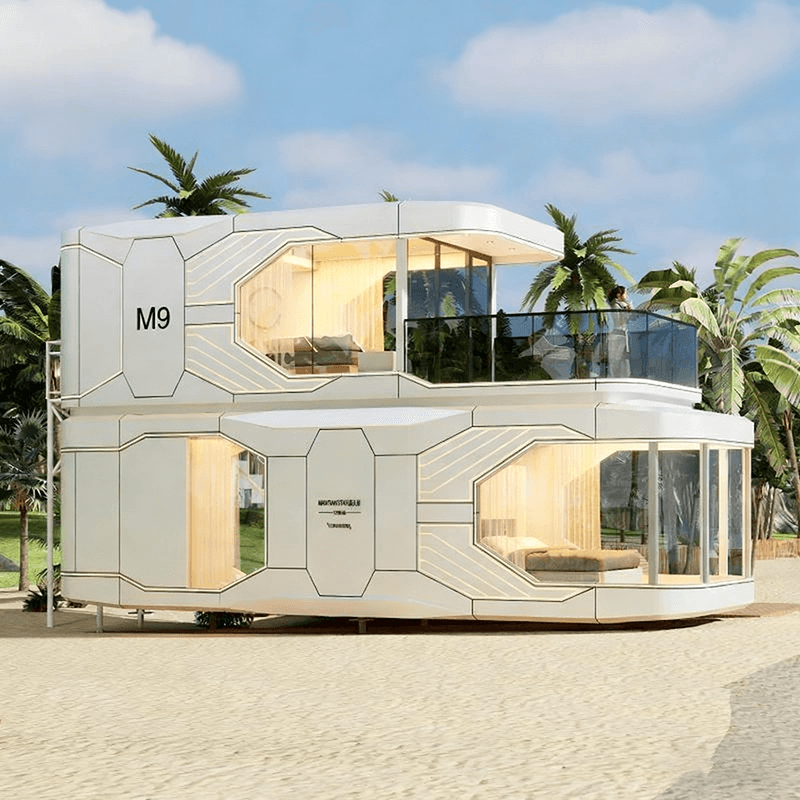
Design and Structural Features
Container mobile house restaurants are usually composed of one or more containers. For example, some restaurants are made up of eight containers, covering a total area of about 240 square meters. The modular structure includes storage, production, ordering spaces, and customer dining areas. Some containers are equipped with glass curtain walls as exclusive dining areas, ensuring both natural lighting and a fashionable ambiance. There are also container restaurants that combine steel structures with pontoons, floating on water surfaces, creating unique architectural landscapes, such as the container restaurant in the Czerniakowski Port in the Mokotów district of Warsaw.
Functional Advantages
- Rapid Deployment: All modules are prefabricated and improved before being transported to the site, with a short installation time. Some can be installed in just nine days, significantly shortening the construction period and enabling brands to quickly transition from design to operation.
- Comprehensive Functions: Stores can handle food processing and dish preparation on-site, forming a complete intelligent production chain. This ensures food quality while achieving a balance between rapid expansion and quality management.
- Diverse Spaces: The interior is equipped with efficient ventilation and heat recovery systems to ensure a comfortable dining environment. Outdoor areas can also be set up with balconies and umbrella seats to meet different scenario needs.
Operational Model Advantages
- Dual Usage Advantages: As a semi-mobile solution, it offers the dual advantages of temporary and long-term use. With a one-time investment, the restaurant can operate stably for a long time or be relocated as a whole when needed, providing greater freedom for the expansion of catering brands.
- Open and Shared: Some container restaurants are not just dining spaces but also community platforms, emphasizing openness and sharing. They attract urban residents and tourists to come for communication, leisure, and making new friends, promoting interaction between urban life and the surrounding environment.



