
Power Connection for Container Mobile Houses
The power connection for container mobile houses should be reasonably designed according to the house type, usage scenario, and safety regulations. Key aspects usually include power access methods, power distribution system configuration, and safety protection measures.
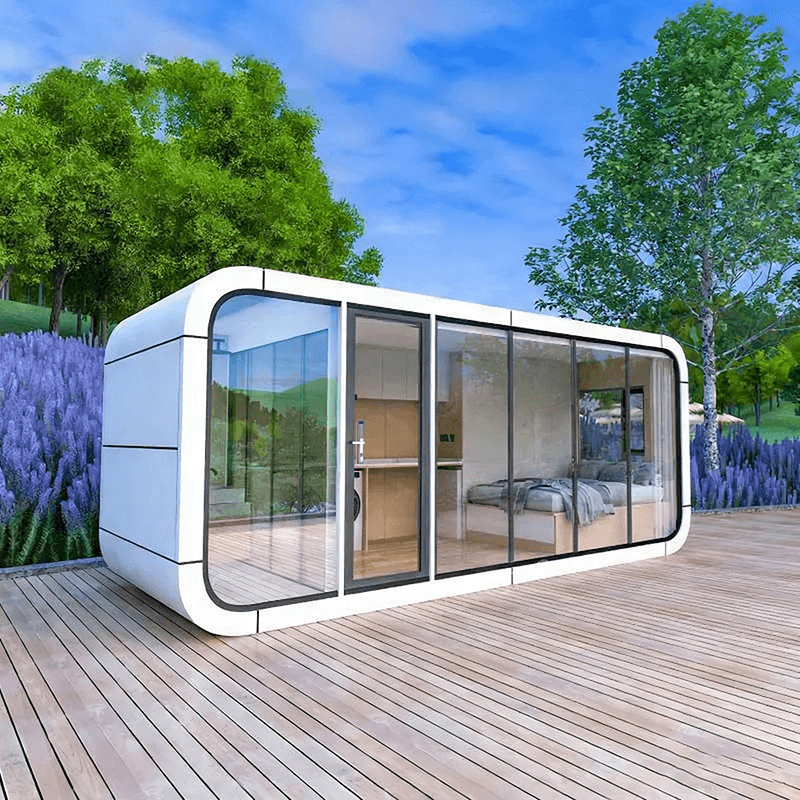
1. Power Access Methods
The power access for container mobile houses should be selected based on the usage scenario:
External Grid Connection
If the house is located in a fixed place (such as a construction site or scenic spot), it can be directly connected to the nearby power grid. The cable routes need to be planned in advance to ensure stable voltage and meet the power demands of the house. For example, residential containers usually require the installation of distribution boxes, fluorescent lamps, and sockets, which should be connected to the external grid by professional electricians and equipped with leakage protection devices.Generator Power Supply
In remote areas without access to the external grid (such as field operations or emergency rescue), diesel or gasoline generators can be used for power supply. The generator power should be selected according to the power load of the house, and voltage regulators should be equipped to prevent voltage fluctuations from damaging electrical appliances.New Energy Supplement
Some customized container houses support the connection of solar panels, enabling off-grid power supply through photovoltaic systems. For example, after installing solar panels on the roof, an inverter is required to convert direct current to alternating current, and energy storage batteries are needed to meet power demands at night.
2. Power Distribution System Configuration
The power distribution system inside the house should be reasonably designed to ensure electrical safety:
Distribution Box and Wiring
A dedicated distribution box should be installed inside the house to centrally control circuit switches and leakage protection devices. The wiring should use flame-retardant cables and be concealed along walls or roofs to avoid safety hazards caused by exposed wiring.Power Load Matching
The total power load should be calculated according to the function of the house (such as office, residential, or commercial use) to avoid overloading. For example, if a residential container is equipped with high-power appliances such as air conditioners and water heaters, separate circuits should be set up, and the cable cross-sectional area should be increased.
3. Safety Protection Measures
Strict safety regulations should be followed during the power connection process:
Grounding Protection
The metal frame of the house should be reliably grounded to prevent electric shock accidents caused by leakage. The grounding resistance should comply with national standards (usually ≤4Ω).Lightning Protection Design
In areas prone to thunderstorms, the house should be equipped with lightning belts or lightning rods, which should be connected to the grounding device through down conductors to reduce the risk of lightning strikes.Regular Inspections
Regularly inspect issues such as aging wiring and loose sockets, and promptly replace damaged components to ensure electrical safety.



