
Container Mobile House Kennel
It is feasible to transform a container mobile house into a kennel, but targeted design optimization is required based on pet needs. The following analysis is carried out from four dimensions: structural adaptability, functional design, material selection, and environmental protection.
1. Structural adaptability requires targeted modification
The spacing between the longitudinal beams of the bottom frame of a traditional container is relatively large. Using it directly as a kennel will result in insufficient floor stiffness, which may pose a safety hazard, especially for large dogs. The technical solution of Baotou Camp Container House Company can be used for reference. C-shaped steel purlins are installed between the bottom beams to evenly distribute the load to the main beams, ensuring structural stability during container stacking or pet activities. In addition, ventilation openings need to be added on the sides of the container to prevent insufficient air circulation due to the excessive airtightness of the metal container walls. Anti-escape metal meshes should be installed at the ventilation openings, and the mesh size should be smaller than the pet's body size.
2. Functional design should fit pet behavior
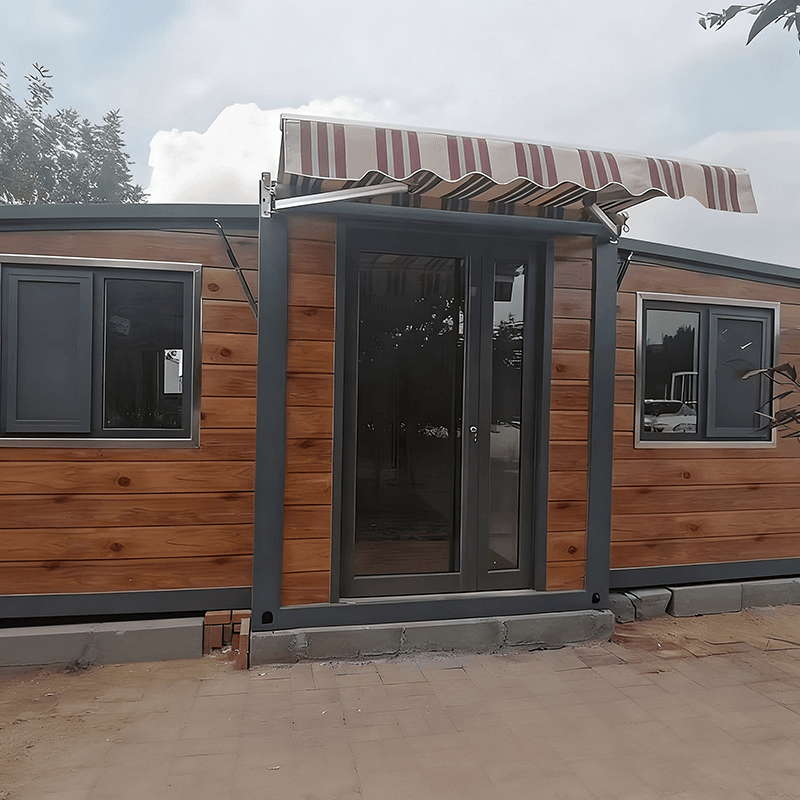
The interior of the container needs to be divided into a resting area, an activity area, and an excretion area. The resting area can be paved with non-slip wooden floors or rubber mats to avoid the coldness of the metal floor. Sufficient space should be reserved in the activity area. According to the "Pet Architectural Design Code", it is recommended that the activity area for large dogs be no less than 4 square meters. The excretion area needs to be waterproofed, and a removable plastic tray should be laid at the bottom for easy cleaning. If used outdoors, a sunshade should be installed on the top of the container, and a foldable rainproof curtain should be set on the side of the container. The bottom of the curtain needs to be weighted to prevent it from being blown up by the wind.
3. Material selection should balance durability and safety
Pet-friendly coatings should be used for the anti-corrosion treatment of the container surface to avoid the use of anti-rust paints containing heavy metals such as lead and chromium. For internal partitions, it is recommended to use E0-grade environmentally friendly panels to reduce formaldehyde emissions. The insulation layer should adopt a broken-bridge lining structure. Hard polyurethane foam should be filled between the steel frame and the interior wall panels, and rubber thermal insulation pads should be installed at the connections of the keels to reduce the cold-bridge effect, ensuring that the indoor temperature in winter is 8-10℃ higher than the outside temperature and reducing health problems in pets caused by low temperatures.
4. Environmental protection should run through the entire life cycle
The core advantage of a container kennel lies in the recyclability of materials. A single standard 20-foot container consumes about 1.2 tons of steel, and its carbon emissions are 56.5% lower than those of a concrete temporary house. If relocation is required in the future, the overall lifting and dismantling loss rate can be controlled within 5%, significantly reducing construction waste. In addition, biodegradable environmentally friendly coatings can be applied to the exterior of the container to reduce the risk of pollution to soil and water sources.



