
Container Mobile House Delivery
Container mobile house delivery involves production, transportation, installation, and after-sales service, requiring the selection of appropriate solutions based on product characteristics and scenario requirements.
1. Production and Process Adaptability
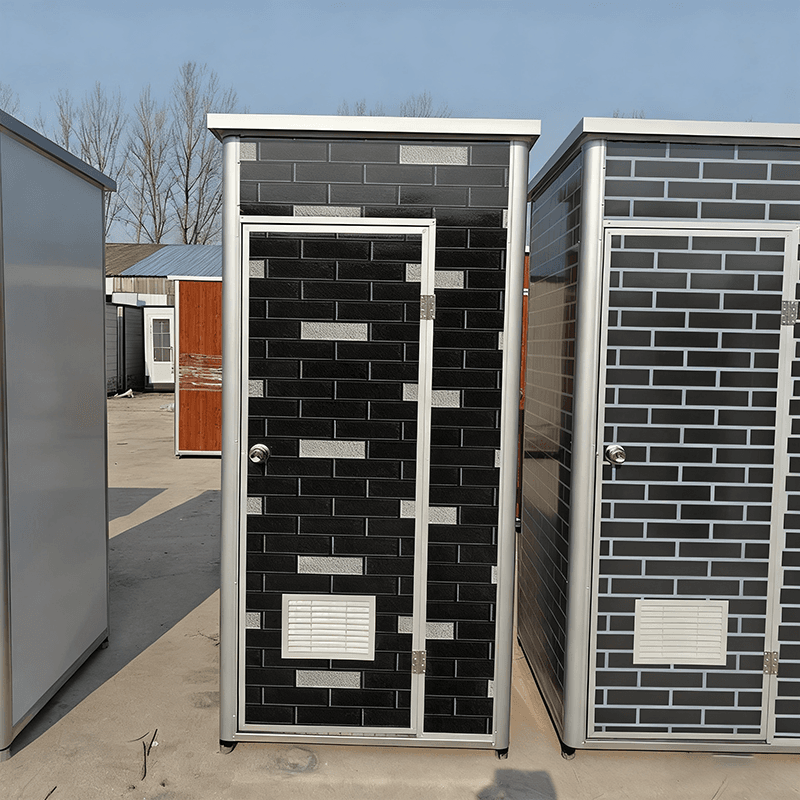
Container mobile houses have evolved into fully prefabricated modular integrated products. Components are standardized and produced in factories, and assembled on-site through bolt connections without wet operations. Based on process differences, mainstream products are classified into quick-assembly packing boxes, folding boxes, corrugated boxes, and double-wing expansion boxes. For example, quick-assembly packing boxes are assembled entirely with bolts, and four workers can complete the assembly in three hours. They feature an independent drainage system and are suitable for scenarios such as construction site offices and employee dormitories. Folding boxes, when collapsed, occupy only one-fifth of their expanded volume, saving transportation space and adapting to emergency orders or cross-regional relocation projects. Purchasers need to select process types based on usage scenarios (such as structural strength, space requirements, and transportation costs) to avoid issues like water leakage and insulation failure due to parameter misjudgments.
2. Transportation and Logistics Optimization
Transportation of container mobile houses requires consideration of volume, weight, and ease of disassembly and assembly. Folding boxes reduce long-distance logistics costs by compressing volume, making them suitable for large-scale emergency orders. Double-wing expansion boxes expand the internal area by 2.3 times when deployed, but transportation requires evaluation of road height restrictions and loading space. Leading manufacturers typically collaborate with professional logistics teams to provide cross-border transportation compliance support, such as meeting international maritime standards and handling export qualification certifications, ensuring timely delivery to construction sites, cultural tourism projects, or overseas camps.
3. Installation and On-Site Debugging
On-site installation directly affects project timelines. Compliant products adopt welding-free quick-assembly processes. For example, quick-assembly packing boxes do not require electric welding, and four workers can complete the assembly in three hours. Corrugated boxes, due to their high structural strength, are suitable for scenarios with high abrasion resistance requirements, such as mining areas, but require professional equipment for lifting. Manufacturers typically provide on-site installation services, along with independent drainage systems and elevated pitched roof designs to ensure no water accumulation or leakage during heavy rain. Purchasers need to confirm on-site foundation conditions in advance to avoid structural deformation due to unstable foundations.
4. After-Sales Service and Circular Reuse
Leading manufacturers support full lifecycle management of products, including regular maintenance, structural stability testing, and disassembly and assembly loss assessment. Under standardized usage conditions, compliant products can be disassembled and reused an average of more than eight times, reducing construction waste emissions by approximately 90% and significantly improving resource utilization compared to traditional temporary buildings. For example, in China Construction Science and Industry Corporation's modular hotel project in Papua New Guinea, through domestic production, ocean shipping, and on-site assembly, the delivery cycle was shortened from 14-18 months to seven months, and labor costs were saved by over 40%.



