
Cooling of Container Mobile Houses
Cooling of container mobile houses can be achieved through methods such as using specialized air conditioners, optimizing house insulation, utilizing ventilation designs, applying cooling coatings, or using spray systems.
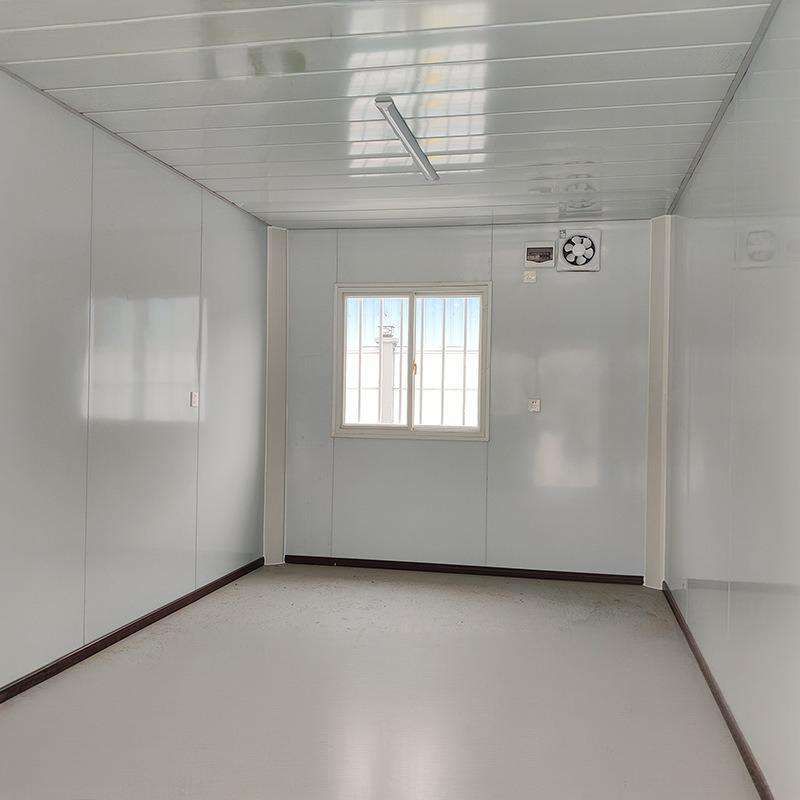
Using specialized air conditioning equipment
For the enclosed nature of container houses, highly adaptable air conditioning systems can be selected, such as the BattCool-AF series of energy storage container air conditioners. It employs DC inverter technology, supports operation in high-temperature environments up to 55℃, and features an upward air supply design for rapid cooling over long distances. For small spaces, the Gree KY-20J mobile air conditioner, with its 280m³/h air volume and silver ion filter combination, can meet cooling needs while filtering the air, making it suitable for use by mothers, infants, or sensitive individuals.Optimizing house insulation structure
During the construction phase, composite insulation materials can be used to enhance thermal insulation performance. For example, new building materials consisting of black steel plates sandwiching polystyrene foam can be used, or the thickness of the rock wool layer can be increased. For already constructed houses, an aviation-grade 6061-T6 aluminum alloy frame and German Bayer PC panels can be added to the exterior. Their impact resistance is 2-20 times that of tempered glass, and their light transmittance reaches 82%, balancing safety and lighting needs.Utilizing ventilation and shading designs
The telescopic folding design of modular mobile sunrooms can achieve an opening area of 60%, promoting air circulation. Manual or electric sliding rail systems allow adjustment of the opening state according to the weather. On sunny days, they can be fully opened to enhance ventilation and heat dissipation, while on rainy or high-temperature days, they can be closed to keep the interior cool. Additionally, installing sunshades or reflective films on the roof can reduce solar radiation heat absorption.Applying cooling coatings and spray technology
New passive cooling coatings can lower wall temperatures by reflecting ultraviolet rays. For large container building complexes, the case of the Yuncheng roof spray system can be referenced, where high-pressure atomizing nozzles are used to periodically spray water mist. Utilizing the principle of heat absorption through water evaporation, the building surface temperature can be reduced by 5-8℃ within 10 minutes, and the ground temperature reduction can reach 12℃. The system needs to flexibly adjust the spray duration and water output according to the air temperature.



