
Container Mobile House and Concrete Building
There are significant differences between container mobile houses and concrete buildings in terms of structure, purpose, construction methods, and environmental protection and recycling:
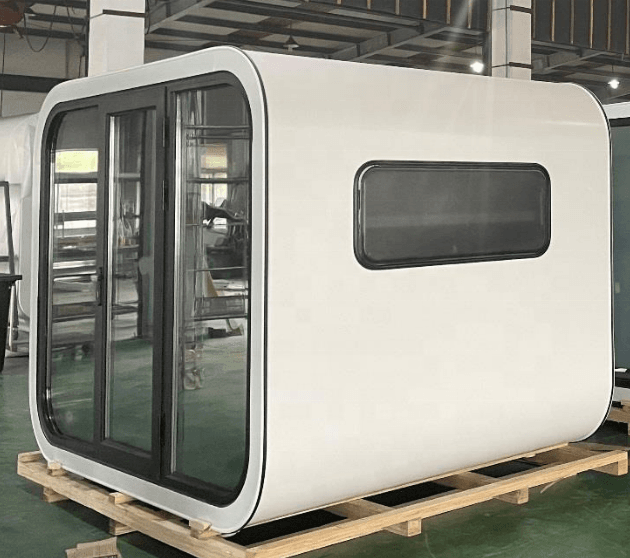
Structure and Materials
Container mobile houses use high-strength steel frames paired with color-steel sandwich panels or insulation layers to form walls, resulting in a lightweight structure with good compressive and seismic resistance. Their modular design originates from standard shipping containers, which are connected as a whole through welding or bolts. Some products use aluminum alloys or composite sandwich panels to reduce weight. Concrete buildings, on the other hand, are centered around reinforced concrete, with steel bars bearing tensile forces and concrete bearing compressive forces. They are divided into two types: monolithic (cast-in-place) and prefabricated (assembled from prefabricated components). Concrete modular buildings are assembled on-site using high-strength connectors after wall panels, roof panels, and other components are prefabricated in factories, forming a stable hexahedral structure.
Purpose and Mobility
Container mobile houses are widely used in scenarios such as temporary offices, homestays, and construction site dormitories due to their strong mobility. They can be used immediately after being connected to electricity and water without the need for foundation construction, offering far greater flexibility than traditional buildings. For example, customized container houses can be used for suburban studios or weekend cottages, which can be quickly put into use after being hoisted and placed on the ground. Concrete buildings, however, are mainly permanent structures, especially prefabricated concrete structures that can meet the needs of high-rise residential buildings. For instance, the Huazhang Xinzhu project in Shenzhen used more than 6,000 concrete modules to assemble a 28-story residential building, with a design service life that meets national standards.
Construction Methods and Cycles
Container mobile houses support rapid assembly and disassembly, resulting in short construction cycles. On-site open-air operations account for only 10% of the total construction period. For example, the Shenzhen Intelligent Construction Industrial Park can produce a complete module every 20 minutes, with an annual delivery capacity of 20,000 to 30,000 units. If concrete buildings are constructed using traditional on-site casting methods, the process is cumbersome and time-consuming. However, prefabricated concrete structures transfer more than 70% of the work to factories. For example, in the Huazhang Xinzhu project, about 90% of the components were prefabricated in factories, significantly improving on-site assembly efficiency and reducing the overall construction cycle by more than 60% compared to traditional methods.
Environmental Protection and Recycling
Ninety percent of the materials in container mobile houses can be recycled, aligning with the concept of a circular economy. In contrast, concrete buildings are difficult to recycle and basically cannot achieve material regeneration. Additionally, container houses reduce on-site wet operations through modular design, lowering dust and noise pollution. Although concrete buildings reduce waste during the factory prefabrication stage, on-site assembly still requires connectors and sealing materials, resulting in relatively weaker environmental advantages.



