
Container Houses Without Property Certificates
Container houses generally do not have property certificates, mainly for the following reasons:
I. Mismatch between Land Nature and Planning Requirements
According to the Provisional Regulations on Real Estate Registration, real estate rights must be registered in accordance with the law. However, container houses that are not built on legal homesteads or have not undergone approval to change land use do not meet registration conditions. As temporary or mobile structures, they typically do not comply with rural planning requirements for permanent residences and are thus difficult to obtain planning permits. For example, rural homestead planning explicitly requires houses to have fixed structures and long-term usability, which container houses, with their temporary nature, cannot satisfy.
II. Lack of Construction Procedures Leading to Doubts About Legality
Obtaining a property certificate requires complete construction procedures, including planning permits and construction permits. If a container house is built without approval from relevant departments or does not adhere to specified area standards and architectural plans, it cannot be registered even if it is located on a legal homestead due to a lack of legal proof. For instance, some regions require houses to meet specific floor and height regulations, which the modular structure of container houses may exceed.
III. Conflicts Between Property Disputes and the 'One Household, One Homestead' Principle
Property certificate applications require clear and dispute-free property rights. If a container house is mortgaged, seized, or subject to ownership disputes, it cannot be registered. Additionally, under the 'one household, one homestead' principle, if a villager already owns a homestead and has not disposed of it legally but builds another container house, they may be denied registration for violating policy requirements. For example, some regions explicitly prohibit villagers from building new houses outside their homesteads, even if using container forms.
IV. Incompatibility Between House Attributes and Property Certificate Requirements
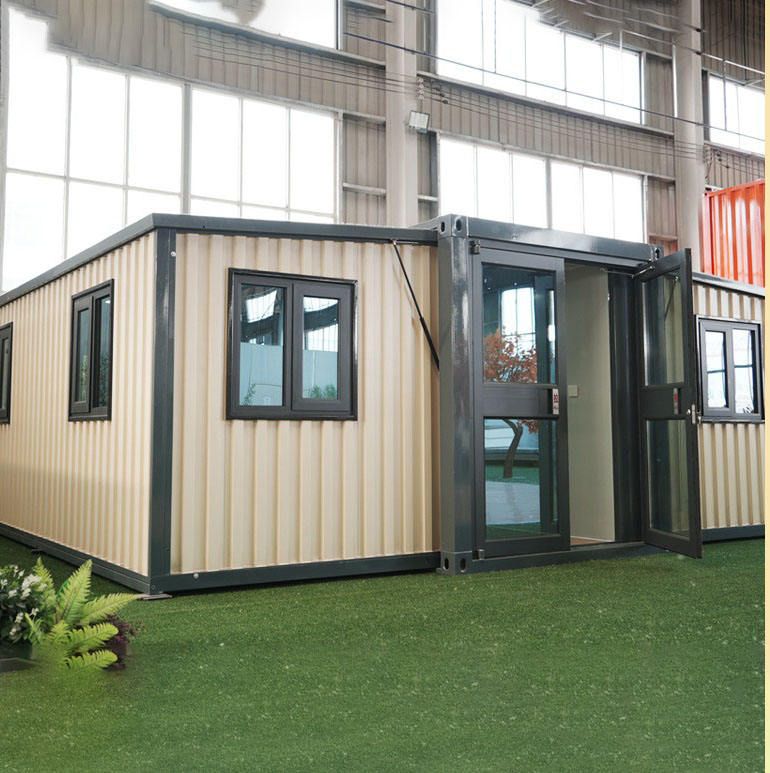
Container houses are temporary structures designed for short-term use and lack the fixed characteristics of traditional real estate. If their foundations are leased or on non-owned land and they are not built according to permanent building standards (e.g., without foundation reinforcement or connection to municipal utilities), they do not meet the land and structural requirements for property certificate issuance. For example, container houses on leased land in cities are usually classified as temporary structures and cannot obtain property certificates.
V. Policy Restrictions Making Registration Difficult
Urban central areas generally prohibit container houses from being used as long-term residences, and rural areas mostly allow them only as temporary ancillary structures (e.g., warehouses, tool sheds) rather than primary residences for long-term settlement. These policy restrictions directly prevent container houses from meeting the basic conditions for property certificate applications. For example, some regions explicitly stipulate that non-permanent structures cannot apply for property registration.



