
Container House Water and Electricity Equipment
The design and installation of water and electricity equipment for container houses should incorporate modular and integrated concepts, achieving efficient, safe, and reusable water and electricity system layouts through professional planning.
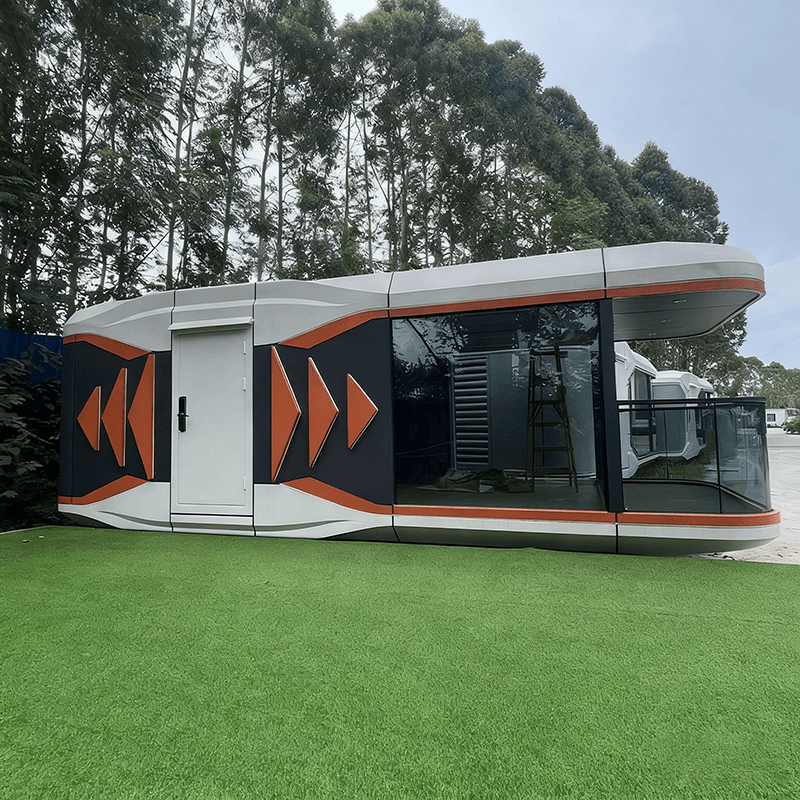
1. Integrated Design of Water and Electricity Equipment
The water and electricity systems in container houses typically adopt a prefabricated cabin matching cabinet model, integrating high-voltage switchgear, low-voltage distribution cabinets, transformers, secondary protection devices, and communication equipment into customized cabin bodies. This design completes the installation, wiring, and system joint debugging of all equipment in the factory, requiring only foundation positioning, inter-cabin busbar connections, and incoming and outgoing cable crimping on-site for commissioning. For example, the power prefabricated cabins provided by Shandong Zhongyuntong Electrical Equipment Co., Ltd. converge distribution, control, and protection functions into standard-sized cabin bodies through three-dimensional optimized layouts, significantly reducing floor space and improving construction efficiency.
2. Optimization of Water and Electricity Routing and Construction
The layout of water and electricity lines should be planned in advance using 3D modeling technology to ensure reasonable routing of pipes and lines within the container structure and avoid construction conflicts. For example, 3D modeling of water and electricity routing diagrams in container renovation projects enables one-time construction completion, reducing rework later. Meanwhile, the design of the ventilation system should coordinate with the water and electricity layout, using forced or natural ventilation methods to prevent dampness and mold, ensuring healthy living conditions.
3. Reusability and Migration Adaptation
For scenarios involving disassembly and relocation, water and electricity equipment must meet the requirements for multiple disassemblies and reassemblies. Products from leading manufacturers can achieve an average of over 8 disassembly and reuse cycles, reducing construction waste emissions by approximately 90%. For example, the modular buildings developed by Zhonghui Energy Storage Container Co., Ltd. ensure the structural stability and functional integrity of the water and electricity systems after relocation through solder-free quick assembly processes and standardized interface designs.
4. Scenario-Based Customization and Compliance
Different application scenarios have significantly varying requirements for water and electricity equipment. Engineering camps require large-capacity power distribution systems, cultural and tourism homestays need to balance aesthetics and energy efficiency, and emergency support scenarios demand rapid deployment and redundant designs. For example, the control rooms for mixing plant equipment supplied by Shanghai Yaotuo Containers adopt a dual-container splicing structure and reserve control interfaces to meet the special needs of field operations. All products must pass domestic and international certifications to ensure cross-border compliance.



