
Container House Wall Panel Materials
The main materials for container house wall panels are orange-peel patterned color-coated steel composite panels, with internal fillers mostly being fire-resistant and thermal insulation materials. In some special scenarios, aluminum panels or corrugated panels are used. Specific materials and their characteristics are as follows:
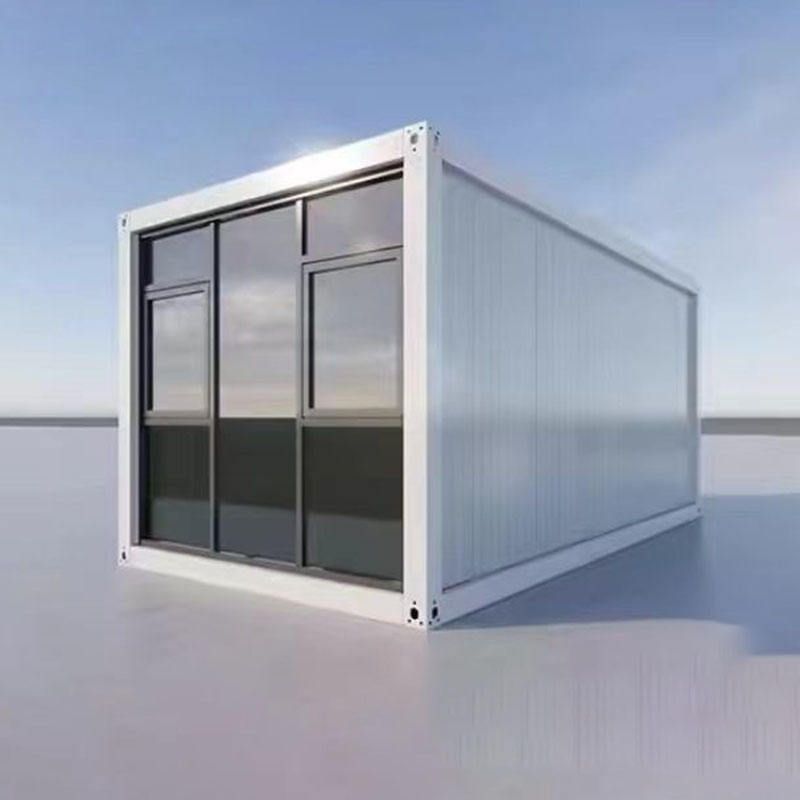
1. Orange-peel Patterned Color-coated Steel Composite Panels
These wall panels are composed of two layers of orange-peel patterned color-coated steel plates on the inside and outside. The surface is formed with a special embossing process to create subtle concave-convex structures that disperse the flow path of rainwater, preventing rust caused by water accumulation. The double-layer color-coated steel enhances the rigidity of the panel through its physical form, and different materials can be filled in the middle:
- EPS (Expanded Polystyrene Foam) or PU (Polyurethane Foam): Provides basic thermal insulation performance but has a relatively low fire rating.
- Grade A Fire-resistant Rock Wool: Brands like Zeyu Housing use this type of filler, which is a non-combustible material (does not soften or deform at 800℃). It releases no toxic smoke during fires and, after being compressed and sealed by machines, significantly enhances the compressive strength of the wall panel, preventing depression and deformation during transportation or stacking.
2. Aluminum Panels
Some exterior walls of container houses use fluorocarbon-sprayed aluminum panels, typically with a thickness of 2.0-3.0mm. Their surface is smooth and flat, with strong weather resistance, and can achieve a variety of appearances through processes such as punching and stone-like finishes. Aluminum panels consist of a panel, stiffeners, and corner brackets, suitable for both interior and exterior wall decoration. However, they are relatively costly and are mostly used in scenarios with high aesthetic requirements.
3. Corrugated Panels
Corrugated panels enhance surface rigidity with a wavy design, dispersing external forces and reducing the risk of deformation. In container renovations, 0.6mm-thick color-coated aluminum corrugated panels are often used for exterior walls, combining an industrial aesthetic with rust-resistant and weather-resistant properties. Their aluminum alloy material is lightweight and easy to construct, and the surface color coating can withstand long-term exposure to sunlight and rain without fading.
4. Other Materials
- Rock Wool Sandwich Panels: Composed of a galvanized steel frame and rock wool core material, they offer excellent sound insulation and thermal insulation performance, suitable for use in all seasons.
- Color-coated Steel Sandwich Panels: Filled with thermal insulation materials (such as polyurethane) in the middle, they balance lightweight construction with thermal insulation needs. When paired with door and window systems, they can quickly transform into comfortable spaces.



