
Container House Tile Waterproofing
Waterproofing of tiles in container houses requires comprehensive design that combines tile waterproofing treatment with the characteristics of container houses, focusing on material selection, construction techniques, and environmental adaptability.
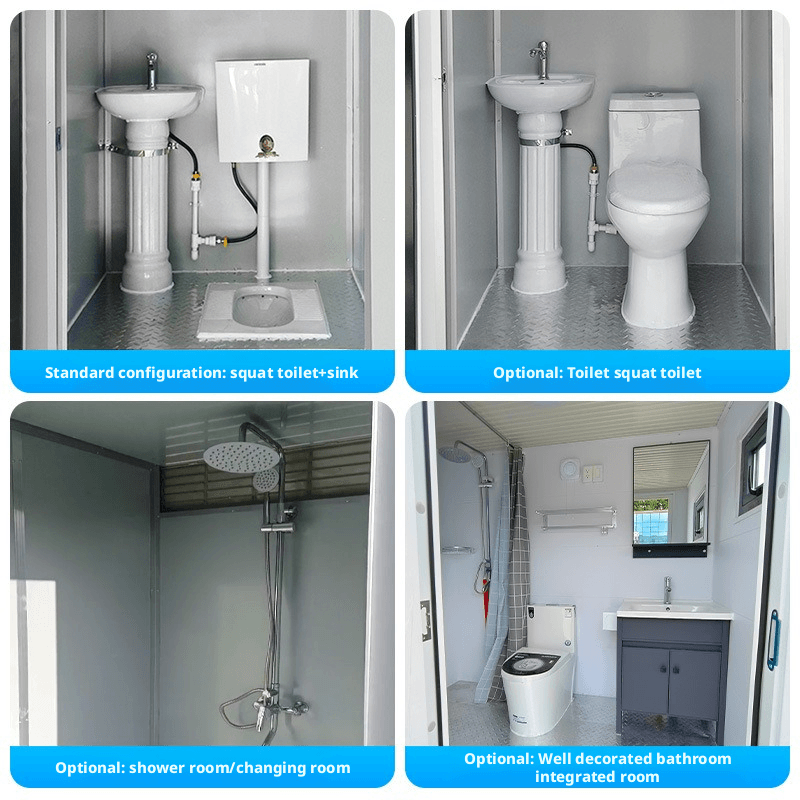
1. Tile Surface Waterproofing Techniques
Application of Waterproof Coatings
Epoxy resin or polyurethane-based waterproof coatings can be directly applied to tile surfaces to form a dense protective film. Before application, oil stains in tile joints must be thoroughly cleaned. A two-coat cross-application technique should be used, with special attention to internal corners and pipe roots. These materials offer strong weather resistance but alter the original gloss of the tiles, making them suitable for short-term waterproofing needs.Grout Modification Techniques
Polymer-modified cement-based grout is used to reseal tile joints. Old grout must be removed to a depth of 3mm, and water-repellent agents should be added. This method is highly effective for localized water seepage but requires additional measures for large-area waterproofing, especially for antique or glazed tiles with high water absorption rates.Penetrating Waterproofing Agent Treatment
Organosilicon penetrants enter tile micropores through capillary action to form a water-repellent layer. The substrate must be kept dry during application, with uniform coverage achieved using low-pressure spraying. Contact with water should be avoided for 24 hours. This technique is suitable for preventing seepage in glazed tiles but has limited effectiveness on cracked tiles, necessitating joint sealing treatment.
2. Special Waterproofing Requirements for Container Houses
Structural Load-Bearing and Loading Specifications
The container floor must meet the load-bearing requirements for heavy tile cargo. Tight stacking should be used during loading to minimize movement within the container, with inflatable bags or wooden supports filling gaps between cargo and container walls. For trans-Pacific shipping routes, desiccants should be placed to prevent condensation caused by temperature changes.Key Points for Leak Repair in Container Houses
For common issues such as loose fasteners, aged waterproofing materials, and panel deformation in container houses, regular inspection of roof fastener waterproofing gaskets is necessary. Unqualified waterproofing materials should be replaced, and cracks around fan installation holes repaired. The gutter system must maintain a transverse slope to ensure unobstructed drainage and prevent water backflow.
3. Construction Environment Control Standards
Substrate Preparation Requirements
Tile surfaces must be kept clean, dry, and free of oil stains. Tiles with high water absorption rates require pre-treatment with an interface agent. The inner walls of the container must be cleared of rust and oil stains, with anti-rust primer applied before waterproofing layer construction.Environmental Adaptability Testing
Waterproofing materials must pass extreme environment tests ranging from -30°C to 80°C to ensure stable performance under temperature and humidity variations during container transportation. Construction environment temperatures should be controlled between 5°C and 35°C to prevent poor coating curing due to low temperatures.



