
Container House Sturdiness Standards
The sturdiness standards for container houses are mainly reflected in three aspects: appearance, interior, and safety inspections. The specific standards are as follows:
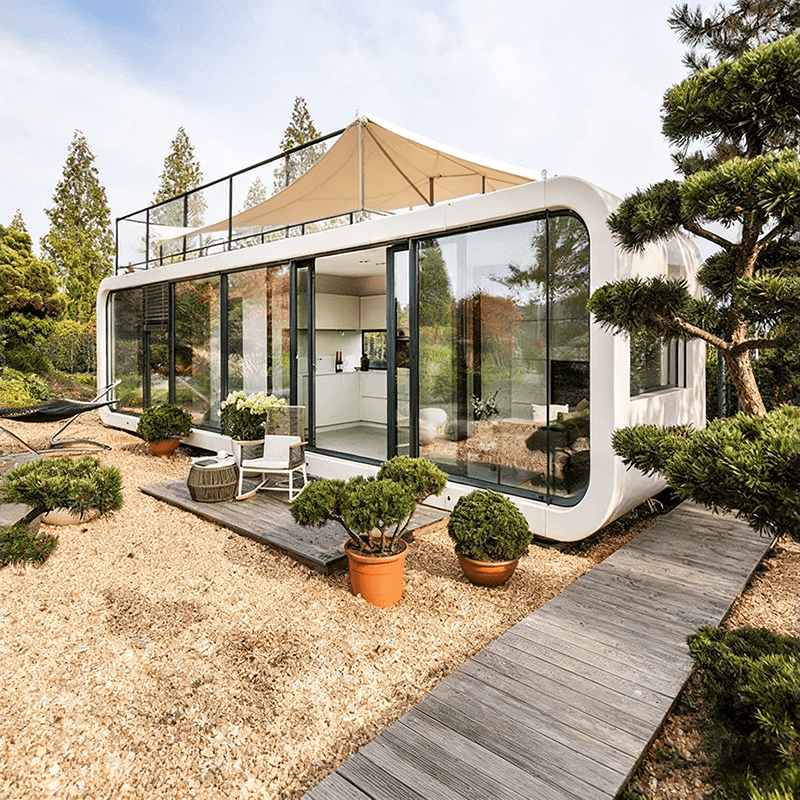
Appearance Inspection
The appearance of a container house is a direct indicator of its sturdiness. Surface flatness requires that the overall surface of the house be smooth and flat, without obvious bumps, cracks, or damage. This standard not only affects aesthetics but also directly relates to the house's ability to withstand impacts from harsh weather conditions such as wind, rain, and snow. If there are defects on the surface, it may lead to water infiltration or uneven structural stress, thereby affecting overall stability.
Coating quality is another key indicator. The coating must be uniformly applied without bubbling, peeling, or rusting. High-quality coatings effectively isolate air and moisture, preventing corrosion of the container's steel, thereby extending the house's service life and maintaining structural strength. For example, in coastal or high-humidity areas, houses with poor coating quality may experience wall loosening due to rust, posing a threat to occupant safety.
Interior Inspection
The sturdiness of the interior structure directly determines the house's load-bearing capacity and safety. The sturdiness of walls and roofs must be verified through professional testing, requiring no looseness, deformation, or cracks. For example, during the acceptance of packing-box integrated houses, a static load test is conducted by applying 1.5 times the design load (such as stacking heavy objects or hydraulic loading) to test the strength of the steel structure, ensuring it can withstand the pressures of actual use. Ground flatness is equally important; the ground must be free of bumps, damage, or hollow spots, as uneven stress over time may lead to structural deformation and even affect foundation stability.
Safety Inspection
Safety inspection is the core aspect of assessing the sturdiness of container houses. Foundation stability requires that the foundation be firm, without settlement or tilting. During the installation of packing-box integrated houses, the foundation must be level, with a horizontal error controlled within ±5mm to ensure even stress distribution across the house. If the foundation is improperly treated (such as not being compacted or the backfill not being dense), it may lead to house tilting, wall cracking, or even collapse under extreme weather conditions. Additionally, the connection points of the house (such as bolts and welds) must be regularly inspected to ensure no looseness or rust, preventing overall structural issues caused by local failures.
In summary, the sturdiness of container houses must be comprehensively evaluated through multi-dimensional standards, from appearance to interior structure, and then to the foundation and connection points. Strict control at each stage is essential to ensure the safety and durability of the house.



