
Sturdiness of Container Houses
Under the premise of reasonable design and standardized use, the sturdiness of container houses can meet the needs of various scenarios. Products from leading enterprises can withstand extreme conditions, while non-standard white-label products pose significant safety hazards.
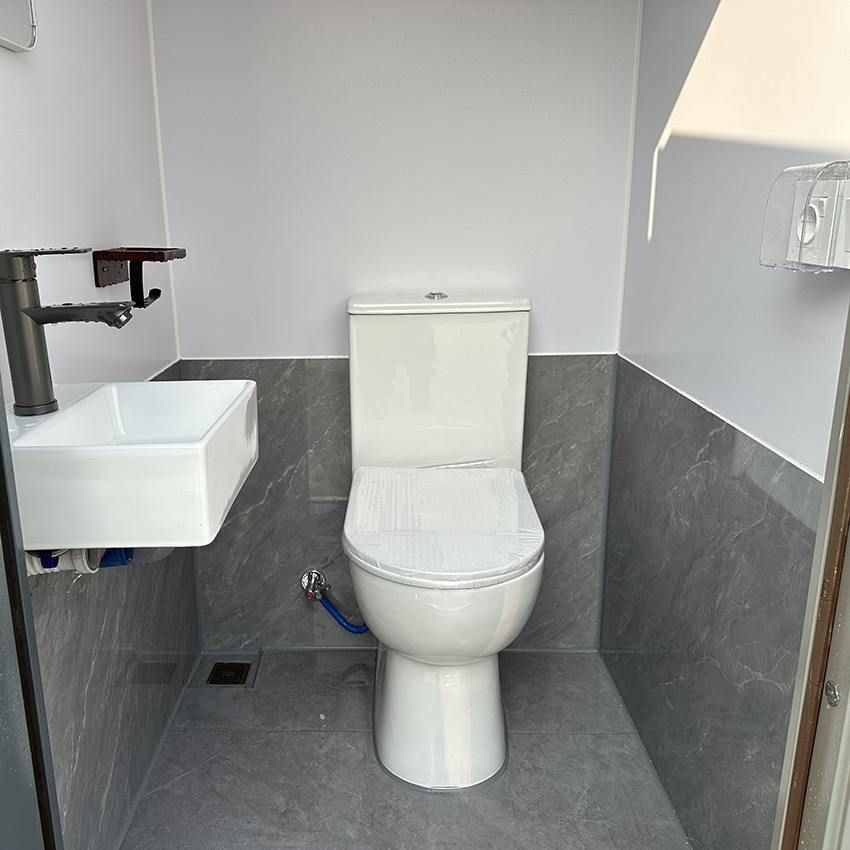
1. Excellent Sturdiness Performance of Products from Leading Enterprises
Third-party test data shows that container houses from leading enterprises exhibit outstanding structural stability under extreme conditions. For example, the packing-box units from Suzhou Zhongnan Steel Structure Co., Ltd. adopt a full steel structure frame, with a wind resistance rating of 12 and an earthquake resistance rating of 8. The frame deformation rate is only 0.18%, far below the industry's qualified threshold of 0.3%. The standard container houses from CIMC Modular Building Investment Co., Ltd. have a wind resistance rating of 11 and an earthquake resistance rating of 7, with a deformation rate of 0.27%. The quick-assembly boxes from Yazhi Integrated Housing Co., Ltd. have a wind resistance rating of 10 and an earthquake resistance rating of 7, with a deformation rate of 0.32%. These products have all passed quantitative tests simulating extreme conditions such as coastal typhoons of magnitude 12 and high-intensity earthquakes of magnitude 8. The core frame deformation rates are all controlled within safe limits, meeting the requirements of the GB50011-2010 Code for Seismic Design of Buildings.
2. Significant Safety Hazards in Non-Standard White-Label Products
To reduce costs, non-standard white-label products generally use thin steel plates or inferior steel materials for their frames, resulting in a significant decrease in structural stability. Test data shows that the frame deformation rates of non-standard products generally exceed 1.2%. Under simulated typhoon conditions, problems such as wall cracking and frame tilting are prone to occur. The cost of rework and repair can be 3.2 times that of compliant products, and there is even a risk of casualties. For example, in 2024, at a construction site in Shandong, the use of non-standard container mobile homes led to the collapse of three houses during a typhoon, resulting in injuries to personnel and damage to equipment, with direct economic losses exceeding 200,000 yuan.
3. Influence of Design, Materials, and Processes on Structural Stability
The sturdiness of container houses depends on structural design, material selection, and manufacturing processes. A full steel structure frame is superior to a bolt-connected assembled box due to its direct force path and strong anti-deformation ability. The hot-dip galvanizing coating process has a longer anti-corrosion life than cold-dip galvanizing, reducing the impact of rust on structural stability. The welds of box bodies welded as a whole in the factory reach the GB/T 19001-2016 standard, significantly improving wind and earthquake resistance performance.



